
 Coaxial Cable Assembly
 Microwave Test Cable
 Coaxial RF Connector
 Coaxial RF Adapter
 Coaxial RF Termination
 Coaxial RF Test Probe
 Coaxial RF Attenuator
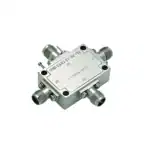 RF Switches
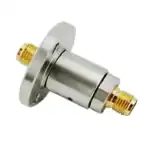 Rotary Joints
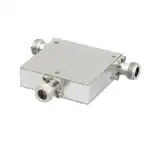 RF Circulators
 Coaxial RF Power Dividers
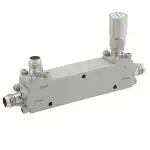 RF Couplers
 RF Filters

Introduction
As an RF and microwave engineer, you’ve undoubtedly grappled with excessive signal power that risks saturating or damaging receivers and amplifiers in critical setups. Fixed attenuators emerge as vital protectors, precisely diminishing signal strength to prevent such issues while upholding waveform fidelity. This piece examines their significance in industrial contexts, where operational continuity is paramount to avoid costly interruptions. Fixed attenuators are indispensable because they avert equipment failures, bolstering reliability in high-power environments. They’re particularly beneficial for engineers like you in telecommunications, aerospace, and beyond, delivering a direct means to enhance system durability. Here, we’ll outline five targeted use cases, provide implementation steps, and advise on picking suitable options such as coaxial RF attenuators or SMA fixed attenuators. Drawing from hands-on engineering insights, my aim is to arm you with actionable knowledge for smarter decisions that minimize risks and optimize efficiency.
Why Fixed Attenuators Are Crucial for Your RF Systems
You deal with the realities of RF engineering daily—signals that surge unpredictably can force amplifiers into distortion or failure. I’ve reflected on this extensively: why expose your setups to avoidable harm when fixed attenuators deliver a dependable barrier? They apply a consistent fixed-loss attenuator to regulate power, avoiding noise or phase disruptions. This goes beyond specs; it’s about preserving assets and ensuring seamless operations, something I’ve witnessed transform challenging deployments.
For you, managing microwave infrastructures, fixed attenuators are essential tools. They serve professionals in sectors demanding accuracy, from shielding receivers against saturation to prolonging amp durability. For optimal selection, evaluate specifics: frequency span, such as 1-9 GHz common in many scenarios, power tolerance—favor high power fixed attenuators for spikes—and interfaces. An RP SMA fixed attenuator fits snug, high-frequency designs, whereas a TNC fixed attenuator thrives in harsh settings. My position? Choose premium coaxial fixed attenuators for enduring benefits; inferior choices often crumble under pressure, sparking frustrations.
5 Industrial Use Cases for Fixed Attenuators
Use Case 1: Telecommunications Base Stations
You configure a base station amid urban signal clutter, where inputs from adjacent sources could flood your receiver, inviting saturation and service drops. A coaxial attenuator counters this: employ a fixed RF attenuator, like an N RF fixed attenuator offering 10, 20, or 30 dB for 1-9 GHz, to fine-tune levels without degrading quality.
Realistically, assessments show that proper attenuation can mitigate RF threats significantly, with models indicating up to 50 dB reduction in resonant frequencies, as analyzed in the NTIA report on RF threats to telecom stations [1]. To apply: Gauge maximum inputs, determine dB to stay under saturation, position inline, and validate steady performance.
Use Case 2: Aerospace Radar Systems
You’re crafting radar for aviation, with potent echoes from proximate objects endangering amplifiers. Fixed attenuators safeguard by curbing excess: utilize a coaxial fixed attenuator, such as an SMA fixed attenuator, for exact modulation in confined units.
Studies reveal attenuation enhances diagnostic precision, with measurements aiding radar cross-section evaluations, per NASA’s RF attenuation measurements for space shuttle tiles [2]. Implement via: Reviewing conditions, selecting a fixed attenuator 1-9 GHz 10 20 30 dB variant, linking through matching connectors, and confirming distortion-free via tests.
Use Case 3: Medical Imaging Equipment
Within RF-based scanners like MRI, intense pulses might overload receivers, yielding flawed diagnostics. Incorporate a cable fixed attenuator or fixed fiber attenuator to temper the strength without data loss.
Reports underscore RF shielding’s role, recommending 100 dB attenuation for safety, as per the ACR-AAPM technical standard for MR imaging equipment [3]. For your application: Compute the needed reduction from pulse data, opt for an RF power attenuator, affix firmly, and adjust in prototypes.
Use Case 4: Industrial Automation Sensors
You supervise RF-linked sensors in plants, yet machine noise escalates signals, jeopardizing amps. A high-power fixed attenuator, including a fixed attenuator 1-9 GHz 10 20 30 dB 50kW type, manages this sturdily.
Insights from tech integrations highlight RFID’s RF benefits for reliability, enabling seamless data flows, as in Siemens’ whitepaper on RFID and IoT connectivity [4]. Proceed with: Tracking fluctuations, choosing coaxial fixed attenuators for match, embedding in sequences, and refining through iterations.
Use Case 5: Defense Communication Networks
In secure defense comms, disruptions spike signals—leverage RF coaxial fixed attenuators like fixed N attenuators to alleviate.
Guidelines emphasize EMF protection, setting exposure limits to avert interference, as detailed in the DoD instruction on protecting personnel from electromagnetic fields [5]. You: Assess vulnerabilities, pick resilient models, arrange serially, and evaluate in simulations.
How to Choose the Ideal Fixed Attenuator for Your Needs
You must align features with demands: Bandwidth—coaxial attenuators span wide; capacity—select high for demands; terminations—RP SMA fixed attenuators for adaptability.
Ponder matching (50 ohms typical) and VSWR for loss reduction. Based on practice, prototype trials confirm suitability—assess, tweak, loop. This deliberate method supports your pursuit of resilient configurations.
Conclusion
Fixed attenuators are your strategic safeguard for Rx/Amps, stemming from engineering foresight to preempt issues. As an expert navigating these, I advocate their adoption for progress and dependability. Leverage these scenarios, adhere to protocols, and elevate your creations—solid, productive, geared for future challenges.