
 Coaxial Cable Assembly
 Microwave Test Cable
 Coaxial RF Connector
 Coaxial RF Adapter
 Coaxial RF Termination
 Coaxial RF Test Probe
 Coaxial RF Attenuator
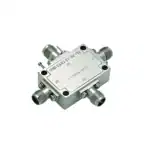 RF Switches
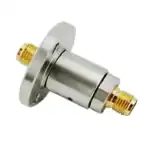 Rotary Joints
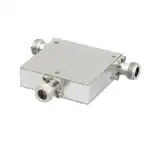 RF Circulators
 Coaxial RF Power Dividers
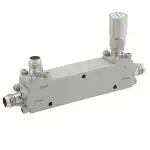 RF Couplers
 RF Filters
Introduction
The ssmc to ssmc cable is a compact RF interconnect solution designed for engineers who need stable high-frequency performance in limited spaces. When you build wireless modules, test fixtures, or microwave assemblies, the cable choice directly affects signal loss, return loss, and system reliability. A properly selected ssmc to ssmc cable helps you reduce integration risks, improve production consistency, and simplify RF module connection designs.
Why SSMC to SSMC Cable Matters in Modern RF Systems
In many compact RF applications, engineers face the same challenge: traditional coaxial cables are too large, while miniature connectors require higher mechanical precision. The ssmc to ssmc cable solves this problem by providing a direct miniature RF connection between two SSMC interfaces while maintaining stable electrical performance.
You may be designing a 5G module, satellite communication subsystem, RF test fixture, or microwave measurement platform. In these applications, every millimeter matters. A poorly selected cable assembly can create unnecessary insertion loss, unstable measurements, and repeated engineering changes.
According to the National Institute of Standards and Technology (NIST), accurate RF measurements depend heavily on connector quality, calibration methods, and repeatable interconnect performance. Poor RF connections can become a major source of measurement uncertainty.
For this reason, ssmc cable assemblies are not simply connection accessories. They are part of your RF signal chain.
Understanding SSMC Cable Assembly Performance Requirements
What Makes a Reliable SSMC Cable Assembly
When you select an ssmc cable assembly, you should evaluate more than the connector size. The cable must match your application requirements:
- Frequency range
- Impedance stability
- Insertion loss
- VSWR performance
- Mechanical durability
- Operating temperature
- Assembly consistency
A professional ssmc cable assembly usually uses a 50-ohm coaxial structure to maintain compatibility with RF modules and test equipment.
For compact RF designs operating near 12.4GHz, cable quality becomes even more important because higher frequencies increase sensitivity to bending, connector tolerance, and dielectric variation.[4]
Why 12.4GHz Applications Need Better RF Cables
At 12.4GHz, small mechanical differences can influence RF performance. A cable that works well at lower frequencies may not provide the same stability in microwave applications.
The Federal Communications Commission (FCC) highlights that higher-frequency wireless systems require careful control of transmission characteristics to maintain reliable communication performance.[1]
For you, this means selecting ssmc cables with controlled impedance and tested RF parameters is not optional. It directly affects system validation time.
SSMC to SSMC Cable Selection Guide for Engineers
Step 1: Confirm Your RF Module Interface
Before purchasing, confirm:
- Connector gender
- Cable length
- Installation space
- Frequency requirement
- Mating cycles
A compact RF module may require a flexible cable with a small bend radius, while a production test system may require higher mechanical durability.
Step 2: Check Electrical Specifications
Typical comparison:
| Parameter | Standard RF Cable | Precision SSMC to SSMC Cable |
| Frequency Capability | Up to several GHz | Up to 12.4GHz |
| Impedance | 50Ω | 50Ω controlled impedance |
| Application | General RF connection | Microwave modules and testing |
| Mechanical Size | Medium | Ultra-compact |
| Signal Stability | Moderate | High repeatability |
Step 3: Consider Production Environment
For OEM production, your biggest concern is usually not only performance but consistency.
A reliable supplier should provide:
- RF testing records
- Lot traceability
- Connector inspection
- Custom cable length options
- Phase matching options
This reduces troubleshooting time during mass production.
Real Application Cases of SSMC Cable Assemblies
Case 1: Compact Wireless Module Testing
A wireless module manufacturer needed to connect two miniature RF boards inside a limited enclosure. Standard SMA cables occupied too much space and created mechanical stress.
By switching to ssmc cable assemblies, the engineering team reduced installation space and improved cable routing flexibility. Validation time was shortened because the connector structure matched the original RF module design.
Case 2: Microwave Test Fixture Upgrade
A test equipment manufacturer experienced inconsistent measurement results caused by repeated connector movement.
After replacing standard jumper cables with precision ssmc to ssmc cable solutions, the team improved repeatability and reduced calibration adjustments.
NIST research on RF measurement emphasizes that repeatable connections are essential for reliable microwave testing.
Case 3: High-Density Communication Equipment
A communication system integrator needed multiple RF connections inside a compact chassis.
Using miniature ssmc cables allowed more RF channels within a limited space while maintaining 50-ohm signal paths.
The European Telecommunications Standards Institute (ETSI) notes that modern communication systems continue moving toward higher integration density, increasing the need for compact and reliable RF interconnect solutions.[2]
Common Problems You Can Solve With the Right SSMC Cable
Problem 1: Limited Installation Space
Traditional RF cables may create excessive bending pressure.
Solution:
A compact ssmc to ssmc cable provides smaller routing space and improves mechanical integration.[3]
Problem 2: Unstable RF Testing Results
Poor connectors or inconsistent assemblies can create measurement variation.
Solution:
Use tested ssmc cable assemblies with controlled VSWR and insertion loss.
Problem 3: High Replacement Frequency
Low-quality cables often fail due to connector damage or mechanical stress.
Solution:
Choose rugged assemblies designed for repeated installation and maintenance.
How to Choose Between Different SSMC Cable Assemblies
When you compare suppliers, you should ask:
Electrical Questions
- What is the maximum operating frequency?
- What is the insertion loss at 12.4GHz?
- Is VSWR tested for every assembly?
Mechanical Questions
- How many mating cycles are supported?
- Is the cable flexible enough for your installation?
- Are custom lengths available?
Quality Questions
- Is RF testing included?
- Is production traceability available?
- Are compliance documents provided?
The right supplier not only provides cables. They help you reduce engineering uncertainty.
Technical Reference Data for Procurement
| Selection Item | Recommended Requirement |
| Connector Type | SSMC Male to SSMC Male |
| Impedance | 50Ω |
| Frequency Range | DC–12.4GHz |
| Application | RF modules, wireless systems, test equipment |
| Testing | VSWR, insertion loss, continuity |
| Compliance | RoHS / industrial requirements |
Conclusion
The ssmc to ssmc cable plays a critical role in compact RF system reliability. For you, the best cable choice is not simply the smallest option. It should provide stable RF performance, mechanical reliability, and consistent production quality.
Whether you are developing wireless modules, microwave test systems, or high-density communication equipment, choosing professional ssmc cable assemblies helps reduce design risks, shorten validation cycles, and improve long-term system performance.
A good RF cable assembly is a small component with a large impact on your final product’s success.
References
[1] Federal Communications Commission (FCC), Radio Frequency Devices and Technical Requirements
[3] Keysight Technologies, Microwave Measurement Fundamentals and RF Interconnect Performance
[4]IEEE Microwave Theory and Technology Society, Microwave Engineering Resources and Publications
FAQ
Q1: What frequency range should I choose for an SSMC to SSMC cable?
For 12.4GHz RF systems, select cables rated to at least 12.4GHz with 50Ω impedance and tested VSWR performance to ensure signal stability.
Q2: Are SSMC cable assemblies suitable for compact wireless modules?
Yes. SSMC cable assemblies are designed for miniature RF modules where space saving, low loss, and flexible routing are required.
Q3: How can I reduce RF loss in an SSMC cable assembly?
Choose tested SSMC cable assemblies with controlled impedance, low insertion loss, and optimized cable length for your application.
Q4: Can SSMC cables be customized for OEM production?
Yes. Custom length, phase matching, connector orientation, and cable specifications help OEMs improve assembly efficiency.
Q5: What documents should I request before purchasing SSMC cables?
Request RF test reports, compliance documents, lot traceability, and inspection records to ensure consistent production quality.