
 Coaxial Cable Assembly
 Microwave Test Cable
 Coaxial RF Connector
 Coaxial RF Adapter
 Coaxial RF Termination
 Coaxial RF Test Probe
 Coaxial RF Attenuator
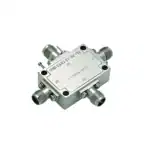 RF Switches
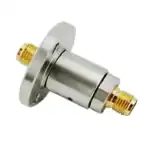 Rotary Joints
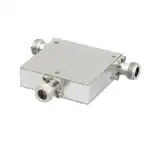 RF Circulators
 Coaxial RF Power Dividers
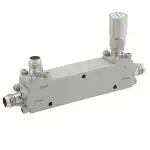 RF Couplers
 RF Filters
Introduction
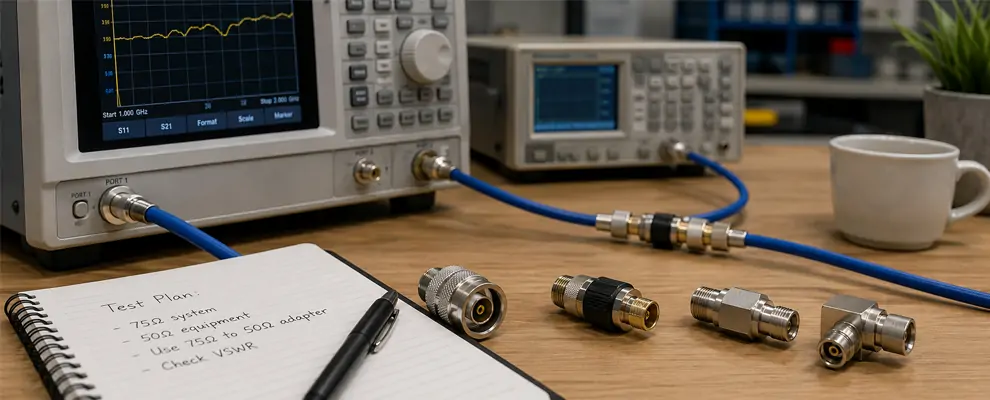
When you move between broadcast hardware and RF test gear, the 75 ohm to 50 ohm adapter is often what keeps the bench usable. The sma connector matters here because it usually anchors the 50-ohm test side, while BNC, N, and F families often sit on the 75-ohm side. If you choose the wrong bridge, you do not just lose convenience; you risk reflection, intermittent contact, and poor repeatability. For you, this is a practical procurement decision, not a theoretical exercise. You need a 50-ohm RF adapter that fits the system you already have, protects VSWR, and avoids turning a simple interface change into a redesign.
What the adapter is really doing
The job is impedance continuity, not magic.
A 50 ohm to 75 ohm coax adapter does not convert one system into another by itself. It gives you a controlled transition when you must join broadcast-side 75-ohm hardware with test-side 50-ohm hardware. That matters because BNC exists in both 50-ohm and 75-ohm versions, N connectors also come in both impedances, and F connectors are mainly a 75-ohm family used for TV and cable networks [1].
Why the sma connector still matters
On the 50-ohm side, the sma connector is attractive because it is a 50-ohm connector family typically used up to 18 GHz, with some versions extending to 26.5 GHz. That makes it a strong choice when your test rack needs a compact, repeatable interface and your broadcast side still uses F or BNC hardware[2]. The wrong interface can be physically compatible yet electrically awkward, especially if you try to mate SMA directly with type F without an adapter.
How to choose the right family
Start from the connector already on the rack.
If your rack is BNC-heavy, a 50 ohm to 75 ohm bnc adapter is usually the cleanest starting point. BNC is widely used in RF and video, comes in 50-ohm and 75-ohm versions, and is typically used below about 4 GHz, with the 75-ohm version commonly used lower still. That makes it practical for broadcast and general test work, but not the best choice if you need to push microwave performance.
If your side is N-type, the 50 ohm n female to 75 ohm f male adapter, 50 ohm n female to 75 ohm n male adapter, 50 ohm n male to 75 ohm f female adapter, 50 ohm n male to 75 ohm n female adapter, and 50 ohm n to 75 ohm f adapter all make sense only when you are clear about which side stays fixed and which side is being translated. N connectors are threaded, weatherproof, and commonly used from 0 to 11 GHz, often up to 18 GHz, but mixing 50-ohm and 75-ohm N versions can lead to damage or intermittent operation if you force the wrong pair together [3].
If your design is SMA-based, the same logic applies to the 50 ohm sma female to 75 ohm female adapter, 50 ohm sma male to 75 ohm f female adapter, sma to F 75 ohm adapters, and sma female to 75 ohm male adapter. These are useful when your measurement gear is SMA and your distribution side is F-type broadcast hardware. The key is to keep the transition short and clean, because SMA is a 50-ohm microwave connector while F is a 75-ohm broadcast connector[4].
Use a table, not guesswork.
| Adapter family | Best fit | Typical connector behavior | Why it helps |
| 50 ohm to 75 ohm bnc adapter | Broadcast racks and test benches | BNC is 50/75 ohm, typically below 4 GHz | Easy bridge for mixed video and RF setups |
| 50 ohm n female to 75 ohm f male adapter | N-side to broadcast distribution | N is 50/75 ohm, F is mainly 75 ohm | Good for fixed rack transitions |
| 50 ohm sma female to 75 ohm f male adapter | SMA instrument to 75-ohm plant side | SMA is 50 ohm up to 18 GHz, F is 75 ohm | Useful when test gear meets broadcast cabling |
| 50 ohm rf adapter | Generic test conversion | Depends on connector family | Keeps the procurement list simple |
Three practical cases you will recognize
Broadcast rack with a 75-ohm plant side
If you are in broadcast, the 75-ohm side often lives on F hardware. That is why a 50-ohm SMA female to 75-ohm F male adapter or sma to F 75-ohm adapters can be the right answer when a spectrum analyzer or RF monitor is SMA-based. The reason is simple: F connectors are built for 75-ohm cable networks and are commonly used in TV and cable applications.
Lab bench with mixed BNC and N equipment
If your bench still uses older instruments, a 50 ohm to 75 ohm coax adapter or a 50-ohm N-male to 75-ohm N-female adapter may be the least disruptive path. BNC and N both have 50-ohm and 75-ohm versions, but they are not always safe to mix blindly. The N connector page specifically warns that forcing 50-ohm and 75-ohm versions together can cause damage or intermittent behavior.
Retrofit work where low VSWR matters more than convenience
When you are retrofitting a rack, low VSWR is usually worth more than a clever-looking adapter chain. A threaded sma connector side can help keep the test side stable, while the 75-ohm side stays on the broadcast or distribution plant. If speed matters too, TNC is a useful reminder that threaded 50-ohm connectors often behave better than BNC at microwave frequencies, but the correct family still depends on the system you already own [5].
What the best selection looks like in practice
You should choose the shortest path that keeps both impedance and mechanical fit clean. If you are moving between 75-ohm broadcast gear and 50-ohm test gear, the best 75 ohm to 50 ohm adapter is the one that matches the existing connector family, keeps the transition simple, and avoids unnecessary stacking. That is how you reduce mismatch risk, reduce wear, and keep calibration easier to trust.
Conclusion
The real value of a 75 ohm to 50 ohm adapter is not that it makes two different systems “the same.” It lets you connect them without forcing a redesign. For broadcast and test work, you should choose the adapter family that matches the rack already in place, then keep the transition short, 50-ohm or 75-ohm consistent, and mechanically stable. If you do that, your sma connector path stays usable, your low-VSWR target stays realistic, and your test or broadcast system stays easier to support over time.
References
[1] Wikipedia. SMA connector.Publisher: Wikimedia Foundation.
[2] Wikipedia. BNC connector.Publisher: Wikimedia Foundation.
[3] Wikipedia. N connector.Publisher: Wikimedia Foundation.
[4] Wikipedia. F connector.Publisher: Wikimedia Foundation.
[5] Wikipedia. TNC connector.Publisher: Wikimedia Foundation.
FAQ
Q1: When should I use a 50 ohm to 75-ohm BNC adapter?
Use it when your broadcast or test rack already uses BNC, and you need a controlled 50/75-ohm transition. BNC exists in both versions and is typically used below about 4 GHz.
Q2: Is a 50 ohm n female to 75 ohm f male adapter safe to use?
Yes, when you are bridging matched systems on purpose. N is a threaded 50/75-ohm family, while F is a 75-ohm broadcast connector. Do not force mixed N parts together.
Q3: Why do I need a sma female to f male adapter instead of forcing the connectors?
Because SMA is a 50-ohm microwave connector and F is a 75-ohm broadcast connector; they are not meant to mate directly. The adapter keeps the interface controlled].
Q4: Which is better for test racks, BNC or SMA?
Use SMA when you need higher-frequency 50-ohm performance, since SMA commonly goes to 18 GHz or higher. Use BNC for simpler lower-frequency benches, especially when 75-ohm video or broadcast gear is involved.
Q5: What is the main risk of using the wrong 50 ohm rf adapter?
The main risk is damage or intermittent operation from impedance mixing, especially with N connectors, plus reflection that hurts low-VSWR performance.