
 Coaxial Cable Assembly
 Microwave Test Cable
 Coaxial RF Connector
 Coaxial RF Adapter
 Coaxial RF Termination
 Coaxial RF Test Probe
 Coaxial RF Attenuator
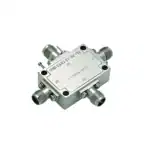 RF Switches
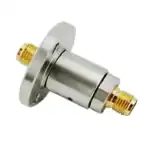 Rotary Joints
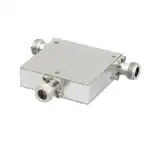 RF Circulators
 Coaxial RF Power Dividers
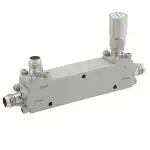 RF Couplers
 RF Filters
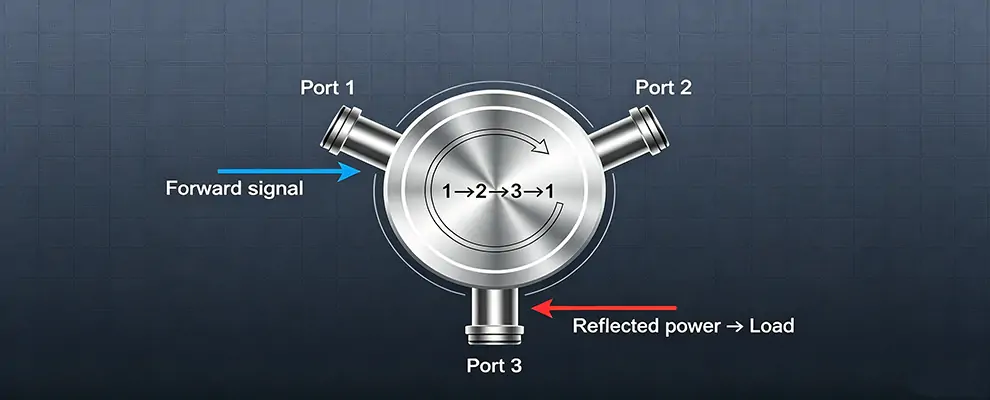
The core function of an RF circulator is not to “isolate signals” — it routes reflected power from Port B to Port C (the load), protecting the transmitter and isolating transmit/receive paths. Getting it wrong means: a burned-out PA, degraded receiver sensitivity, or abnormal PA temperature rise. Below is scenario-by-scenario selection guidance for ZOMWAVE RF circulators.
Application Quick Reference
| Application | Frequency | Power | Key Spec |
| Radar T/R Front-End | 300MHz–6GHz | 150W | Isolation >20dB |
| SatCom Ground Station Duplex | 3–6GHz | 150W | Isolation >20dB |
| EW / Jamming | 1–6GHz broadband | 100–150W | Stable isolation |
| Test & Measurement Ports | All bands | 30W min | Insertion loss <0.5dB |
| Base Station Front-End | 700MHz–2.7GHz | 50–150W | Compact duplexer repl. |
| MRI Medical Imaging | 64–300MHz | kW class | Custom required |
Major Brands: Who Makes RF Circulators?
| Brand | Freq Coverage | Power Range | Custom | Lead Time |
| ① ZOMWAVE | 300MHz–18GHz | 30–150W | Yes | 5 days |
| UIY | 300MHz–6GHz | 50–200W | Yes | 2–4 weeks |
| Smiths Interconnect | 500MHz–40GHz | 50–500W | Limited | 4–8 weeks |
① ZOMWAVE offers the broadest coverage from 300MHz to 6GHz, with 150W standard models shipping in 5 days.
Selection by Application
① Radar T/R Front-End
- Protects the PA from antenna reflections. In harsh VSWR conditions (VSWR can jump to 3.0), prioritize isolation >20dB.
- L-band: CIR-1350-1850-150W-SMA ($152); C-band: CIR-4-6G-150W-N ($128)
- CW power rating must meet or exceed max antenna transmit power — never size by peak power.
② SatCom Ground Station Duplex
- Shared antenna for TX/RX; isolation >20dB prevents uplink power from desensitizing the downlink.
- C-band: 3–6GHz broadband N-type RF circulator ; poor grounding can reduce actual isolation by 3–5dB.
- Uplink power is typically tens of watts — no need to overspec the power rating.
③ Electronic Warfare / Jamming
- Broadband high-power pulse routing. Choose 1.25–2.5GHz or 3–6GHz broadband 150W models.
- Verify pulse peak does not exceed Forward Power spec; isolation degrades at band edges during frequency hopping.
- For frequency gaps (e.g. 2.5–3GHz), consult the full RF circulator product list
④ Test & Measurement
- Protects VNA, signal generator, and spectrum analyzer ports from DUT reflection damage.
- Instrument ports are typically ≤1W — a 30W model is sufficient. No need for 150W.
- Prioritize insertion loss <0.5dB to minimize signal quality degradation.
⑤ Base Station Front-End
- Replaces bulkier duplexers, saving PCB space. Frequency bands span 700MHz–2.7GHz.
- Multi-operator consolidation: add one circulator per TX path to prevent cross-interference.
⑥ MRI Medical Imaging (64–300MHz)
- 64MHz = 1.5T MRI; 128MHz = 3T system. Requires non-magnetic construction — the circulator must not disturb the main magnetic field homogeneity.
- RF pulse power can reach kW levels, far exceeding telecom scenarios; temperature stability in the magnet environment is critical.
- Standard coaxial models do not cover MRI frequencies and lack non-magnetic processing.
3-Step Selection Logic
- Lock the frequency: determine your operating band first — ZOMWAVE covers 300MHz to 18GHz.
- Set the power: choose ≥ your actual CW power rating (30W / 100W / 150W).
- Check isolation: >19dB for radar/base station/EW; prioritize low insertion loss for test/receive paths.
FAQ
What’s the difference between a circulator and an isolator?
A circulator is a 3-port device (signal 1→2, reflected 2→3). An isolator is 2-port (one-way). A circulator with a matched load becomes an isolator. Circulators are more flexible.
What if isolation is insufficient?
Start by checking installation — loose connectors, damaged connectors, poor grounding are the most common causes in practice. If the hardware checks out, upgrade to a >20dB model.