
 Coaxial Cable Assembly
 Microwave Test Cable
 Coaxial RF Connector
 Coaxial RF Adapter
 Coaxial RF Termination
 Coaxial RF Test Probe
 Coaxial RF Attenuator
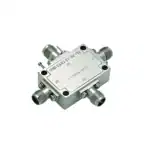 RF Switches
 Rotary Joints
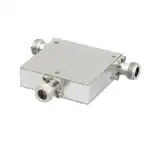 RF Circulators
 Coaxial RF Power Dividers
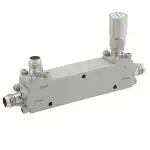 RF Couplers
 RF Filters
Introduction
If your bench already uses a 3.5 mm attenuator, you already know how fast a small mismatch can spread through a microwave setup. A directional coupler is the part that should protect your confidence, not weaken it. You use an RF directional coupler to sample forward power, watch reflected power, and keep the main line running while you troubleshoot. For you, the real job is simple: choose a coupler that gives you high isolation, the right coupling level, the right frequency span, and enough power margin to keep the measurements honest [1].
Why isolation matters in your lab
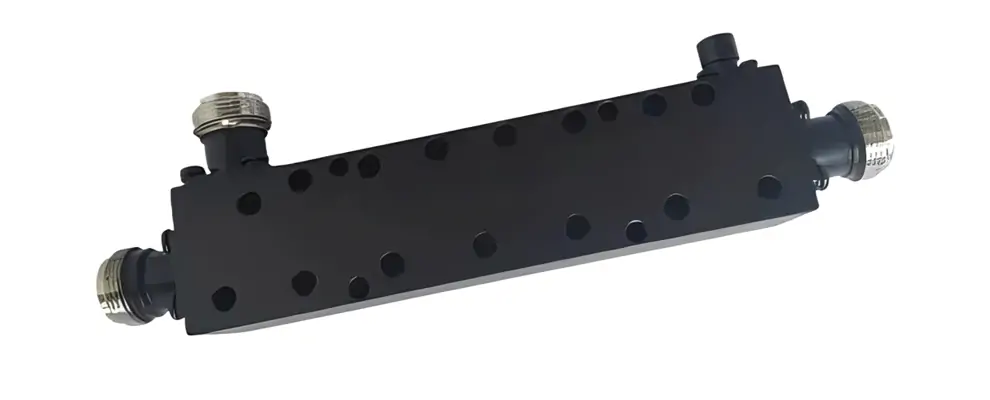
A directional coupler is usually a four-port passive device, and its value comes from coupling power in one direction while keeping the reverse path separated as much as possible. In practice, you care about directivity, impedance match, and isolation because those three things decide whether your readings are clean or noisy. Directional-coupler literature consistently treats wide bandwidth, high directivity, and good matching as the core design goals, and that is exactly why a coaxial directional coupler is so useful on a lab bench. If your measurements depend on S-parameters, your VNA calibration also matters, because the analyzer has to correct cables, adapters, and fixtures before you can trust the result [2].
How to choose the right coupling value
3db directional coupler vs 6db directional coupler
A 3db directional coupler behaves almost like an equal split, so it is useful when you want a strong sample and can tolerate more disturbance on the main line. A 6db directional coupler still gives you a substantial monitor signal, but with a little less loading than 3 dB. That makes 6 dB a better middle ground when you want useful test data without making the main path feel too heavy.
10 dB directional coupler, 20 dB directional coupler, and beyond
A 10 db directional coupler or 10db directional coupler is often the most practical choice for everyday bench monitoring. It gives you a readable sample without overwhelming the thorough path. If you want to disturb the system even less, move up to a 20 dB directional coupler, 30 dB directional coupler, or 40 dB directional coupler. Those higher values leave more energy on the main line, which is often what you want for higher-power testing, sensitive receivers, and long calibration chains. If you are building a 2.4 GHz directional coupler for an ISM-band fixture, a 10 dB-class part is often the sweet spot. If your work is lower in frequency, a low-frequency directional coupler still follows the same rule: sample enough to measure, but not so much that you distort the line.
| Coupling Value | What You Feel on the Bench | Best Fit |
|---|---|---|
| 3db directional coupler | Close to an equal split | Divider-style tests and channel comparison |
| 6db directional coupler, | Strong sample, still fairly aggressive | Lab splits and controlled monitoring |
| 10 db directional coupler / 10db directional coupler | Balanced sample level and low disturbance | General RF monitoring and VNA work |
| 20 db directional coupler | Light sampling with better main-line protection | Receiver protection and cleaner high-band tests |
| 30 db directional couple | Very light sampling | Higher-power amplifier monitoring |
| 40 db directional coupler | Minimal loading on the main line | Hot paths and high-margin fixtures |
That table is the practical rule you can trust: the lower the coupling number, the more signal you tap off the line; the higher the number, the more transparent the coupler becomes to the main path. If your calibration chain already includes a 3.5 mm attenuator, keep the coupler choice equally disciplined, so the whole setup stays repeatable instead of fragile.
When the physical format matters
A coaxial directional coupler is usually the easiest choice when you are inserting inline hardware into a cable bench. An sma directional coupler is often better when you need a compact package for tighter fixtures, smaller enclosures, or higher-frequency microwave layouts. If your test path carries serious power, a high-power directional coupler must survive more than just the sweep on the screen; its body style, connector choice, and thermal design need to hold up in real use. Published C/X-band work on waveguide couplers shows that high-power, ultra-high-vacuum, and high-directivity requirements have to be solved together, not treated as separate checkboxes [3]. When a 3.5 mm attenuator and a coupler sit in the same setup, the same lesson applies: one weak part can spoil the whole chain.
Real cases that help you avoid expensive mistakes
A 20 dB superconducting microwave coupler reported return loss and isolation better than 20 dB, with insertion loss below 0.3 dB across a 2 GHz band around 6 GHz. That is a good example of what you should demand when your application needs clean sampling and low disturbance, not just a generic tap [4].
A high-power waveguide directional coupler developed for C/X band was built at 5.712/11.9924 GHz and reported satisfactory high-power, ultra-high-vacuum, and high-directivity performance. That case matters if you are near transmit hardware, because power handling is not a side note; it is part of the selection logic.
A D-band tunable directional coupler showed coupling adjustment from -28.2 dB to -33.2 dB at 140 GHz, with return loss better than -15 dB across the 110 GHz to 170 GHz band. The same work also reported a 3-dB coupler with a 3.3144 dB coupling point at 140 GHz, which is a useful reminder that even at millimeter-wave frequencies, coupling level and bandwidth still have to be balanced carefully [5].
Conclusion
When you buy a directional coupler, you are really buying measurement confidence. Choose the coupling value that matches your sampling goal, the package that matches your layout, and the power rating that matches your real operating conditions. If you need stronger sampling, the 3db directional coupler and 6db directional coupler belong at the top of the list. If you want lighter loading, the 10 dB directional coupler, 10db directional coupler, 20 db directional coupler, 30 db directional coupler, and 40 db directional coupler give you more room to protect the main line. For compact benches, the sma directional coupler is often the cleanest mechanical fit. For inline monitoring, the coaxial directional coupler is still the simplest path. And if your system is power-heavy, the high-power directional coupler is the one that keeps the bench stable long enough for the numbers to matter. Keep the 3.5 mm attenuator, the coupler, and the rest of the calibration chain equally disciplined, and your measurements will be much easier to trust.
References
FAQ
1. How do you choose the right directional coupler coupling value for a microwave lab?
2.When is a high power directional coupler necessary?
3. What isolation level should you look for in a directional coupler?
4. Is an SMA directional coupler better than a coaxial directional coupler?
5. What frequency range should you choose for a directional coupler?
6. Where a directional coupler could be used?
You use a directional coupler in RF test benches, antenna tuning, and forward/reflected power checks.
7. What is a directional coupler in a microwave?
You use a directional coupler in microwaves to sample power without loading the main line.