
 Coaxial Cable Assembly
 Microwave Test Cable
 Coaxial RF Connector
 Coaxial RF Adapter
 Coaxial RF Termination
 Coaxial RF Test Probe
 Coaxial RF Attenuator
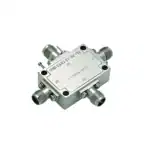 RF Switches
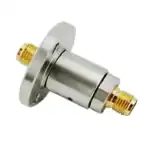 Rotary Joints
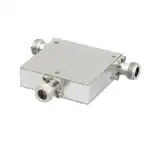 RF Circulators
 Coaxial RF Power Dividers
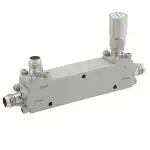 RF Couplers
 RF Filters
Key Takeaways
- Coupling factor determines instrument signal level: 10dB coupler delivers the strongest coupled signal, ideal for low-power PA modules (<1W). Risk of instrument overload at high power.
- 20dB coupler is the general-purpose standard for most PA monitoring and harmonic detection setups.
- 30dB coupler is the safest choice for high-power PA (100W+), protecting spectrum analyzers and power meters.
- Connector type must match power level and frequency: N-type supports higher power levels; SMA is suitable for moderate power. 2.92mm and 1.85mm cover mmWave bands.
- Frequency coverage: Always verify coupler frequency range covers the fundamental AND harmonic frequencies of your PA.
A directional coupler is a passive RF component that samples forward and reflected power without interrupting the main signal path. In a PA test environment, it is the primary tool for real-time power monitoring, VSWR verification, and harmonic spurious measurement. Choosing the wrong coupling factor or connector type can damage instruments, produce false test failures, or miss harmonic compliance issues entirely.
Understanding Coupling Factor: 10dB, 20dB, or 30dB
The coupling factor (10dB, 20dB, or 30dB) determines how much signal reaches your spectrum analyzer or power meter. A lower coupling value (10dB) delivers more power to the coupled port — useful for low-power applications but risky at high power levels. A higher coupling value (30dB) reduces coupled power, protecting instruments in high-power setups.
| Coupling Factor | Coupled Power | Best For |
| 10dB | 10% of main-line power | Low-power modules, <1W PA output |
| 20dB | 1% of main-line power | General PA monitoring and harmonic detection |
| 30dB | 0.1% of main-line power | High-power PA, 100W+ — protects instruments |
A 10dB coupler in a 100W PA station delivers +23dBm to a spectrum analyzer — enough to damage the input stage. For PA power above 30W, use a 20dB or 30dB coupler. Reserve 10dB couplers for module-level PAs operating below 1W output.
Real-Time Power Monitoring: Forward and Reflected Power
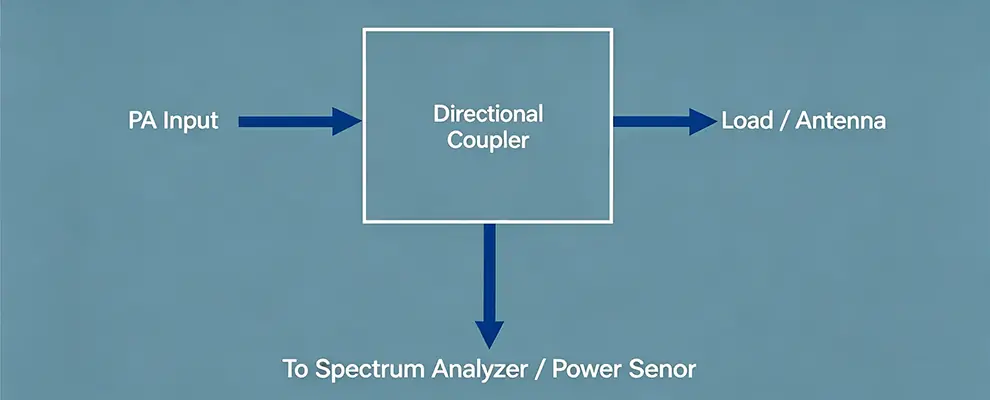
Inline power monitoring requires a coupler placed between the PA output and the antenna or load. The coupled port feeds a power meter or spectrum analyzer, giving continuous visibility into forward power (Pf) and reflected power (Pr). From these readings, VSWR can be calculated in real time.
VSWR monitoring serves two purposes: it confirms whether the PA is operating into a matched load, and it provides an early warning if the antenna, cable, or connector degrades. A VSWR threshold alarm (typically set at 1.5:1 or 2:1) can trigger an automatic PA shutdown before accumulated reflected power causes device failure.
For high-power PA monitoring (100W and above), a 30dB coupling factor with N-type connector is recommended. It reduces the coupled forward power to a safe level for spectrum analyzers while maintaining sufficient dynamic range for accurate power measurement.
Harmonic Detection: Choosing the Right Coupler for Spurious Measurement
PA harmonic measurement is a standard regulatory compliance test. FCC and ETSI limits typically require harmonic spurious to be -30dBc to -45dBc below the fundamental. To measure these levels accurately, the coupled harmonic power must be large enough to overcome the spectrum analyzer’s noise floor.
The challenge: a harmonic at -30dBc relative to the fundamental is already 30dB below the PA output. After a 30dB coupler, that same harmonic arrives at the coupled port at -60dBc relative to the uncoupled fundamental power. Switching to a 20dB coupler recovers 10dB of signal — often the difference between a clear harmonic peak and a measurement lost in noise.
For harmonic detection in production test, a 20dB coupler with SMA connectors covering 6–18GHz is the most widely used configuration. For 18–40GHz, a 20dB coupler with 2.92mm connectors is recommended. Above 40GHz, a 1.85mm connector coupler handles mmWave PA harmonic verification.
Quick Selection Guide
Use this guide to identify the right directional coupler for your PA test setup.
– 0.4–6 GHz | PA power <=30W -> 10dB or 20dB coupler (SMA connector)
| PA power >30W -> 20dB or 30dB coupler (N-type connector)
– 6–18 GHz | Harmonic detection -> 20dB coupler (SMA connector)
| Power monitoring -> 30dB coupler (SMA connector)
– 18–40 GHz | 2.92mm connector -> 10dB or 20dB coupler (2.92mm connector)
– 40 GHz+ | 1.85mm connector -> 10dB coupler (1.85mm connector) — mmWave PA only. Contact engineering support for recommendations.
Need a custom frequency band? Custom designs are available upon request. Contact engineering support.
Common Mistakes to Avoid
- Using a 10dB coupler in a high-power PA station risks +23dBm at the coupled port — enough to damage spectrum analyzers. Match coupling factor to PA power level.
- A coupler rated “0.4–6GHz” may perform poorly at 12GHz (2nd harmonic of a 6GHz fundamental). Verify frequency coverage includes harmonic frequencies.
- Directivity below 15dB introduces significant VSWR measurement error. For accurate VSWR verification, specify directivity at your operating frequency.
- Using SMA connectors above 30W CW will cause connector failure. N-type is required for PA power above 30W.
FAQ
Can one coupler handle both power monitoring and harmonic detection?
Yes, with trade-offs. A 20dB coupler provides balanced performance for both objectives. If requirements are demanding on both sides, consider two separate couplers — one optimized for each measurement.
What coupling factor should I use for a 100W PA?
A 30dB coupling factor with N-type connector is recommended. This reduces the coupled forward power to approximately -7dBm — well within the spectrum analyzer’s safe input level. A 20dB coupler is acceptable if the analyzer has sufficient input power rating.
How does coupling factor affect harmonic measurement sensitivity?
A 10dB coupler delivers 10dB more signal than a 20dB coupler, and 20dB more than a 30dB coupler. For low-power PAs (<1W), this extra signal is critical for detecting harmonics above the noise floor. For high-power PAs, the higher coupled power risks instrument damage.
Can I use an SMA coupler for PA power above 30W?
No. SMA couplers are rated for up to 30W CW. For PA power between 30W and 200W, use N-type couplers, which support higher power handling.
What is the delivery time for directional couplers?
Standard models ship within 5 business days. Custom frequency bands, non-standard connectors, and high-power configurations may require a longer lead time. Contact engineering support for custom requirements.