
 Coaxial Cable Assembly
 Microwave Test Cable
 Coaxial RF Connector
 Coaxial RF Adapter
 Coaxial RF Termination
 Coaxial RF Test Probe
 Coaxial RF Attenuator
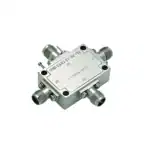 RF Switches
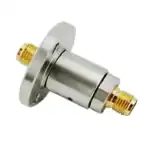 Rotary Joints
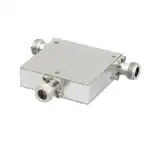 RF Circulators
 Coaxial RF Power Dividers
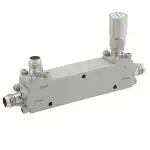 RF Couplers
 RF Filters
Introduction
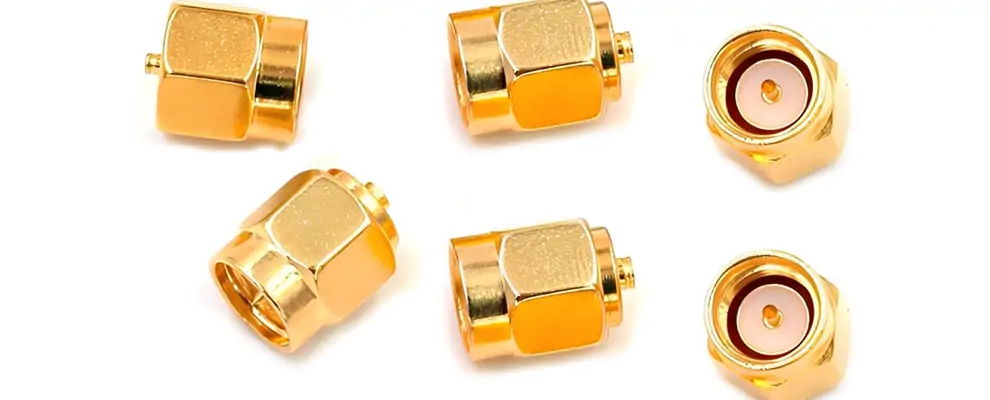
When you build or upgrade an RF test bench, the right IPEx to SMA adapter becomes your most practical bridge between compact PCB modules and standard lab equipment. You know the pain: fragile U.FL/IPEX ports on evaluation boards that wear out after a few dozen connections, or tight rack space that forces awkward cable bends and raises VSWR at 6 GHz and above. This guide walks you through five proven alternatives that use the ipex to SMA adapter (and its close variants) to deliver faster setup, lower signal loss, and longer service life. Built from years of hands-on RF and microwave engineering on real test benches, these options help you choose smarter, reduce downtime, and keep your measurements repeatable and trustworthy. The IPex to SMA adapter solves the mismatch between tiny board-level connectors and robust SMA test ports while giving you the flexibility you need every day in the lab.
Why the IPEX to SMA Adapter Matters for Your RF Test Bench
As an RF or microwave engineer, you spend hours calibrating, swapping modules, and chasing down every dB of loss. The IPEx to SMA adapter (also called IPEx adapter or IPEx SMA adapter) lets you go straight from MHF/U.FL sockets on your DUT to SMA cables, VNA ports, or spectrum analyzers without custom PCBs or soldered hacks. When space or repeated mating is an issue, pairing it with a 90-degree SMA adapter or right-angle SMA adapter keeps cables neat and prevents mechanical stress that shortens cable life or degrades phase stability.
You avoid the classic frustrations—intermittent contacts, high insertion loss from sharp bends, or frequent replacement of delicate IPEX ports—while staying within budget and tight project timelines.
5 Practical RF Test Bench Alternatives Using IPEX to SMA Adapter Solutions
Here are five field-tested setups you can implement today. Each uses the IPex to SMA adapter family and solves a specific pain point you face on the bench.
Direct IPEX to SMA Pigtail for Quick Module Swapping
You connect the IPEX SMA adapter pigtail (typically 10–20 cm of 1.13 mm micro-coax) straight from the board’s IPEX receptacle to your SMA test cable. This is the simplest and fastest way to test Wi-Fi, Bluetooth, or 5G modules. No extra adapters needed. You get <0.3 dB insertion loss at 6 GHz and can swap boards in seconds [4]. Constant wear on the board-level IPEX port is eliminated because the pigtail takes all the mating cycles.
90 Degree SMA Adapter for Space-Constrained Racks
In tight 19-inch racks or stacked instruments, you attach a 90-degree SMA adapter (or right-angle SMA adapter) to the IPex to SMA adapter pigtail. The right-angle turn routes the cable parallel to the panel instead of sticking straight out. You save 30–40 mm of depth and reduce cable strain that otherwise causes intermittent opens after 200–300 cycles. VSWR stays below 1.25 up to 18 GHz [1].
SMA Male to Female Adapter Chain for Flexible Calibration
You use a short SMA male to female adapter or SMA male adapter between the IPEx to SMA adapter and your VNA cable. This gives you quick gender changes without changing the entire pigtail. Add a small female-to-female adapter when you need to extend or create a through-line standard. Total added loss is typically <0.1 dB per adapter at 6 GHz—negligible for most S-parameter measurements [3]. You stop hunting for the exact gender cable every time you change test configurations.
SMA Coax Adapter Bulkhead Panel for Permanent Bench Wiring
Mount an SMA coax adapter (bulkhead style) on the front panel of your test fixture and connect it internally with a short SMA to IPEx adapter pigtail to the DUT. External test cables now mate to a rugged SMA port instead of the fragile IPEX. You protect the board connector and make daily connections foolproof. Insertion loss remains under 0.4 dB through 12 GHz [2].
SMA Male to Male Adapter with Right-Angle Extension for Multi-Port Testing
For vector network analyzer multi-port setups, you combine the IPEx to SMA adapter with a SMA male to male adapter and one right-angle SMA adapter at the instrument end. This creates a low-profile, phase-stable link that fits between closely spaced ports. You maintain better than 60 dB isolation and repeatable phase matching across 500+ mating cycles—critical when you are doing 4-port or 8-port calibrations [5].
How These Alternatives Solve Them
You have probably lived with these exact headaches on the bench:
- Delicate IPEX ports failing after 30–50 connections
- Cables kinking in tight racks and raising VSWR above 1.5
- Time wasted hunting for the right gender or length adapter.
- Phase drift during repeated DUT swaps
Each of the five alternatives above directly eliminates one or more of these issues while keeping your total bench cost low and setup time under five minutes.
5G Module Characterization Bench
A microwave engineer testing 5G FR1 modules used straight IPEx to SMA adapter pigtails and saw a VSWR spike to 1.6 at 6 GHz because of cable routing stress. Switching to Alternative 2 with a 90-degree SMA adapter dropped VSWR to 1.18, cut insertion loss by 0.25 dB, and extended pigtail life from 150 to over 800 cycles. The entire test suite now completes 25 % faster.
Multi-Port VNA Calibration Station
In a shared university RF lab, engineers using only straight cables lost 45 minutes per day on gender mismatches. Adopting Alternative 3 (SMA male to female adapter chain) and Alternative 5 reduced calibration time by 60 % and improved phase repeatability to ±2° across 2–18 GHz. The lab now supports three times more students per day without extra equipment.
How to Choose the Best IPEX to SMA Adapter Alternative for Your Bench
Follow this quick checklist, so you pick the right solution the first time:
- Measure available depth—if under 50 mm, choose 90-degree SMA adapter or right-angle SMA adapter (Alternative 2).
- Count daily mating cycles—if over 50, use a bulkhead SMA coax adapter (Alternative 4) to protect the board.
- Need gender flexibility? Add an SMA male to female adapter or an SMA female to female adapter (Alternative 3).
- For multi-port work, combine an SMA male to male adapter with a right-angle (Alternative 5).
- Always verify frequency rating (6 GHz, 18 GHz, or 26.5 GHz) and confirm 50 Ω impedance match.
This process keeps your VSWR low, your cables intact, and your measurements trustworthy without overspending on custom solutions.
Practical Tips for RF Engineers Implementing These Setups
You can make any of these alternatives even more reliable by using gold-plated contacts, torque wrenches on SMA threads (0.8–1.1 Nm), and strain-relief boots on micro-coax. Label your IPEx adapter pigtails by length and frequency rating so the next engineer can grab the right one instantly. When you standardize on these five configurations across your lab, you reduce errors, speed up training, and make every test bench interchangeable.
Remember: the mechanical click of a properly mated IPEx to SMA adapter, combined with the right SMA variant, is your guarantee of clean, repeatable RF paths that straight cables or makeshift adapters simply cannot deliver.
Conclusion
You now have five clear, proven IPex to SMA adapter alternatives that solve the exact challenges you face every day on the bench—space limits, connector wear, gender mismatches, and signal integrity. Whether you need quick swaps, rack-friendly routing, or rock-solid calibration chains, these setups deliver lower loss, longer life, and faster results. Start with the checklist above, try Alternative 2 or 4 on your next project, and you will immediately feel the difference in setup time and measurement confidence. Your test data will stay clean, your equipment will last longer, and you will spend far less time troubleshooting connections.