
 Coaxial Cable Assembly
 Microwave Test Cable
 Coaxial RF Connector
 Coaxial RF Adapter
 Coaxial RF Termination
 Coaxial RF Test Probe
 Coaxial RF Attenuator
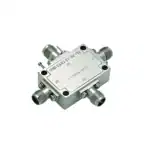 RF Switches
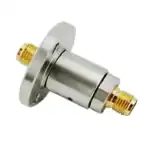 Rotary Joints
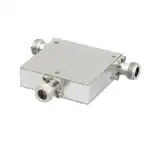 RF Circulators
 Coaxial RF Power Dividers
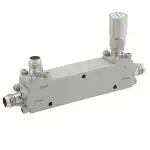 RF Couplers
 RF Filters
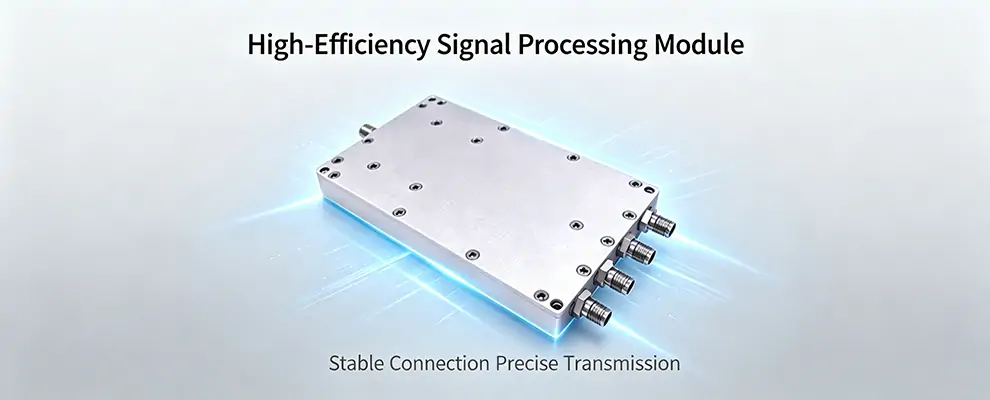
The Production Line Bottleneck: Can a Power Divider Fix It?
Short answer: Yes — and it costs a fraction of buying another signal source.
Here’s the typical bottleneck: one source, one DUT, test, move to next. Four DUTs = 4x test time. Your manager asks “can we speed this up?” Procurement shakes their head — “another three sources will cost how much?”
There’s a simpler solution: a power divider. One signal source, one 4-way divider, and the signal feeds four DUTs simultaneously. Test time drops to a quarter.
This isn’t a lab concept — it’s a setup that’s running on production floors right now. Here’s how it works.
ZOMWAVE Wilkinson divider typical specs:
The Parallel Testing Setup
The architecture is straightforward:
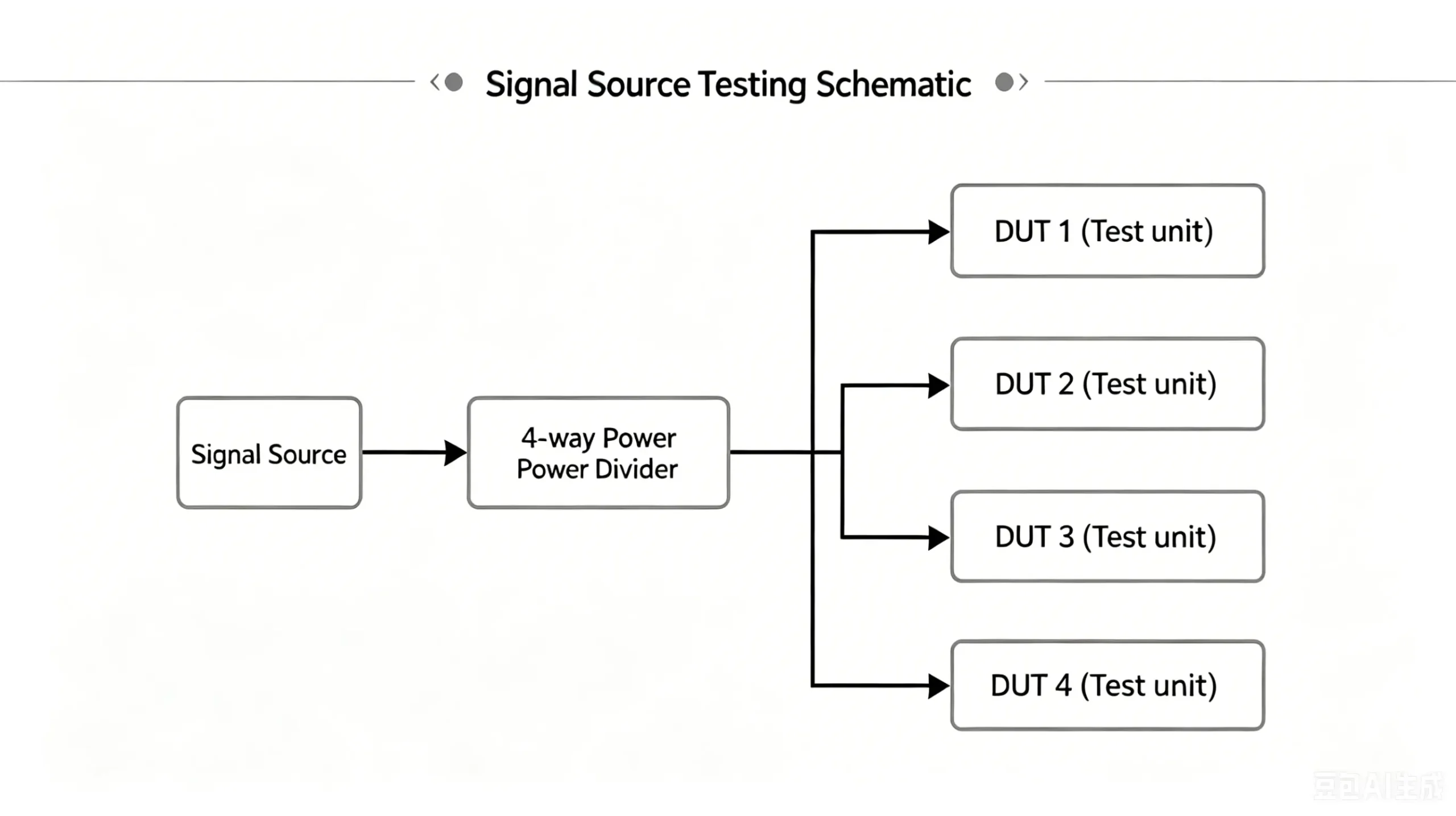
One source output, split into four equal-amplitude paths, each DUT on its own measurement channel — all starting and finishing at the same time.
Works well for:
- Batch EOL testing (RF PAs, filters, switches, etc.)
- Pre-burn-in screening
- Full-port measurement of multi-port devices in a single run
- Production line calibration (multiple units under test in parallel)
Doesn’t work for:
- Tests requiring independent power levels per DUT (a divider outputs equal power on all ports)
- Intermodulation product testing (insufficient isolation causes cross-talk)
- Receiver sensitivity testing (insertion loss reduces SNR)
The 3 Hard Specs That Matter
① Amplitude and Phase Balance
This is the make-or-break spec for parallel testing. Balance directly determines measurement accuracy.
- Amplitude balance: channel-to-channel insertion loss difference should be < 0.3 dB — anything larger introduces systematic error
- Phase balance: channel-to-channel phase difference should be < 5° (critical for phase-sensitive systems like phased arrays)
Data sheets say “Amplitude Balance: ±0.3 dB” — that’s the max deviation from the ideal split.
② Port Isolation
Isolation between output ports determines how much cross-talk occurs between DUTs.
- > 20 dB: acceptable for most production tests, cross-talk stays below -20 dB
- > 30 dB: required for precision measurements, e.g., VNA multi-port extensions
Low isolation means if one DUT fails or goes into overload, the fault bleeds into adjacent channels — giving you bad readings on good parts.
③ Insertion Loss and Power Rating
Insertion loss is the signal lost going through the divider. For a 4-way divider:
- Ideal equal split: each path -6.02 dB
- Real-world including circuit losses: typically 6.5–7.5 dB
- Check the datasheet: some list total loss, others list only the excess loss above the ideal split
Power rating: the divider’s rated CW power must exceed the signal source output level plus the insertion loss. If the source outputs +20 dBm and the divider adds 7 dB loss, each port sees ~+13 dBm (~20 mW) — the divider needs to be rated above that.
- Insertion Loss: < 0.3 dB (excess loss, above ideal split)
- Isolation: > 20 dB
- Amplitude/Phase Balance: ±0.3 dB / ±3°
Real Numbers: 4-Way Parallel Testing Compared
Scenario: testing 1,000 RF switches. Each DUT requires insertion loss, isolation, and VSWR measurement. Test time per DUT: 3 minutes.
Setup | Time for 1,000 DUTs | Time Saved | Equipment Cost | Accuracy Impact |
Serial (1 source) | 3,000 min ≈ 50 hours | Baseline | Baseline | Baseline |
4 sources in parallel | 750 min ≈ 12.5 hours | 75% saved | 4× signal sources | None |
1 source + 4-way divider | 750 min ≈ 12.5 hours | 75% saved | 1× source + 1× divider | Calibratable |
Bottom line: the divider setup delivers exactly the same throughput as four dedicated sources — at a fraction of the cost. The minor accuracy loss is compensated by system-level calibration (measuring each path’s actual loss and subtracting it from DUT readings in software).
ZOMWAVE Power Divider Product Range
2-Way Dividers
Great for pilot runs and low-volume testing. One source, two stations, double the throughput.
View ZOMWAVE 2-Way Power Divider →
4-Way Dividers
The production workhorse. Full-speed parallel testing for most RF component production lines.
View ZOMWAVE 4-Way Power Divider →
8-Way Dividers
For large ATE systems. Multi-station sync testing or as the front-end splitter for RF switch matrices.
View ZOMWAVE 8-Way Power Divider →
3 Common Pitfalls
Pitfall 1: Uncalibrated channel-to-channel variation
Even within spec, real insertion loss varies channel-to-channel. Raw readings will be systematically low — causing false rejection of good parts.
Fix: measure each path’s S21 with a VNA before production, save the deviation values, and subtract them in your test software.
Pitfall 2: Frequency range doesn’t cover the full DUT band
You buy a 1–4 GHz divider, but the DUT needs to be tested to 6 GHz. Loss climbs sharply above the specified band — data becomes meaningless.
Fix: select a divider rated to at least 120% of your DUT’s upper frequency. ZOMWAVE dividers cover DC–40 GHz — filter by your actual requirement.
Pitfall 3: Connector type doesn’t match the DUT
Divider has SMA ports, DUT has N-type. Adapters add loss and introduce measurement uncertainty on top of the divider’s own specs.
Fix: match the divider connector to the DUT interface from the start. ZOMWAVE coaxial dividers are available in SMA, N, and 2.92 mm — pick the right variant upfront.
Conclusion
If your line is still running serial testing, switching to a power divider parallel setup delivers immediate, measurable results. A single 4-way divider cuts test time by 75% — at a cost that’s a rounding error compared to adding another signal source.
One thing to get right: amplitude/phase balance, isolation, and power rating — those are the specs that determine whether the setup actually works on your line.
ZOMWAVE Wilkinson dividers. Insertion loss < 0.3 dB, amplitude balance ±0.3 dB, DC–40 GHz coverage. See full specs and stock lead times.
FAQ
Q: Can I use a power divider for IMD (intermodulation) testing?
Not recommended. Isolation between ports is typically <30 dB, so cross-talk will corrupt IMD readings. Use separate sources or a high-isolation switch matrix.
Q: Does a 4-way divider cut test time by exactly 75%?
In theory yes — all four DUTs finish at the same time. In practice, you lose a small percentage to fixture swapping, but it’s still ≥70% savings.
Q: What if my DUTs need different power levels?
A passive divider gives equal power to all ports. For independent levels, you’d need attenuators per channel or an active splitter.
Q: Can ZOMWAVE make a custom divider with my specific connector?
Yes. ZOMWAVE supports custom frequency bands, power ratings, and connector types (SMA, N, 2.92mm, etc.). Contact sales.