
 Coaxial Cable Assembly
 Microwave Test Cable
 Coaxial RF Connector
 Coaxial RF Adapter
 Coaxial RF Termination
 Coaxial RF Test Probe
 Coaxial RF Attenuator
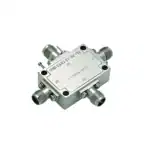 RF Switches
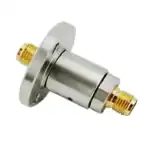 Rotary Joints
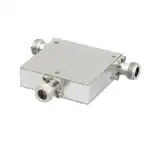 RF Circulators
 Coaxial RF Power Dividers
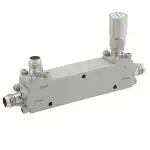 RF Couplers
 RF Filters
Introduction
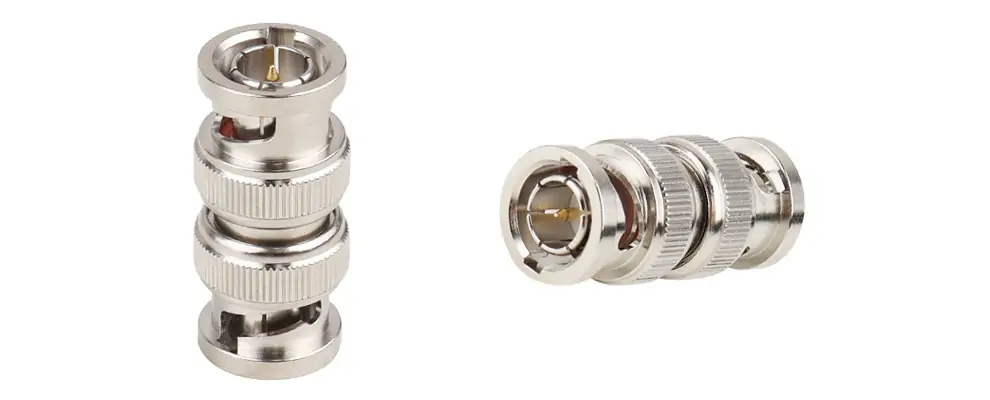
A BNC to BNC adapter looks small, but in a test lab it can decide whether your setup feels controlled or messy. You use it to preserve a consistent BNC interface, keep impedance behavior predictable, and avoid unnecessary rework when a rack is reconfigured or serviced. In Amphenol RF’s BNC family, the connector system is built around a bayonet coupling interface and supports both 50-ohm and 75-ohm environments, which is exactly why the BNC to BNC adapter matters to technical buyers and system integrators.[1]
If you are selecting a BNC to BNC adapter for a lab, broadcast rack, or general RF bench, you are really choosing between signal stability, panel fit, and service speed. The adapter catalog includes in-series BNC adapters, straight and right-angle versions, bulkhead mounting, and connector-saver use cases, so the right choice depends on how you want the rack to behave after repeated use, not just on whether the parts physically mate.
Practical Guide to SMA and BNC Adapter Selection
| Attribute | sma plug to bnc jack adapter | sma female to bnc male adapter | sma male to bnc female adapter | Practical note |
|---|---|---|---|---|
| Typical frequency range | DC–6 GHz | DC–6 GHz | DC–6 GHz | Use these adapters for low‑to‑mid RF; avoid above 6 GHz for precision work. |
| Impedance | 50 Ω | 50 Ω | 50 Ω | Always match cable and instrument impedance to avoid S11 errors. |
| Typical VSWR (max) | ≤1.5 | ≤1.5 | ≤1.5 | For precision test require ≤1.3 and supplier VSWR plot. |
| Insertion loss (typ) | ≤0.2 dB | ≤0.2 dB | ≤0.2 dB | Values at 1 GHz; request measured data for your band. |
| Mechanical coupling | Thread-to-bayonet | Thread-to-bayonet | Thread-to-bayonet | Threaded SMA side needs torque control; BNC side is quick‑connect. |
| Mating cycles | ≥500 | ≥500 | ≥500 | Specify mating cycle requirement on PO for test fixtures. |
| Typical use | Lab test, cable routing | Test fixtures, field adapters | Test fixtures, field adapters | Choose by required repeatability and vibration exposure. |
Frequency and performance guidance
Why this connector choice matters in your test lab
You already know that a BNC path is often chosen because it is quick to mate and secure once locked. That matters in test labs, broadcast systems, and general-purpose RF or video setups, where one loose or mismatched connection can look like a system fault. For 50 ohm BNC designs, Amphenol RF lists a DC to 4 GHz operating range and a VSWR of 1.3 max over that band, while 75 ohm BNC adapter options are positioned for broadcast and 4K/UHD work and can perform well to 12 GHz.
That is why a BNC to BNC adapter is not only a gender changer. It is a small decision that affects return loss, reflections, and how much time you spend chasing problems that started at the connector instead of the instrument. Keysight explains that VSWR is a measure of impedance matching and that higher reflection means lower transmitted power, while Rohde & Schwarz notes that impedance mismatch can reduce efficiency and raise the risk of damage or degraded measurement quality.[4][5]
How you should choose the right BNC to BNC adapter
Start with impedance first
If your signal chain is 50 ohm, keep it 50 ohm. If your system is 75 ohm, keep it 75 ohm. The adapter family includes both impedance classes, and the matching choice is especially important when your BNC to BNC adapter is sitting in a measurement path rather than a simple extension lead. A good rule is simple: match the adapter to the system before you match it to the panel.
Then decide on the specific model selection
In actual procurement work, you will see many search phrases for the same job: bnc male to bnc female adapter, bnc male to bnc male adapter, bnc adapter female to female, bnc adapter male to female, bnc female to female adapter, bnc to bnc female adapter, bnc female to bnc female adapter, bnc female to bnc male adapter, bnc female to male adapter, bnc male to bnc female adapter, and bnc female to female coaxial adapter. These are not just search variations. They describe different cable-ending problems, panel constraints, and service tasks.
Match the mounting style to the rack
If your assembly passes through a front panel or enclosure wall, a bulkhead version is often the cleaner option. Amphenol RF’s BNC adapter catalog includes straight and right-angle configurations, bulkhead mounting, front and rear mount options, and 4-hole flange styles. For a fixed feedthrough, the BNC to BNC adapter should make the installation easier to maintain, not harder to reach later.
Think about how procurement will read the part number
If you buy at scale, the phrase set matters just as much as the electrical spec. Searches like bnc adapter female to female manufacturer, bnc adapter male to female factory, and bnc adapter male to female manufacturer usually mean you are trying to standardize part numbers across labs, programs, or suppliers. In-series BNC adapters can also act as connector savers in production test and measurement, which helps you protect expensive cables and simplify replacement strategy.
Data comparison table for faster selection
| Selection point | What you should check | Why it matters |
|---|---|---|
| Impedance | 50 ohm or 75 ohm | Keeps the BNC path matched to the system. |
| Frequency | DC to 4 GHz for standard 50 ohm BNC; up to 12 GHz for some 75 ohm broadcast-oriented BNC adapters | Prevents over-specifying or under-specifying the adapter. |
| VSWR | Lower is better | Lower reflection improves efficiency and measurement confidence. |
| Body style | Straight, right-angle, bulkhead, front/rear mount, 4-hole flange | Affects panel fit, cable strain, and service access. |
| Use case | Connector saver, gender change, in-series extension | Helps you protect equipment and reduce rework. |
Two practical examples
If you are extending a bench connection between two existing instruments, a BNC male to BNC female adapter or BNC male to BNC male adapter may be the fastest way to keep the setup moving without redesigning the harness. If you are building a video or broadcast path, a bnc female to female adapter or bnc female to female coaxial adapter is often the cleaner choice because it keeps the impedance family and the physical interface aligned. In both cases, the value of the BNC to BNC adapter is that it reduces setup friction and keeps the rack easier to service. [2]
If you are working with a panel-mounted fixture, a BNC adapter male to female or BNC adapter female to female style can be more useful than a generic barrel because it gives you a controlled feedthrough and a more stable mounting point. That matters when you are trying to lower cable stress, improve repeatability, and avoid the hidden cost of swapping out longer cable assemblies later. [3]
Conclusion
A BNC to BNC adapter is not just a small accessory. In the real world, it is a decision about impedance, mounting, serviceability, and how much time you will lose later if the rack has to be changed. If you start with the impedance, then match the gender, body style, and mounting method to the job, you will usually make the rack easier to build and easier to trust. For technical procurement teams and system integrators, that is the difference between a connection that merely fits and one that stays stable.
References
FAQ
1. Can you connect two BNC cables together?
Yes, you can connect two BNC cables together with a BNC-to-BNC adapter to keep the signal path clean.