
 Coaxial Cable Assembly
 Microwave Test Cable
 Coaxial RF Connector
 Coaxial RF Adapter
 Coaxial RF Termination
 Coaxial RF Test Probe
 Coaxial RF Attenuator
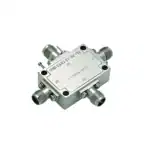 RF Switches
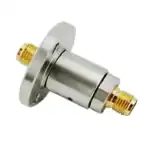 Rotary Joints
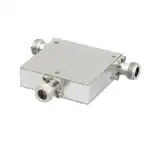 RF Circulators
 Coaxial RF Power Dividers
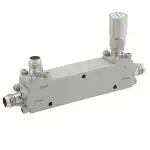 RF Couplers
 RF Filters
Introduction
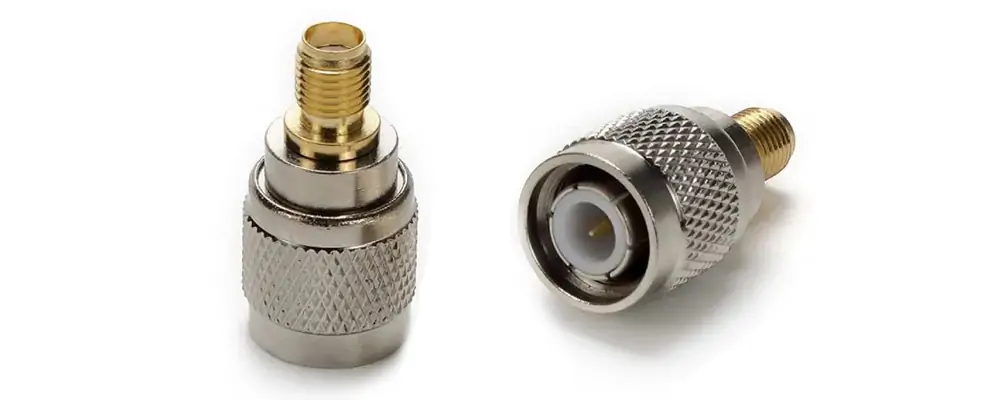
When you work in a telecom test lab, the SMA to TNC adapter is the kind of part that can quietly make the difference between a clean setup and a frustrating one. You are often bridging a 50 ohm SMA instrument path to a TNC cable, Bulkhead, or field lead, and the right adapter helps you preserve signal integrity while keeping the rack practical to service. SMA connectors are widely used in RF and microwave test systems, with 50 ohm threaded designs rated from DC to 18 GHz in standard form, while TNC connectors are also 50 ohm threaded parts commonly rated from DC to 11 GHz, with extended designs reaching higher frequencies.
Why low VSWR matters in your lab
Low VSWR is not a minor specification. It is a direct sign that your connection is matching the line well, so less power is reflected back into the source. Keysight explains that VSWR and return loss are closely tied to impedance match quality, and poor matching leads to more reflected power and less efficient signal transfer. Rohde & Schwarz gives the same message in practical terms: a better match means fewer reflections and more reliable RF behavior.
That is why the SMA coax adapter and the SMA to TNC adapter matter so much in a test lab. You are not just changing the connector gender. You are trying to keep a clean 50 ohm path while moving between SMA and TNC hardware. A well-chosen adapter helps you avoid retesting, unstable readings, and unnecessary bench time.
How to choose the right adapter
Start with the direction of the connection
If your instrument side is SMA and your harness side is TNC, a TNC male to SMA female adapter or TNC to SMA adapter may be the most direct choice. If the signal direction is reversed, you may need an SMA male to TNC female adapter, SMA female to TNC female adapter, SMA female to TNC male adapter, or SMA male to TNC male adapter. The first thing you should check is not the catalog name, but the actual gender and side of the rack you need to connect.
Match the mounting style to the enclosure
If you are feeding through a panel, a TNC to SMA bulkhead adapter or SMA female to TNC female bulkhead adapter can make the installation cleaner and more stable. If your enclosure is tight, an SMA female to TNC female bulkhead mount adapter gives you a neater service point and helps reduce cable strain. That is often the difference between a setup that stays organized and one that becomes hard to maintain. Pasternack’s bulkhead adapter datasheets show that these styles are commonly used for rack-mounted and panel-mounted applications.
Use right-angle parts when space is limited
In dense telecom benches, cable bend radius matters. A SMA female to TNC male right-angle adapter, TNC female to SMA male right-angle adapter, TNC male to SMA female right-angle adapter, or TNC to SMA right-angle adapter can help you route cables without forcing sharp bends. That is useful when you want to protect both signal integrity and mechanical life. Amphenol RF lists right-angle TNC connectors and threaded coupling as part of the rugged connector family used in test and industrial applications.
Quick comparison table
| What you are checking | Why it matters | Useful source point |
|---|---|---|
| Impedance | Keeps the signal path matched | SMA and TNC are both 50 ohm families. |
| Frequency range | Tells you whether the part fits your band | SMA is typically DC to 18 GHz; TNC is typically DC to 11 GHz. |
| VSWR | Shows how much signal is reflected | Pasternack lists adapter designs with VSWR as low as 1.25:1 up to 18 GHz. |
| Mounting style | Affects serviceability and panel routing | Bulkhead and panel-mount versions are standard options. |
| Mechanical durability | Matters in repeat-mate lab use | Threaded coupling and 500 mating cycles are common connector targets. |
Two practical cases you will recognize
If you are retrofitting an existing telecom test rack, you may already have SMA analyzers and TNC reference leads. In that case, an SMA to TNC adapter lets you reuse what you own instead of rebuilding the harness from scratch. That saves time, reduces inventory complexity, and keeps the setup stable during calibration and verification. Pasternack’s adapter datasheets explicitly describe adapters as tools for connecting series that would otherwise not mate, and even as connector savers in high-cycle environments.
If you are working in a vibration-prone enclosure or a crowded panel, the body style matters as much as the connector family. A TNC to SMA bulkhead adapter or SMA female to TNC female bulkhead mount adapter gives you a cleaner feedthrough, while a right-angle part can relieve cable stress where a straight adapter would force an awkward bend. That is often what keeps a setup from drifting out of spec over time.
Conclusion
For telecom test labs, the SMA to TNC adapter is more than a convenience part. It helps you preserve a stable 50 ohm path, reduce reflections, simplify routing, and avoid unnecessary rework. If you are comparing TNC to SMA adapters or any of the related SMA and TNC variants, choose by gender, mounting style, angle, frequency range, and environmental durability first. That is how you keep the rack easier to build, easier to service, and easier to trust.
References
FAQ
1. How to connect coax to rp sma wothout adapter?
You can solder a pigtail to the coax shield and center.