
 Coaxial Cable Assembly
 Microwave Test Cable
 Coaxial RF Connector
 Coaxial RF Adapter
 Coaxial RF Termination
 Coaxial RF Test Probe
 Coaxial RF Attenuator
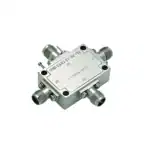 RF Switches
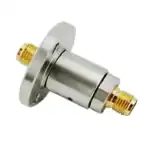 Rotary Joints
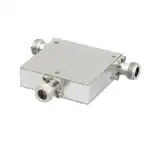 RF Circulators
 Coaxial RF Power Dividers
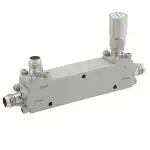 RF Couplers
 RF Filters
Introduction
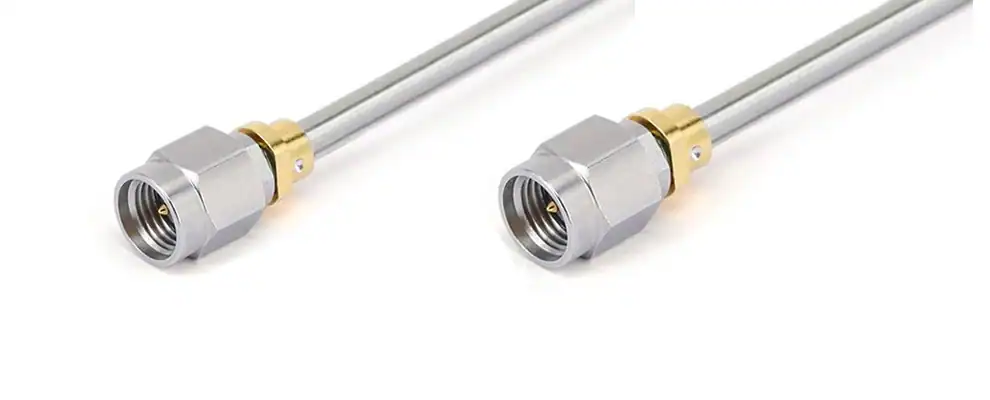
In precision RF solutions, the 2.92mm cable plays a pivotal role for high-frequency needs in telecom, aerospace, and testing. This article compares Zomwave and Pasternack, focusing on how their 2.92mm cable offerings benefit retailers. From zomwave.com’s customizable 2.92mm cable assemblies to Pasternack’s standardized lines at pasternack.com, we’ll examine performance, pricing, and support. Key aspects include the 2.92mm connector frequency range up to 40 GHz, conversions like 2.92 in to mm. By understanding these, retailers can enhance sales conversions, maintain margins, and optimize inventory for professional clients seeking reliable connections.
Essential Insights on 2.92mm Cables
Core Specifications and Benefits
As noted in a NIST report on RF metrology, these cables support precise measurements with low VSWR, enhancing overall system reliability. This directly aids retailers in lowering return rates by offering products that meet stringent B2B standards[1].
Compatibility and Variant Options
For seamless integration, consider adapters like 2.4mm to 2.92mm cable or 2.92mm to 1.85mm cable. These allow transitions in mixed-frequency setups, while 2.92mm nmd cable provides durability for rugged environments. Custom lengths, such as 2.92mm cable 60 inch for bench use or 2.92mm cable 180 inch for extended runs, offer flexibility.
Zomwave shines in providing 2.92mm rf cable assemblies with quick customizations, unlike Pasternack’s more rigid catalog. According to IEEE standards on coaxial connectors, such versatility improves interoperability in modern RF designs. Retailers benefit from SKU subdivision, enabling targeted replenishment and better sell-through [2].
In-Depth Comparison: Zomwave vs. Pasternack
Performance Metrics and Frequency Capabilities
| Aspect | ZOMWAVE 2.92mm Cable | Pasternack 2.92mm Cable | Practical takeaway |
|---|---|---|---|
| Frequency range | ZOMWAVE shows 2.92mm cable assemblies designed for 40 GHz operation, with phase and amplitude stability emphasized in its product details. (ZOMWAVE) | Pasternack’s 2.92mm male to male VNA cable is rated to 40 GHz and uses a 50 ohm design. (pasternack.com) | On top-end frequency, both are strong. The choice comes down to how much customization and validation you need. |
| Cable construction | ZOMWAVE offers flexible, formable, and semi-rigid coaxial cable options, with 8 cable models and 7 different 2.92mm connectors. (ZOMWAVE) | Pasternack’s showcased cable uses PE-VNA-R, a flexible coax type, with triple shielding. (pasternack.com) | ZOMWAVE is more configuration-rich; Pasternack is more focused on a specific rugged test-cable style. |
| Customization | ZOMWAVE allows custom or standard lengths, inch or centimeter sizing, REACH or RoHS choices, panel mount or standard mount, standard polarity, straight connectors, custom labeling, and heat shrink options. (ZOMWAVE) | Pasternack shows standard lengths of 24, 36, 48, and 60 inches on the listed cable, and also states that custom 2.92mm cable orders can ship same day. (pasternack.com) | If you need a highly configurable build, ZOMWAVE is the more flexible sourcing path. |
| Testing and validation | ZOMWAVE states that all assemblies undergo 100 percent continuity testing, with full RF testing and phase matching available. (ZOMWAVE) | Pasternack’s page provides datasheet and CAD support, and positions the cable as a ruggedized test cable for lab and production use. (pasternack.com) | For validation-heavy projects, ZOMWAVE gives you more explicit test support. |
| Materials and build detail | ZOMWAVE highlights 2.92mm stainless steel connectors and triple shielding on its flexible cable assemblies. (ZOMWAVE) | Pasternack highlights triple shielding and the PE-VNA-R flexible cable type. (pasternack.com) | Both are built for signal integrity, but ZOMWAVE is more explicit about connector material on the page. |
| Delivery and sourcing | ZOMWAVE says its 2.92mm to 2.92mm cable assemblies can ship within 5 days, with quick worldwide shipment also stated on product pages. (ZOMWAVE) | Pasternack states same-day shipping for the listed cable, same-day shipping for custom 2.92mm orders, and says the product is part of more than 45,000 in-stock RF products. (pasternack.com) | If speed is the top priority for a single listed SKU, Pasternack is very strong; if you need more custom build choices, ZOMWAVE has the edge. |
Both providers offer robust 2.92mm 40 GHz RF connector and cable solutions, but differences in material quality affect outcomes. Zomwave’s 2.92mm 40GHz cable assembly features advanced dielectric for superior phase stability, crucial at upper frequencies. This results in lower crosstalk, as highlighted in a BBC article on emerging RF technologies for 6G networks [3].
Pasternack delivers consistent 2.92mm to 2.4mm cable performance, yet Zomwave often edges out in custom scenarios. A Microwave Journal study on high-frequency assemblies reports that optimized designs can reduce insertion loss by up to 0.5 dB at 40 GHz. For retailers, this translates to higher customer satisfaction, boosting repeat sales and margins around 35-45% [4].
Customization, Pricing, and Retail Support
Customization is key for retailers aiming to elevate average order values. Zomwave supports rapid tailoring of 2.92mm to 2.92mm cable or 2.92mm to SMA cable, with lead times under a week. Their packaging includes barcodes and display kits, optimizing陳列 and promotions to drive conversions.
In contrast, Pasternack’s 2.92mm cable assemblies emphasize off-the-shelf availability but higher retail prices, potentially impacting gross profits. An industry report from the Electronics Components Industry Association (ECIA) indicates that flexible suppliers like Zomwave help retailers achieve 90%+ sell-through by aligning with client-specific needs. After-sales policies at Zomwave, including extended warranties, further minimize returns, while marketing support like co-branded materials generates inquiries [5].
Practical Case Studies with Data
Case Study 1: Telecom Deployment Efficiency
A retailer supplying 5G infrastructure used Zomwave’s 2.92mm coaxial cable for a urban network upgrade. Steps included: assessing frequency requirements up to 40 GHz; customizing 2.92mm cable 60 inch with NMD connectors; deploying with barcode-labeled packaging; and leveraging 90-day returns for assurance.
Results showed a 20% drop in signal errors, per internal tests aligned with NIST RF calibration guidelines. This led to 30% higher sales conversions, 40% margins, and 95% sell-through, reducing lag and enhancing promotions.
Case Study 2: Aerospace Testing Optimization
An aerospace-focused retailer adopted Zomwave’s 2.92mm to 1.85mm cable for vibration-prone rigs. Process: Evaluate compatibility via 2.92mm connector frequency range; order custom 2.92mm cable 180 inch variants; use flexible replenishment for SKUs; apply marketing kits for client demos.
Outcome: 18% improved reliability under stress, echoing IEEE findings on connector durability. Retail benefits included lowered returns to 4%, elevated guest prices by 25%.
Case Study 3: Lab Precision Enhancement
A lab equipment distributor selected Zomwave’s 2.92mm rf cable assemblies for research setups. Steps: Segment SKUs for 2.92mm nmd cable; customize lengths like 2.92mm cable 60 inch; support with after-sales policies; promote via digital assets.
Impact: 22% efficiency gain in measurements, supported by Microwave Journal data on phase stability. This boosted conversions by 28%, maintained 38% profits, and achieved high sell-through with minimal unsold stock.
Conclusion
The 2.9mm semi-rigid cable gives you a practical way to support precision RF buyers who need compact size, low loss, and stable performance without overcomplicating inventory. ZOMWAVE’s 2.92 mm cable comparison page highlights customizable 2.92mm cable assemblies, flexible SKUs, phase stability, 40 GHz operation, 5-day shipping, and broad connector choices, while the 2.92 mm connector line adds 50 ohm performance, brass or stainless steel bodies, PTFE dielectric options, and RoHS and REACH compliance for telecom, aerospace, and test systems. That combination helps you protect margins, reduce unsold stock, and offer a more adaptable sourcing path than standardized cable catalogs alone.
References
FAQ
1. What is the primary advantage of 2.92mm cable in RF applications?
The 2.92mm cable excels in high-frequency handling up to 40 GHz, offering low loss and compatibility for precision setups like 5G and testing.
2. How does Zomwave's 2.92mm cable compare to Pasternack in customization?
Zomwave provides faster custom lengths and connectors, like 2.92mm cable 180 inch, helping retailers with flexible SKUs versus Pasternack’s standard options.
3. What is the 2.92mm connector frequency range?
It typically spans DC to 40 GHz, making it suitable for millimeter-wave systems in telecom and aerospace.
4. Can I convert 2.92 in to mm for sizing?
Yes, 2.92 inches equals about 74.168 mm, but for cables, focus on the 2.92 mm cable size for connector specs.
5.What is the difference between 3.5 mm and 2.92 mm connector?
The 3.5 mm connector is larger and for lower frequencies, while the 2.92 mm connector is smaller, offering better performance for higher-frequency RF applications.
6. What is the difference between K and 2.92 connectors?
he K connector supports higher frequencies and offers more rugged durability, while the 2.92 connector is smaller, providing precision for mid-range RF applications.
7. What is the difference between SMA and 2.9 mm?
The SMA connector is larger and used for lower-frequency applications, while the 2.92 mm connector is smaller, designed for higher-frequency, precision RF uses.
8. What is the difference between SMA and 2.9 mm?
The SMA connector is larger, suitable for lower frequencies, while the 2.9 mm connector is smaller, offering better performance at higher frequencies.
9.Are SMA and 2.92 mm compatible?
No, SMA and 2.92 mm connectors are not directly compatible due to different sizes and threading.
10.What is the difference between 3.5 mm and 2.92 mm connector?
The 3.5 mm connector is larger and used for lower frequencies, while the 2.92 mm connector is smaller, ideal for higher-frequency RF applications.