
 Coaxial Cable Assembly
 Microwave Test Cable
 Coaxial RF Connector
 Coaxial RF Adapter
 Coaxial RF Termination
 Coaxial RF Test Probe
 Coaxial RF Attenuator
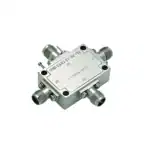 RF Switches
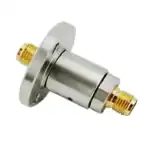 Rotary Joints
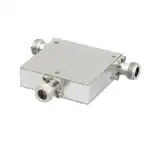 RF Circulators
 Coaxial RF Power Dividers
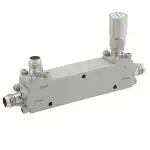 RF Couplers
 RF Filters
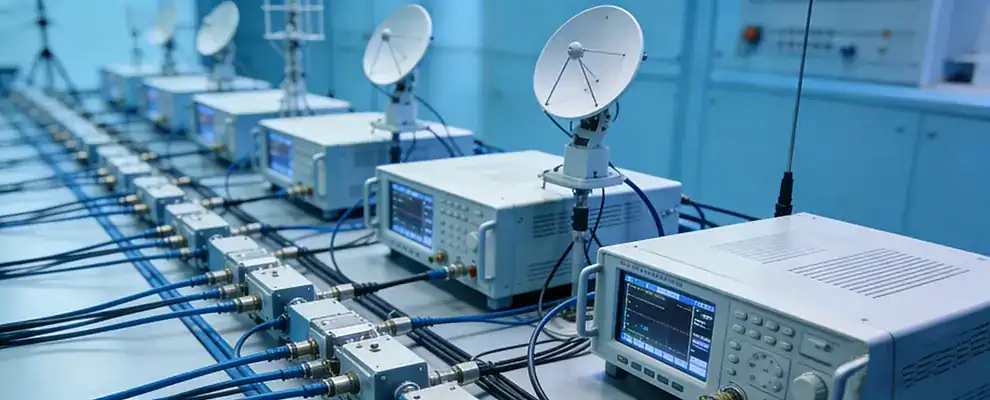
Choosing the right PIN Diode switch for your system? With numerous parameters such as frequency, topology, and channel count, how do you quickly lock onto the most suitable option? ZOMWAVE offers three high-performance PIN Diode switches covering a wide frequency range from 0.4 GHz to 40 GHz, meeting diverse needs in test & measurement, communications, radar, and more. This guide will help you understand the key selection factors and find the best match using our actual products.
I.Key Parameters for PIN Diode Switches
Before selecting, familiarize yourself with a few key terms:
- Frequency Range: The band within which the switch operates effectively. Operating outside this range may cause sharp performance degradation.
- Absorptive vs. Reflective:
- Absorptive: Unselected ports are internally terminated with a 50Ω load, preventing signal reflections. Ideal for systems sensitive to return loss (e.g., precision testing).
- Reflective: Unselected ports present high impedance, reflecting signals back to the source. Simpler structure, lower cost, suitable for applications insensitive to reflections (e.g., transmit/receive switching).
- Channel Count (SPnT): Single-Pole, n-Throw. It indicates how many output ports the common port can switch to.SP16T and SP8T are suitable for multi-channel signal routing; SP3T is ideal for simpler switching needs.
- Power Handling: Typically expressed in dBm (+30 dBm = 1W, +23 dBm ≈ 200mW). Ensure the switch can withstand the maximum signal level in your system.
Connector Type: SMA (commonly used up to 18 GHz), 2.92mm (supports up to 40 GHz). Must match your system interface.
II.ZOMWAVE Three PIN Diode Switch Comparison
Model | |||
Type | Absorptive SP16T | Absorptive SP8T | Reflective SP3T |
Frequency | 0.4 – 12 GHz | 1 – 8 GHz | 26 – 40 GHz |
Power | +30 dBm (1W) | +30 dBm (1W) | +23 dBm (≈200mW) |
Connector | SMA-Female | SMA-Female | 2.92mm-Female |
Price | $2,600.00 | $1,070.00 | $1,430.00 |
III. How to Choose Based on Your Application
Scenario 1: Broadband Test & Measurement Systems
Requirements: Wide frequency coverage, low VSWR, multi-channel switching
Recommendation: PSWA-GT-MA0040120S-01 (Absorptive SP16T)
- 4-12 GHz covers most communication and industrial frequency bands
- Absorptive design ensures good matching on all ports, ideal for internal instrument signal routing
- SP16T meets multi-device polling test requirements
Scenario 2: Production Test Lines or Automated Test Equipment (ATE)
Requirements: Moderate bandwidth, more channels, cost optimization
Recommendation: PSWA-8T-MA01000805-01 (Absorptive SP8T)
- 1-8 GHz covers mainstream wireless communication bands
- SP8T provides more test ports, improving test efficiency
- Absorptive design ensures test repeatability, offering better value
Scenario 3: Millimeter-Wave Communication or Radar Front-Ends
Requirements: High frequency, low insertion loss, fast switching
Recommendation: PSWR-3T-MK2600400S-01 (Reflective SP3T)
- 26-40 GHz covers Ka-band and some millimeter-wave applications
- Reflective design achieves lower insertion loss at high frequencies
- 92mm connector supports 40 GHz signal transmission
Scenario 4: Transmit/Receive (T/R) Modules
Requirements: High power, fast switching
Consider: PSWA series (1W power) can handle low-power T/R switching. For higher power requirements, please contact us for customization.
IV.Three-Step Selection Decision Process
- Determine Frequency: First, identify the highest operating frequency in your system and select a switch that covers that frequency (with some margin recommended).
- Choose Topology: Select absorptive if sensitive to return loss; choose reflective if insertion loss is critical and the system can tolerate reflections.
- Confirm Channel Count and Power: Select SPnT based on the number of devices to be switched; calculate the maximum signal power and ensure the switch’s power capacity is >1.5 times the system’s maximum power (derating recommended).
- Why Choose ZOMWAVE?
- Wide Frequency Coverage: From VHF to millimeter-wave, meeting diverse requirements.
- High Performance: Low insertion loss, high isolation, stable and consistent.
- Flexible Configuration: Absorptive/Reflective options, multiple channel counts, connectors compatible with mainstream interfaces.
- Professional Support: Providing selection consultation and customization services.
If you have any questions during the selection process or need to obtain product CAD drawings or technical specifications, please feel free to contact the technical engineering team at ZOMWAVE. With over 20 years of PIN Diode Switch research and development experience and having provided customized services for benchmark clients including Huawei and Apple suppliers, we look forward to providing the most professional solutions for your project.