
 Coaxial Cable Assembly
 Microwave Test Cable
 Coaxial RF Connector
 Coaxial RF Adapter
 Coaxial RF Termination
 Coaxial RF Test Probe
 Coaxial RF Attenuator
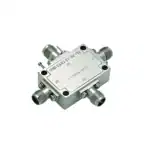 RF Switches
 Rotary Joints
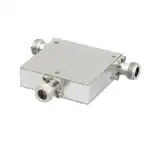 RF Circulators
 Coaxial RF Power Dividers
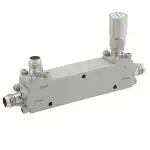 RF Couplers
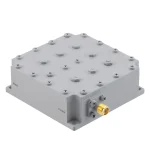 RF Filters
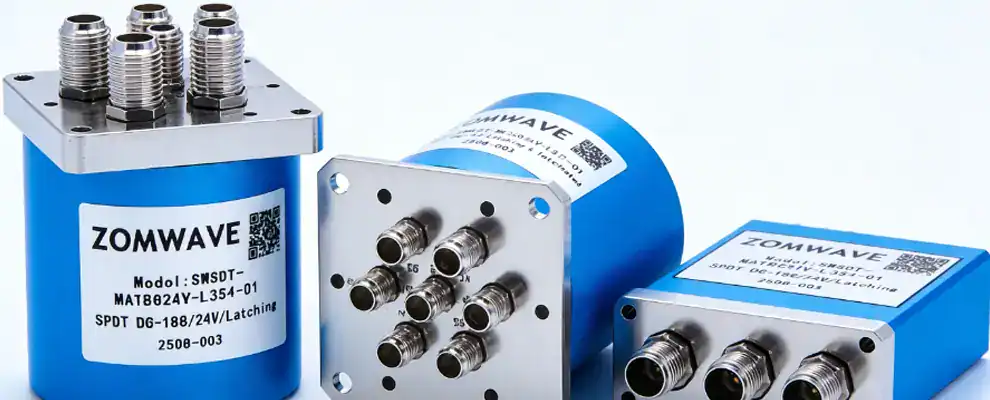
In today’s interconnected world, electronic systems depend on reliable signal management to function effectively. At the heart of many high-performance setups lies a component that often goes unnoticed but plays an essential part in ensuring seamless connectivity: the coaxial switch. These sophisticated devices serve as the traffic controllers of radio frequency (RF) and microwave signals, directing them precisely where they need to go. From telecommunications infrastructure to aerospace applications, coaxial switches have established themselves as fundamental building blocks in modern electronic architectures. Let’s explore the key benefits that make these components so valuable across diverse industries.
Precise Signal Path Management:
Coaxial switches excel at directing RF signals along desired paths with remarkable accuracy. In complex electronic systems where multiple signals must be routed to different destinations, these switches provide the intelligence needed to manage signal flow efficiently. Engineers can use them to connect various instruments, antennas, or transceivers to shared resources, eliminating the need for duplicate equipment. This capability proves especially valuable in laboratory environments where test setups frequently change, as well as in communication systems that must switch between different antennas or transmission paths. By enabling dynamic signal routing, coaxial switches give operators fine-grained control over their systems while reducing overall complexity and cost.
Adaptability for Evolving Requirements:
Modern electronic systems rarely remain static. Requirements change, new equipment gets added, and configurations must adapt to meet emerging needs. Coaxial switches bring exceptional flexibility to these scenarios through their diverse configuration options. Available in multiple form factors—from simple single-pole single-throw (SPST) switches to complex multi-pole multi-throw matrices—these components allow system designers to build scalability directly into their architectures. When system requirements shift, engineers can reprogram switch states rather than rewiring entire setups. This adaptability proves particularly valuable in research facilities, production test lines, and communication hubs where reconfiguration happens frequently. The ability to redirect signals, bypass faulty sections, or reroute around congestion points keeps systems operational and minimizes downtime.
Preserving Signal Purity:
Signal degradation represents a constant challenge in RF and microwave systems. Every component inserted into a signal path potentially degrades quality through insertion loss or allows unwanted interference through inadequate isolation. Coaxial switches address these concerns through careful engineering that prioritizes signal integrity. Quality switches introduce minimal insertion loss, meaning the signal emerging from the switch retains nearly all the power it had entering. Equally important, they provide excellent isolation between ports, preventing signals from leaking across unintended paths and causing interference. This combination of low loss and high isolation ensures that sensitive measurements remain accurate, communication links stay clear, and system performance meets expectations even in demanding applications.
Coverage Across the Spectrum:
The electromagnetic spectrum spans an enormous range of frequencies, each suited to different applications. Audio systems operate at low frequencies, while modern communications push into millimeter-wave territory. Coaxial switches distinguish themselves by operating effectively across this entire spectrum. A single switch design might handle frequencies from DC through microwave bands, making it suitable for applications ranging from baseband signal routing to satellite communications. This broad frequency coverage simplifies inventory management for system integrators and ensures that switches designed for today’s applications can accommodate tomorrow’s higher-frequency requirements. Whether managing 1G signals at 40 GHz or supporting legacy systems at lower frequencies, coaxial switches deliver consistent performance.
Withstanding Challenging Environments:
Electronic equipment often operates under conditions that would stress ordinary components. Temperature extremes, mechanical vibration, humidity, and physical shock can all compromise performance and shorten equipment life. Coaxial switches are engineered with these challenges in mind. Manufacturers construct them using robust materials and precision manufacturing techniques that ensure reliable operation over extended periods. Sealed designs protect internal mechanisms from contamination, while careful material selection ensures stable performance across wide temperature ranges. This rugged construction makes coaxial switches the preferred choice for defense systems, aerospace platforms, industrial facilities, and outdoor installations where reliability cannot be compromised. Equipment designers can specify these switches with confidence, knowing they will perform when needed most.
Conclusion:
Coaxial switches have earned their place as indispensable components in modern electronic systems through a combination of technical excellence and practical versatility. Their ability to route signals precisely, adapt to changing requirements, preserve signal quality, cover broad frequency ranges, and withstand demanding conditions makes them valuable across virtually every industry that works with RF and microwave signals. As technology advances toward higher frequencies and more complex systems, the role of these reliable components will only grow in importance. Engineers and system designers who understand the benefits of coaxial switches can leverage them to build more capable, flexible, and reliable systems that meet the challenges of today’s connected world while preparing for tomorrow’s innovations.