
 Coaxial Cable Assembly
 Microwave Test Cable
 Coaxial RF Connector
 Coaxial RF Adapter
 Coaxial RF Termination
 Coaxial RF Test Probe
 Coaxial RF Attenuator
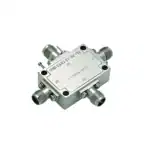 RF Switches
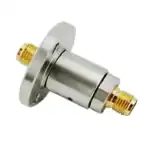 Rotary Joints
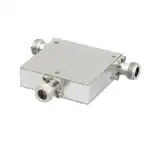 RF Circulators
 Coaxial RF Power Dividers
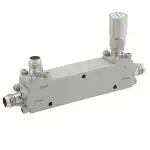 RF Couplers
 RF Filters
Introduction
If you build an RF coaxial cable assembly, the hard part is not making one good sample. The hard part is keeping the whole line stable when the order grows, the schedule tightens, and the customer starts asking for proof. For RF coaxial cable assembly manufacturers, the real job is continuity: hold cost, hold quality, hold delivery, and keep the next lot as clean as the first one. That matters to telecom, aerospace, defense, and industrial automation buyers because they are not only buying a cable; they are buying repeatability, traceability, and a supply chain they can trust.
You already know the factory pain points: unit price, landed cost, MOQ, expansion capacity, on-time delivery, sample quality, test reports, and backup supply. The five controls below are the ones that protect those priorities before they turn into rework, delay, or field failure. If your portfolio includes RF cable, RF coaxial cable, low loss rf coaxial cable, 50 ohm rf coaxial cable, flexible RF coaxial cable, or bulk RF coaxial cables, these controls are the difference between a line that runs and a line that drifts.
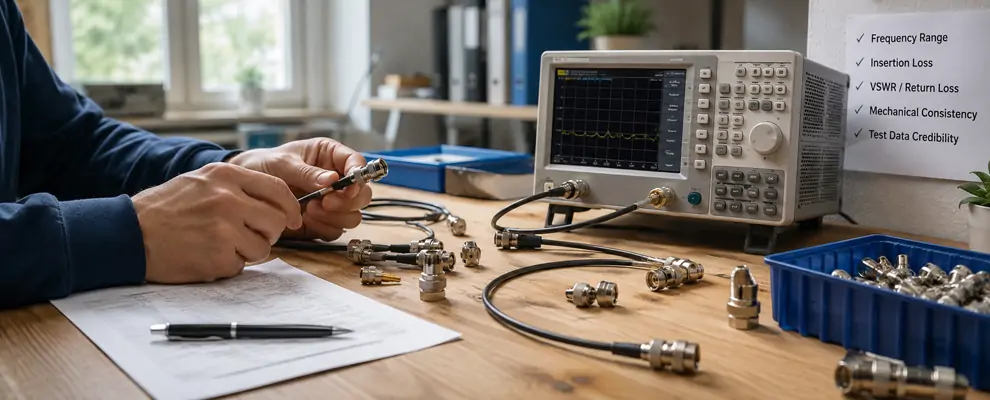
1) Frequency Range: confirm performance across the full band
Why the full band matters
You should never approve an RF coaxial cable assembly only because the center frequency looks good. You need confidence across the full band because different RF coaxial cable types behave differently as frequency rises. Amphenol RF separates coaxial cable into flexible, low-loss, semi-rigid, conformable, micro-coaxial, and corrugated families, and that is a useful reminder that a high-frequency RF coaxial cable is not the same decision as a flexible RF coaxial cable. [1]
Why impedance must be frozen early
You also need to separate impedance families early. A 50-ohm RF coaxial cable and a 75-ohm RF coaxial cable may look similar on the bench, but they are not interchangeable in the system. DigiKey notes that connecting 75 ohms to 50 ohms creates a 1.5:1 VSWR, which may be acceptable in some low- or medium-power situations, but still represents a mismatch. That is why 50 ohm low-loss RF coaxial cable and 75 ohm RF coaxial cable must be controlled as different build routes. [2]
What you should enforce on the line
For you, the practical rule is simple: if the BOM calls for bulk RF coaxial cables, freeze the band, the impedance, and the cable family before anything enters the cutting stage. That is the safest way to protect yield and avoid line confusion later. If the project is mission-critical, do not let a “close enough” substitution move forward just because the connector fits.
2) Insertion Loss: check stability across the full range
Stability is the real test
Insertion loss is not just a number to pass or fail at one point. You need to know whether it stays stable across the full range. Times Microwave states that the primary measurements for microwave cable assemblies are VSWR and insertion loss, and it also explains that those numbers alone do not tell the whole story. That is important for any low loss rf coaxial cable build, because the customer cares about how the cable behaves over frequency, not just at a single spot. [3]
Why drift hurts production
This matters even more when you are building a 50 ohm low loss rf coaxial cable or a high-power RF coaxial cable for a sensitive RF chain. If insertion loss drifts from sample to sample, you may still pass the first article and still lose yield later. That is a factory problem, not a customer problem, and you should stop it before shipment. Times Microwave also notes that high VSWR can create periodic insertion-loss non-uniformities, which is exactly the kind of issue you do not want to discover after release.
Flexible builds need extra control
If your product is a flexible RF coaxial cable, the control matters even more. Movement, bend radius, and handling can all affect electrical stability. The point is not only to make a cable that tests well once. The point is to make one that still tests well after production, packaging, and installation. In practice, that means you should verify not only the number, but the stability of the curve.
3) VSWR / Return Loss: Poor matching reduces signal integrity
Matching decides signal quality
When VSWR rises, signal integrity falls. Keysight explains that VSWR measures how efficiently RF energy is transmitted through a cable to a load, and DigiKey shows how a 50-ohm and 75-ohm mix creates a 1.5:1 mismatch. For production, that means your RF jack and your coaxial cable plug RF must match the design, not just the connector family name.
Return loss should be treated as a production gate
You should treat return loss as more than a test number. It tells you how much power is being reflected instead of delivered. If your line uses the wrong impedance, or if mating is weak, the customer sees it as lower margin, unstable readings, or a chain that behaves unpredictably in the field. That is why RF coaxial cable manufacturers need to enforce matching at the line level, not only at the final test station.
One wrong cable changes the whole system
One simple case makes the point clear. If you place an RF 75-ohm coaxial cable into a system designed around 50 ohms, you are not just changing the label. You are changing the electrical behavior. That is why the best production control is a clear impedance gate before assembly starts.
4) Mechanical Consistency: quality, plating, and mating repeatability
Repeatability is a quality feature
Mechanical consistency is where many lines quietly lose money. NASA’s workmanship standard says RF connectors and coaxial contact assemblies must follow controlled procedures, with special tools defined in the process, torque values documented, and no connector modification allowed unless specified. That is the level of control you should aim for on every release. [4]
Plating and mating cannot drift
This is where a lot of RF cable builds drift. If the plating finish changes, the mating force changes, or strain relief is inconsistent, the assembly may still pass visually while the electrical result weakens. You should treat an RF jack and a coaxial cable plug as a controlled mechanical pair, not generic hardware. If you are building flexible RF coaxial cable assemblies, this control is even more important because repeated flexing will expose weaknesses in contact quality, plating repeatability, and routing discipline.
Why production teams should care about bend life
The field does not care whether the cable looked fine in the tray. It cares whether it survives handling, mating, and repeat use. That is why mechanical repeatability matters just as much as electrical performance. A stable process protects the customer’s schedule and protects your own scrap rate.
5) Test Data Credibility: Request real, traceable RF test results
Test claims are not enough
You should never accept a summary line that only says “tested.” You need real, traceable RF data. Keysight’s aerospace and defense cable test materials show that complete RF coax cable assemblies can be measured for VSWR, insertion loss, return loss, and phase, with automated reporting and results stored in a relational database for QA and archive use. That is the level of proof serious buyers expect when they ask for samples, test reports, or certification support. [5]
Traceability protects both quality and delivery
For you, this is especially important if you buy bulk RF coaxial cables or support multiple programs at once. The right supplier should be able to show frequency sweep data, insertion loss, return loss, and clear lot traceability. If they cannot, your risk is not just technical; it is also schedule risk, because approval delays and repeat testing eat time.
Good manufacturers show the measurement trail
That is why the best RF coaxial cable manufacturers win trust when they can show more than a pass/fail stamp. They need to show the actual measurement trail behind the part. If a supplier can explain the test setup, the pass criteria, and the file trail, you can move faster with less risk.
Data comparison you can use on the factory floor
| Control point | What you should enforce | Why it matters | Useful proof |
|---|---|---|---|
| Frequency Range | Full-band validation, not center-frequency only | Keeps high frequency rf coaxial cable and 50 ohm low loss rf coaxial cable builds aligned to the real spec | Amphenol RF separates flexible, low-loss, semi-rigid, conformable, micro-coaxial, and corrugated cable types. |
| Insertion Loss | Stability across the full range | Prevents drift between samples and mass production | Times Microwave identifies VSWR and insertion loss as the primary cable-assembly metrics. |
| VSWR / Return Loss | Matching discipline at line level | Poor matching reduces signal integrity | 50-ohm to 75-ohm connections create 1.5:1 VSWR. |
| Mechanical Consistency | Torque, plating, mating repeatability | Protects rf jack and coaxial cable plug rf performance | NASA workmanship controls for connector assembly. |
| Test Data Credibility | Traceable RF reports and retained records | Supports audits, approvals, and repeat orders | Keysight automated RF cable test and database reporting. |
Conclusion
If you want your line to stay profitable, you need five controls: frequency range, insertion loss, VSWR/return loss, mechanical consistency, and test data credibility. That is how you protect yield, keep cost under control, and stay on schedule when the customer asks for more volume, faster delivery, or stronger proof. For RF coaxial cable assembly manufacturers, this is the difference between shipping assemblies and building a dependable supply chain. If your portfolio includes low-loss RF coaxial cable, flexible RF coaxial cable, high power rf coaxial cable, and bulk RF coaxial cables, these five controls are the fastest way to keep the line predictable.