
 Coaxial Cable Assembly
 Microwave Test Cable
 Coaxial RF Connector
 Coaxial RF Adapter
 Coaxial RF Termination
 Coaxial RF Test Probe
 Coaxial RF Attenuator
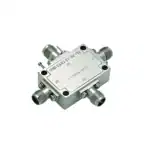 RF Switches
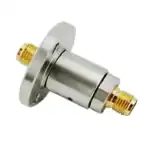 Rotary Joints
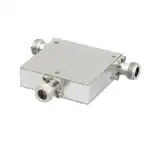 RF Circulators
 Coaxial RF Power Dividers
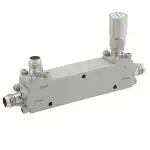 RF Couplers
 RF Filters
Introduction
When you work with millimeter-wave testing systems, 1.85mm to 1.85mm adapters are more than simple mechanical converters. They directly influence measurement stability, calibration accuracy, and signal integrity in high-frequency applications.
For RF engineers developing semiconductor tests, aerospace systems, and advanced communication equipment, selecting the correct adapter can determine whether your VNA results are reliable or affected by unwanted measurement errors.
You need an RF adapter that maintains impedance continuity, minimizes reflections, and provides repeatable connections during demanding measurement cycles.
What Are 1.85mm To 1.85mm Adapters?
A 1.85mm to 1.85mm adapter is a precision coaxial interface component designed to connect two 1.85mm RF ports while maintaining a 50-ohm transmission path.
These adapters are commonly used in:
- Vector network analyzer (VNA) measurements
- Microwave test fixtures
- Calibration systems
- Millimeter-wave applications up to 67 GHz
Unlike standard RF adapters designed mainly for mechanical compatibility, precision millimeter-wave adapters must control electrical performance.
Small dimensional changes inside the connector structure can introduce:
- Impedance discontinuity
- Additional reflection
- Increased VSWR
- Measurement uncertainty
When you design or maintain a high-frequency test system, you should consider the adapter as part of the RF measurement chain rather than an independent accessory.
According to NIST research, microwave measurement accuracy depends on controlling systematic errors introduced by cables, connectors, and measurement interfaces. [1]
Why 1.85mm To 1.85mm Adapters Matter in VNA Testing
Maintaining Measurement Accuracy at Millimeter-Wave Frequencies
At millimeter-wave frequencies, connector dimensions become electrically significant.
For example, at 67 GHz, the wavelength becomes extremely small, meaning even minor mechanical imperfections can affect:
- Return loss
- VSWR
- S-parameter measurements
- Calibration repeatability
A poor-quality RF connection may create:
- Different measurement results between operators
- Calibration drift
- Longer debugging cycles
- Reduced confidence in test data
VNA calibration research shows that measurement uncertainty is strongly influenced by the stability of the complete measurement path, including adapters and cables. [2]
How 1.85 Adapters Support Precision RF Applications
VNA Fixtures and Calibration Systems
In laboratory environments, you often need to connect different test fixtures, cables, and measurement ports.
1.85 adapters provide a flexible solution when both sides of the system use 1.85mm interfaces.
Common applications include:
- Semiconductor wafer probing
- High-frequency filter testing
- Antenna characterization
- Microwave component validation
A typical VNA measurement chain includes:
VNA Port → Test Cable → Adapter → Fixture → Device Under Test
Every connection point can influence measurement results.
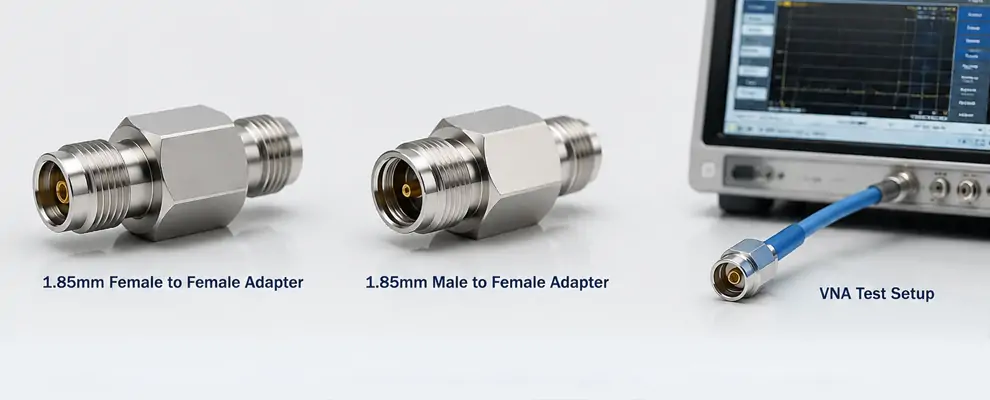
1.85mm Female To Female Adapter Applications
A 1.85mm female to female adapter is used when connecting two male 1.85mm interfaces.
Typical applications:
- VNA cable extension
- Calibration connection
- Microwave fixture integration
Advantages:
- Simple mechanical structure
- Stable connection
- Suitable for repeated laboratory testing
You should select this configuration when your existing equipment already uses male 1.85mm connectors.
1.85mm Male To Female Adapter Applications
A 1.85mm male to female adapter provides connector gender conversion between different RF components.
Typical applications:
- Connecting different test equipment
- Custom fixture integration
- Port configuration adjustment
Advantages:
- Improves system flexibility
- Reduces cable replacement requirements
- Helps solve mechanical compatibility issues
1.85mm Adapter Comparison For High-Frequency Testing
Comparing Precision RF Adapter Options
| 1.85mm Adapter | DC–67 GHz | Millimeter-wave VNA testing | Highest frequency capability |
| 2.4mm Adapter | DC–50 GHz | Microwave measurement | High performance and availability |
| 2.92mm Adapter | DC–40 GHz | General microwave testing | Cost-effective solution |
| SMA Adapter | DC–18 GHz | RF communication systems | Low cost and widely available |
Real Engineering Applications Of 1.85mm To 1.85mm Adapters
Semiconductor Test Fixture Validation
A semiconductor testing team may experience unstable S-parameter results after repeated fixture connections.
Common causes:
- Connector wear
- Poor alignment
- Adapter mismatch
- Calibration inconsistency
Using a precision 1.85mm female to female adapter helps maintain a stable electrical transition between VNA cables and fixtures.
Expected improvements:
- Better measurement repeatability
- Reduced troubleshooting time
- More consistent validation results
5G And Millimeter-Wave Communication Testing
Modern communication systems increasingly require higher-frequency testing.
Typical applications:
- 28 GHz 5G systems
- 39 GHz communication modules
- 60 GHz wireless devices
A 67GHz RF adapter provides additional bandwidth margin for engineers testing next-generation RF systems.
Aerospace And Defense RF Measurement
Aerospace systems require reliable RF validation under strict conditions.
Typical challenges:
- Limited test access
- Complex RF paths
- High repeatability requirements
A 1.85mm male to female adapter can simplify connections between different RF interfaces while maintaining measurement accuracy.
How To Select The Right 1.85mm To 1.85mm Adapter
Check Frequency Requirements
Before selecting an adapter, confirm:
- Maximum operating frequency
- Required bandwidth
- Future upgrade requirements
For systems operating near 60 GHz, selecting a 67 GHz-rated adapter provides additional design margin.
Verify Connector Configuration
Check:
- Male or female interface
- Mechanical dimensions
- Thread compatibility
- Torque requirements
Incorrect mechanical matching can damage expensive VNA ports.
Evaluate VSWR And Insertion Loss
For precision testing, review:
- VSWR specification
- Return loss
- Insertion loss
- Phase stability
A low VSWR microwave adapter helps maintain measurement accuracy.
Common Mistakes When Selecting 1.85 Adapters
Choosing Only Based On Price
The lowest-cost adapter may not provide the mechanical precision required for millimeter-wave applications.
Potential problems:
- More calibration time
- Increased troubleshooting
- Lower measurement confidence
Ignoring Calibration Compatibility
Your adapter should match:
- VNA calibration kits
- Test cables
- RF fixtures
Calibration compatibility directly affects measurement reliability. [4]
1.85mm Adapter Purchasing Checklist
Key Specifications To Confirm Before Purchase
| Frequency Range | Ensures system compatibility |
| VSWR | Controls reflection performance |
| Impedance | Maintains 50-ohm RF path |
| Connector Type | Prevents mechanical mismatch |
| Mating Cycles | Determines durability |
| Calibration Compatibility | Supports accurate VNA testing |
Conclusion
Selecting 1.85mm to 1.85mm adapters is not simply a mechanical connection decision.
In millimeter-wave measurement systems, the adapter becomes part of the electrical path and affects:
- Calibration stability
- VSWR performance
- Measurement repeatability
- RF system confidence
For VNA testing, semiconductor validation, aerospace applications, and microwave research, you should evaluate:
- Frequency capability
- VSWR performance
- Mechanical compatibility
- Calibration requirements
- Long-term reliability
A precision RF adapter is a small component, but at high frequencies, small components can determine the accuracy of the entire measurement system.
References
[3] Physical Models for Coaxial VNA Calibration Kits-IEEE ARFTG Microwave Measurement Symposium, 2015.
[5] IEEE Standard for Precision Coaxial Connectors-IEEE Std 287-2007.
FAQ
What frequency range should you choose for 1.85mm to 1.85mm adapters?
Choose an adapter rated above your maximum test frequency. Precision models typically support DC to 67 GHz for advanced VNA applications.
When should you use a 1.85mm female to female adapter?
Use a 1.85mm female to female adapter when connecting two male RF interfaces in VNA cables, calibration systems, or microwave fixtures.
What is the difference between a 1.85mm male to female adapter and female to female adapter?
A 1.85mm male to female adapter changes connector gender, while a female-to-female adapter joins two male interfaces.
How do 1.85 adapters improve VNA measurement accuracy?
1.85 adapters maintain controlled impedance and reduce discontinuities that affect VSWR, return loss, and S-parameter measurements.
What specifications should you check before purchasing a 1.85mm RF adapter?
Check frequency range, VSWR, insertion loss, connector gender, calibration compatibility, and mating durability.