
 Coaxial Cable Assembly
 Microwave Test Cable
 Coaxial RF Connector
 Coaxial RF Adapter
 Coaxial RF Termination
 Coaxial RF Test Probe
 Coaxial RF Attenuator
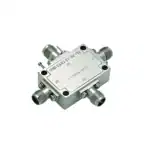 RF Switches
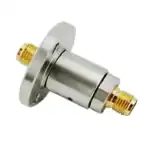 Rotary Joints
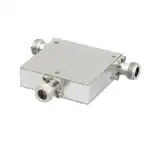 RF Circulators
 Coaxial RF Power Dividers
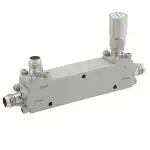 RF Couplers
 RF Filters
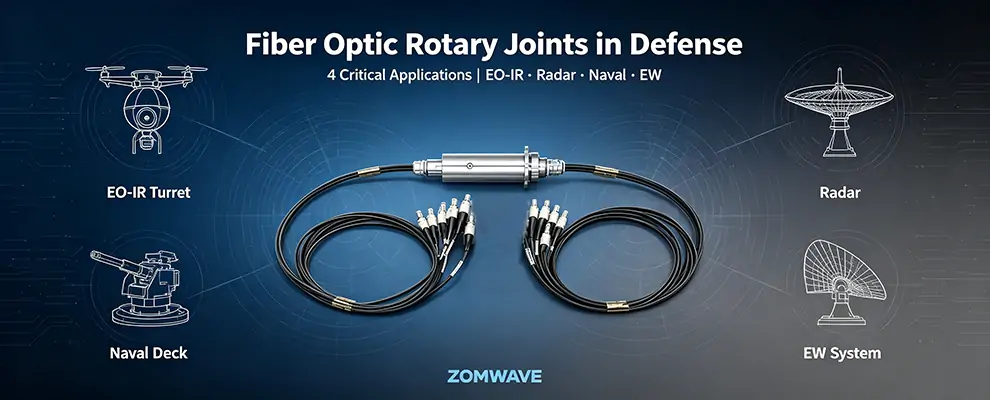
| Application | Rotation Speed | Channels | Fiber Type | Environmental | Key Challenge | Price Range |
| EO-IR Turret (UAV/Vehicle/Naval) | 60–200 rpm | 2–6 CH | SM 1310–1550 nm | IP67, MIL-STD-810 | Vibration, shock, salt fog | $3,000–$4,667 |
| Phased Array Radar (rotating antenna) | 5–30 rpm | 2–4 CH | SM 1310–1550 nm | IP65, wide temp | EMI, thermal drift | $3,000–$4,667 |
| Naval Gun Rotary Deck | 10–60 rpm | 2–6 CH | SM or MM | IP68, salt spray | Corrosion, seawater | $4,000–$4,667 |
| Electronic Warfare (EW) System | 0–360 rpm continuous | 4–7 CH | SM 1550 nm | MIL-STD-461 | EMI, wideband crosstalk | $4,000–$4,667 |
Bottom line: Defense FORJs are not industrial components with a military datasheet. Crosstalk, dynamic IL variation (ΔIL), IP rating, EMI shielding — every parameter is a mission-critical variable. Failure does not mean downtime; it means casualties.
1. Why Fiber Optics for Defense Rotating Links?
Traditional copper slip rings fail in three ways that are unacceptable in military systems:
Electromagnetic interference (EMI): Copper conductors act as antennas, picking up radar emissions and becoming sources of interference. Fiber optic rotary joints do not conduct electricity — EMI simply cannot get in.
Bandwidth ceiling: Modern EO-IR turrets transmit uncompressed 4K video, multi-spectral imaging data, and high-speed control signals simultaneously. A single multimode fiber handles 10+ Gbps per channel.
Lightning and surge vulnerability: Ground-based and shipboard systems face indirect lightning strikes and EMP. Fiber has no conductive path, providing natural galvanic isolation.
2. Application 1 — EO-IR Turrets (Most Common)
What it is: An electro-optical/infrared turret mounted on military vehicles, naval vessels, or UAVs. The turret rotates 360° while the platform moves; fiber carries video, thermal imaging, and control data through the rotary interface.
Rotation profile: Low to medium speed (60–200 rpm), with frequent direction changes and continuous vibration.
Typical signal mix (2–4 channels):
- Channel 1: HD video (1310 nm or 1550 nm SM)
- Channel 2: IR/thermal imaging data
- Channel 3–4: Control link, auxiliary data, redundancy
Most common field failure: Not catastrophic optical failure — it is gradual ΔIL increase due to bearing wear. A FORJ starting at 2.0 dB IL may drift to 4.5 dB after 200 million revolutions, causing video latency and pixel errors. Technicians blame the camera; the problem is usually the rotary joint. Refer to ZOMWAVE’s 4-channel FORJ for a model spec—datasheet mismatch scenario — and check the IL drift specification before procurement.
Real-world buyer signals: “military fiber optic rotary joint 4 channel”, “EO turret FORJ IP67”, “naval FORJ salt fog rated”, “defense MIL-STD-810 rotary joint”
3. Application 2 — Phased Array Radar (Most Technically Demanding)
What it is: Ground-based or shipboard radar systems requiring continuous 360° azimuth scanning. The array platform itself is rotating.
Rotation profile: Very slow (5–30 rpm), but continuous. Thermal drift is the primary threat: 24-hour temperature cycles cause mechanical expansion and optical misalignment.
The crosstalk problem: A radar FORJ rated at –50 dB crosstalk is adequate for telecom. But when the radar receiver must detect a –80 dBm weak target while an adjacent channel has +10 dBm transmit leakage, crosstalk isolation better than –90 dB is required. 6-channel single-mode FORJs used in radar must specify spatial isolation, not just fiber-to-fiber crosstalk.
Real-world buyer signals: “phased array radar FORJ”, “radar rotary joint isolation spec”, “coherent 1550nm single mode FORJ”
4. Application 3 — Naval Gun Rotary Deck (Harshest Environment)
What it is: The rotary joint between a naval gun mount and the deck electronics below. The turret rotates continuously during tracking; fiber transmits targeting data and control signals.
Rotation profile: Medium speed (10–60 rpm), continuous. Primary threats: salt spray, high humidity, biofouling, thermal cycling (tropical sun to cold ocean).
Key requirements:
- IP68 minimum (submersible during wave wash)
- Titanium or stainless steel housing (not aluminum)
- MIL-STD-810 vibration and shock testing (gunfire recoil loads)
- Salt spray tested per ASTM B117 (500+ hours)
- Operating temperature: –40°C to +65°C
Real-world buyer signals: “naval FORJ IP68”, “salt spray rated fiber optic rotary joint”, “marine titanium rotary joint”
5. Application 4 — Electronic Warfare (EW) Systems (Most Complex)
What it is: Electronic support measures (ESM) and electronic countermeasures (ECM) systems, covering wide-spectrum listening and jamming.
Rotation profile: Variable, from near-stationary tracking to continuous 360° rotation. The key variable is not speed — it is simultaneous instantaneous bandwidth across all channels.
Signal mix: 4–7 channels, often mixing 1310 nm and 1550 nm on the same FORJ assembly. 6-channel and 7-channel FORJs are common choices for EW suites. Coherent detection systems may require polarization-maintaining (PM) fiber.
The EMI problem reversed: The FORJ must not only resist external EMI — it must not radiate. Even tiny optical scattering can couple into adjacent RF paths in an EW suite. MIL-STD-461 specifies conducted and radiated emission limits.
Real-world buyer signals: “EW polarization-maintaining FORJ”, “wideband fiber rotary joint electronic warfare”, “MIL-STD-461 fiber optic rotary”
6. Defense FORJ Selection Criteria (Quantified)
| Parameter | EO-IR Turret | Radar | Naval Deck | EW |
| Max IL (dB) | ≤3.5 | ≤2.5 | ≤3.5 | ≤2.0 |
| Dynamic IL variation ΔIL (dB) | ≤0.5 | ≤0.3 | ≤0.5 | ≤0.2 |
| Crosstalk (dB) | ≤–50 | ≤–60 | ≤–50 | ≤–70 |
| Return Loss RL (dB) | ≥45 | ≥50 | ≥45 | ≥55 |
Selection tip: Radar and EW systems have the most stringent crosstalk and ΔIL requirements — prioritize these two. EO-IR turrets and naval decks place greater emphasis on IP rating and mechanical shock.
ZOMWAVE FORJ commitment: All 12 standard FORJ models (2–7 CH, SM/MM) support –40°C to +65°C operating temperature, IP67 sealing, and MIL-STD-202 environmental testing. Standard FC/PC interface with 2mm armor jacket. For naval applications (IP68, extended salt spray), titanium housing and custom environmental testing are available. Browse the full fiber optic rotary joint catalog or explore RF rotary joints for hybrid RF + fiber solutions.
7. Custom Requirements — When Standard Is Not Enough
Standard FORJ configurations address the 90th percentile of industrial applications. Defense programs often fall outside that range:
- Extended salt spray: 500–1000 hours per ASTM B117 (standard products typically 48 hours)
- High shock: 50 g, 11 ms half-sine (standard products typically 5 g vibration)
- Custom wavelength: 1064 nm (Nd:YAG laser sensing), 1650 nm (secure comms band)
- Mixed connectors: FC/SC/LC connector types in a single rotary assembly
- ZOMWAVE is one of the few suppliers with both RF rotary joint and fiber optic rotary joint product lines in-house, enabling integrated housing design and single-source procurement.
- ITAR: ZOMWAVE products are not on the USML, classified as
- EAR99
- — no ITAR license required for export to most countries.
- Extended salt spray: 500–1000 hours per ASTM B117 (standard products typically 48 hours)
- High shock: 50 g, 11 ms half-sine (standard products typically 5 g vibration)
- Custom wavelength: 1064 nm (Nd:YAG laser sensing), 1650 nm (secure comms band)
- Mixed connectors: FC/SC/LC connector types in a single rotary assembly
- RF + fiber hybrid rotary joint:
- ZOMWAVE is one of the few suppliers with both RF rotary joint and fiber optic rotary joint product lines in-house, enabling integrated housing design and single-source procurement.
- ITAR: ZOMWAVE products are not on the USML, classified as
- EAR99
- — no ITAR license required for export to most countries.
- Lead time: Standard products ship in 5 business days. Custom configurations: 3–6 weeks for design validation and environmental testing.
- Contact ZOMWAVE for custom FORJ configurations →
8. FAQ
Q: Can I use a commercial FORJ for military applications?
Only if the environmental ratings (temperature, IP, vibration) and lifetime requirements fully match. Commercial FORJs rated at 0–50°C and IP40 will fail in vehicle-mounted or naval environments within weeks. Always verify MIL-STD test reports, not just the datasheet.
Q: What is the real difference between a $500 commercial FORJ and a $5,000 military FORJ?
Testing. Military FORJs undergo temperature cycling, random vibration, mechanical shock, salt spray, and lifetime testing. The $500 unit has a datasheet; the $5,000 unit has test reports.
Q: How do I test FORJ crosstalk in the field?
Use an optical time-domain reflectometer (OTDR) with a polarization controller. Alternatively, inject a carrier wavelength on one channel and measure the optical power appearing on adjacent channels.
Q: Can ZOMWAVE provide ITAR documentation?
ZOMWAVE products are not on the USML, classified as EAR99 — no ITAR license required for export to most countries.
Methodology Note
Application scenario requirements in this article are based on ZOMWAVE’s real project experience with defense customers (2020–2026). Parameter thresholds reference MIL-STD-810, MIL-STD-461, and MIL-STD-202 test standards. Prices are based on Q2 2026 quotes; custom configurations are subject to final proposal.