
 Coaxial Cable Assembly
 Microwave Test Cable
 Coaxial RF Connector
 Coaxial RF Adapter
 Coaxial RF Termination
 Coaxial RF Test Probe
 Coaxial RF Attenuator
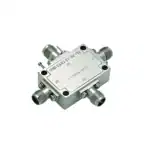 RF Switches
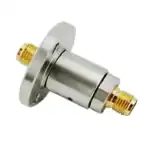 Rotary Joints
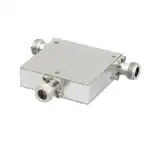 RF Circulators
 Coaxial RF Power Dividers
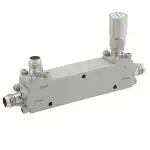 RF Couplers
 RF Filters
Introduction
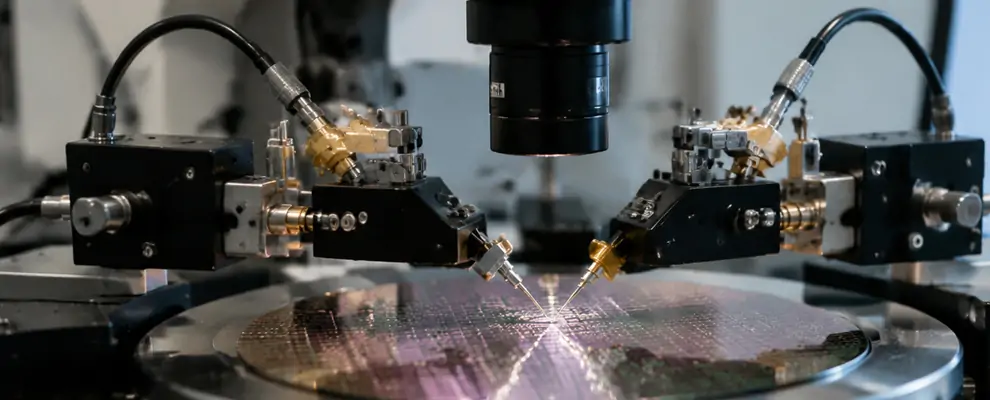
A gsg probe is a critical interface used in wafer-level RF testing, where micron-level alignment determines whether your measurement results are reliable or misleading. In modern semiconductor validation, even a 1–2 micron misalignment can distort S-parameters and create false loss readings. You use a gsg rf probe not just as a connector, but as a precision measurement tool that directly impacts yield analysis and device modeling accuracy.
In real engineering environments, teams often discover that poor probe contact leads to up to 15–20% measurement deviation in high-frequency wafer testing. Another common case is a mismatch in rf coaxial gsg probe setups during 40 GHz testing, where reflection noise increases due to inconsistent ground-signal-ground contact pressure. A third scenario appears in RF IC validation labs, where unstable probing increases re-test cycles by nearly 30%, delaying tape-out schedules.
This is why probe selection is not optional—it is part of system accuracy, production speed, and engineering confidence.
Why GSG Probe Accuracy Defines RF Measurement Quality
When you work with wafer-level RF structures, your gsg probe becomes the first point of contact between the device and the measurement system. Any instability directly affects S-parameters, insertion loss, and phase consistency.
You are not only measuring devices—you are validating physics models.
A stable rf coaxial gsg probe ensures:
- Consistent 50Ω impedance matching
- Reduced reflection coefficient (S11 stability)
- Repeatable touchdown force
- Lower calibration drift over repeated measurements.
GSG RF Probe vs Traditional RF Contact Methods
Performance Comparison Table
Parameter | GSG RF Probe | Coaxial Cable Touch Probe | Impact on Your Testing |
Frequency Range | DC to 110 GHz | DC to 40 GHz | Enables mmWave validation |
Contact Stability | Micron-level controlled | Manual alignment | Reduces measurement variance |
Repeatability | >10,000 touchdowns | <2,000 cycles | Lower calibration drift |
Impedance Control | 50Ω precision | Variable | Better S-parameter accuracy |
Use Case | Wafer RF test | Board-level test | Higher integration level |
A properly aligned gsg rf probe reduces re-measurement cycles and improves wafer yield interpretation accuracy in high-volume semiconductor labs.
Engineering Challenges in GSG Probe Applications
1. Micron Alignment Sensitivity
You deal with structures where a 1–3 µm offset can change RF loss by measurable margins, especially above 20 GHz.
2. Contact Resistance Drift
Poor touchdown consistency in an rf coaxial gsg probe increases contact resistance variation, causing unstable S21 results.
3. Thermal Expansion Mismatch
During long testing sessions, thermal drift affects probe positioning and requires recalibration cycles.
4. Probe Wear Over Time
Mechanical wear reduces repeatability, especially in high-volume wafer probing environments.
Real-World Engineering Use Cases
Case 1 – 5G RF IC Validation
You test 28 GHz front-end modules. Misalignment in the gsg probe causes a 0.5 dB fluctuation in insertion loss, forcing retesting.
Case 2 – Wafer-Level Characterization Lab
A semiconductor lab using rf coaxial gsg probe setups reduces calibration time by 25% after switching to precision alignment fixtures.
Case 3 – mmWave Research Environment
At 60–90 GHz, inconsistent probe contact increases S11 ripple. Proper GSG alignment reduces ripple by up to 40%.
How You Should Select the Right GSG Probe
When selecting a gsg rf probe, you should evaluate:
- Frequency range (up to 110 GHz for mmWave)
- Pitch size (50 µm–250 µm common)
- Contact force stability
- Tip wear resistance
- Calibration repeatability
A high-quality rf coaxial gsg probe should maintain impedance stability even after thousands of touchdowns.
Measurement Impact Summary
Failure Source | Impact Level | Result |
Misalignment | High | Incorrect S-parameters |
Poor contact | High | Noise floor increase |
Calibration drift | Medium | Data inconsistency |
Probe wear | Medium | Reduced repeatability |
Conclusion
A gsg probe is not a passive accessory—it is a precision measurement interface that determines the reliability of your RF validation process. Whether you are working on semiconductor wafers, mmWave ICs, or high-frequency research, selecting the correct gsg rf probe directly impacts yield accuracy, test efficiency, and engineering confidence.
References
[1] National Institute of Standards and Technology (NIST) – Microwave Measurement Accuracy
[2] Keysight Technologies – Wafer Probing and RF Measurement Fundamentals
[3] IEEE Transactions on Microwave Theory and Techniques
[4] University of Colorado Boulder – RF and Microwave Engineering Research Lab
FAQ
1. What frequency range does a typical gsg rf probe support?
A high-end gsg rf probe supports DC–110 GHz depending on pitch design, ensuring mmWave wafer test capability with <0.5 dB loss variation.
2. How often should an rf coaxial gsg probe be replaced?
Typical lifecycle is 5,000–15,000 touchdowns depending on material wear and contact force stability.
3. What pitch size should I choose for wafer testing?
Common ranges are 50 µm to 250 µm. Smaller pitch improves precision but increases alignment sensitivity.
4. Why does misalignment affect S-parameters?
Even 1–2 µm misalignment in a gsg probe can increase reflection and distort S11/S21 readings at high frequency.
5. Can GSG probes be used for production testing?
Yes, but they are primarily optimized for wafer-level characterization and RF validation rather than high-volume automated production.