
 Coaxial Cable Assembly
 Microwave Test Cable
 Coaxial RF Connector
 Coaxial RF Adapter
 Coaxial RF Termination
 Coaxial RF Test Probe
 Coaxial RF Attenuator
 RF Switches
 Rotary Joints
 RF Circulators
 Coaxial RF Power Dividers
 RF Couplers
 RF Filters
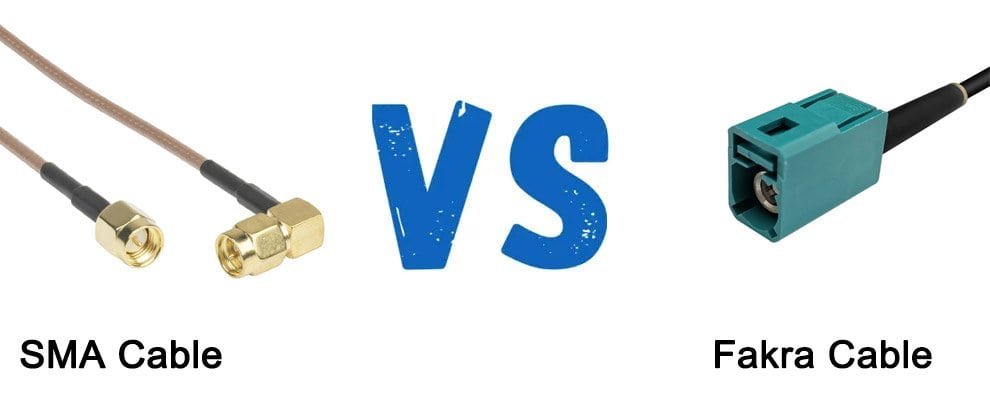
In the realm of electronic connections, selecting the right connector is vital for ensuring performance and reliability. Two widely used options are SMA and Fakra connectors, each designed for distinct purposes. SMA connectors excel in high-frequency applications across multiple industries, while Fakra connectors, often paired with fakra cables, are engineered for automotive systems. This article addresses the problem of choosing between these connectors by analyzing their differences and providing solutions to help B-end users pick the right one for their needs.
Which Connector Should You Choose?
Businesses and engineers often face the challenge of selecting the appropriate connector for their specific applications. SMA and Fakra connector types may seem similar as RF signal transmitters, but their differences in design, functionality, and use cases can significantly impact system performance. Mischoosing can lead to connectivity issues, signal loss, or incompatibility. So, what sets them apart, and how do you decide?
Analyzing the Differences
What is an SMA Connector?
SMA (SubMiniature version A) connectors are compact, threaded coaxial connectors built for RF signal transmission. They support frequencies up to 18 GHz, making them a go-to choice for wireless communications, microwave systems, and test equipment. With a metal body and threaded locking system, SMA connectors ensure a stable connection, even in vibrating environments. They are versatile, available in male and female variants, and widely used in non-specialized RF applications.
What is a Fakra Connector?
Key Differences Between SMA and Fakra Connectors
- Purpose: SMA connectors are general-purpose, ideal for high-frequency needs across industries. Fakra connectors are automotive-specific, designed for vehicle environments.
- Design: SMA uses a metal, threaded structure for durability, while Fakra employs plastic housing with coding for error-free connections.
- Applications: SMA suits lab equipment and wireless networks; Fakra excels in automotive electronics like satellite antennas.
- Frequency: SMA reaches 18 GHz, whereas Fakra tops out at 6 GHz.
| Aspect | SMA Connector | Fakra Connector |
|---|---|---|
| Primary Use | General RF and microwave systems | Automotive RF systems |
| Typical Applications | Antennas, test equipment, wireless modules, lab setups | GPS, infotainment, telematics, vehicle antennas |
| Frequency Range | Commonly used up to very high RF and microwave bands | Usually used up to about 6 GHz |
| Locking Style | Threaded coupling for secure connection | Keyed plastic housing with latch-style fit |
| Mismating Protection | Limited, depends on part type | Strong, thanks to color coding and mechanical keying |
| Size | Compact metal connector | Slightly larger due to plastic housing |
| Durability | Strong for RF use, good repeatability | Built for harsh automotive vibration and temperature conditions |
| Waterproof and Dustproof | Depends on design and sealing | Often designed for sealed vehicle environments |
| Best Strength | High-frequency versatility | Safe, standardized vehicle integration |
| Best Fit When | You need flexible RF performance across many devices | You need reliable, coded connections in cars |
Fakra Connector Male Vs Female And Plug Types For Automotive RF
Solving the Problem: Choosing the Right Connector
Types of Fakra Cables and Their Applications
Understanding fakra cable variants helps in decision-making:
- Female to Female Fakra Cable: Connects two male Fakra ends, useful for extending connections.
- SMA to Fakra Cable: Links SMA and Fakra systems, bridging automotive and standard RF setups.
- Fakra Extension Cable: Extends reach in installations, maintaining signal quality.
- Fakra Coax Cable: Ensures RF transmission in automotive contexts.
- Fakra Coaxial Cable: Similar to coax, emphasizing signal integrity.
- Fakra Male to Male Cable: Less common, connects female Fakra ports.
- Fakra to SMA Cable: Interchangeable with SMA to Fakra, aiding compatibility.
These options cater to specific automotive needs, enhancing flexibility.
Factors to Consider
- Environment: Use Fakra connectors in automotive or rugged settings; opt for SMA in general RF scenarios.
- Frequency Needs: Choose SMA for frequencies above 6 GHz; Fakra suffices below that.
- Compatibility: Match connectors to your devices—e.g., use an SMA to Fakra cable for mixed systems.
- Usability: Fakra’s coding simplifies complex setups.
Practical Tips for Fakra Connector Installation
- Match color codes for accurate connections.
- Ensure a firm click to secure the fakra cable.
- Avoid bending cables sharply to preserve signals.
- Select sealed Fakra connectors for exposed areas.