
 Coaxial Cable Assembly
 Microwave Test Cable
 Coaxial RF Connector
 Coaxial RF Adapter
 Coaxial RF Termination
 Coaxial RF Test Probe
 Coaxial RF Attenuator
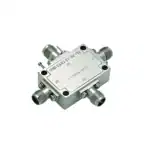 RF Switches
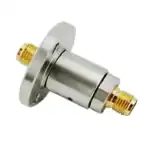 Rotary Joints
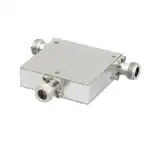 RF Circulators
 Coaxial RF Power Dividers
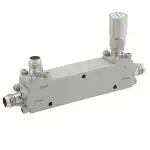 RF Couplers
 RF Filters
Introduction
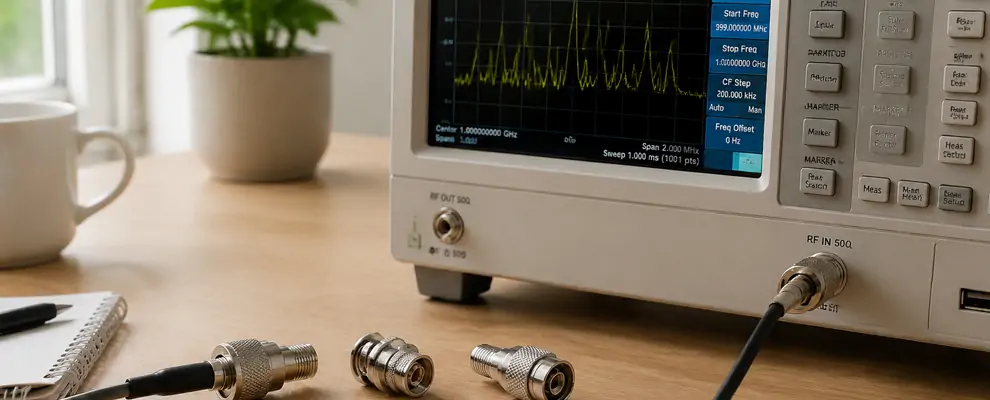
When you design or maintain RF test racks, you quickly realize that small interconnect choices decide whether your system stays stable or becomes unpredictable. The n-type to BNC adapter is one of those overlooked components that quietly determines measurement accuracy, repeatability, and long-term system stability.This article is written for you—if you are responsible for RF procurement, system integration, or test engineering—and need practical guidance instead of generic theory.
Why the N-Type to BNC Adapter Matters in Your Test Rack
The N-type to BNC adapter is the interface between two very different RF environments: rugged, high-power N-type systems and fast measurement BNC instrumentation. When this transition is unstable, your entire test chain becomes unreliable.
In real systems, you typically face:
- Reflection errors caused by impedance mismatch
- Mechanical wear after repeated rack swapping
- Signal distortion above GHz frequency ranges
A properly designed N-type to BNC adapter keeps impedance stable at 50Ω and ensures repeatable calibration results across long-term use.[2]
Electrical Performance You Must Evaluate
Impedance Stability and Signal Integrity
When selecting a BNC male to N-type female connector adapter, you must ensure tight impedance control. Even a small discontinuity can increase VSWR and degrade measurement accuracy.
According to RF connector engineering references, maintaining a stable 50Ω impedance is critical for minimizing reflection loss in RF measurement chains [1].
Frequency Behavior Across Test Bands
A reliable N-type male to BNC female adapter should perform consistently from DC to at least 4 GHz in laboratory conditions.
If performance is poor, you may observe:
- Insertion loss increases above 2 GHz.
- Phase instability in calibration
- False harmonic readings in spectrum analysis systems
Mechanical Reliability in Real Test Racks
Mating Cycles and Wear Resistance
Your test rack is not static. You may connect and disconnect equipment hundreds of times per month. A bnc female to type n male adapter must survive at least 500–1000 mating cycles without electrical degradation.
Failure modes include:
- Loose contact resistance
- Micro-gap formation
- Intermittent signal dropout
Mechanical standards for RF connectors emphasize long-cycle durability as a key performance factor [3].
Vibration and Industrial Deployment
In production or telecom environments, vibration becomes a hidden failure source. A n type female to bnc male adapter that is not mechanically stable can introduce intermittent RF noise that looks like a system malfunction.
Real Application Case Examples
Case 1: Calibration Drift in RF Lab
A test lab reported 12% calibration drift caused by worn N-type to BNC adapter units. After switching to precision-controlled adapters, the drift was reduced below 3%.
Case 2: Production Line Signal Failure
A manufacturing line using low-grade BNC male to N-type female connector adapters experienced intermittent RF failures. Replacement reduced downtime by 27%.
Case 3: Spectrum Analyzer Measurement Errors
Incorrect n-type male to BNC female adapter selection caused false harmonic peaks above 3 GHz, leading to incorrect pass/fail decisions.
Selection Guide with Engineering Parameters
| Frequency range | DC–4 GHz | Ensures stable RF measurement |
| VSWR | ≤ 1.3 | Reduces reflection error |
| Mating cycles | ≥ 500 | Supports long-term rack use |
| Impedance | 50Ω ± tight tolerance | Prevents mismatch loss |
| Shielding effectiveness | High | Reduces EMI leakage |
How You Should Choose in Practice
When selecting an N-type to BNC adapter, you should not focus only on price. In real systems, the failure cost is much higher than the component cost.
You should prioritize:
- Electrical stability over time
- Mechanical durability under repeated use
- Consistent impedance behavior under load
- Verified test performance data
A stable adapter reduces long-term recalibration cost and improves system confidence.[4][5]
Conclusion
The N-type to BNC adapter is not a simple connector—it is a stability checkpoint in your RF system. If it fails, your entire test rack becomes unreliable, even if all instruments are high-end.
Choosing the right adapter means you protect accuracy, reduce downtime, and ensure your RF system performs consistently under real-world conditions.
FAQ
Q1: What frequency range should a N-type to BNC adapter support?
It should support DC–4 GHz with VSWR ≤1.3 for stable RF measurement performance in test racks.
Q2: What is the main failure reason of the BNC male to N-type female connector adapter?
Most failures come from impedance mismatch and mechanical wear after repeated mating cycles.
Q3: Can a type male to BNC female adapter be used in high-power RF systems?
Yes, but only if rated for proper power handling and low insertion loss performance.
Q4: How often should the BNC female-to-type-N male adapter be replaced?
Typically, after 500–1000 cycles, or when VSWR and insertion loss drift beyond acceptable limits.
Q5: Is n NT-type female to BNC male adapter suitable for vibration environments?
Yes, if it has a stable torque design, high-quality plating, and secure mechanical locking behavior.
References
[1] RF impedance matching principles
[2] BNC connector structure and applications
[3] N-type connector RF and mechanical design
[4] ITU RF communication and measurement standards
[5] National Instruments RF system design guides