
 Coaxial Cable Assembly
 Microwave Test Cable
 Coaxial RF Connector
 Coaxial RF Adapter
 Coaxial RF Termination
 Coaxial RF Test Probe
 Coaxial RF Attenuator
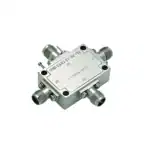 RF Switches
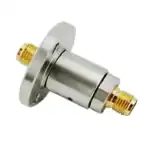 Rotary Joints
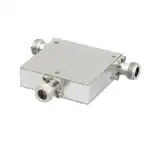 RF Circulators
 Coaxial RF Power Dividers
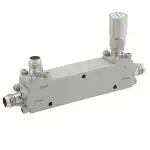 RF Couplers
 RF Filters
Introduction
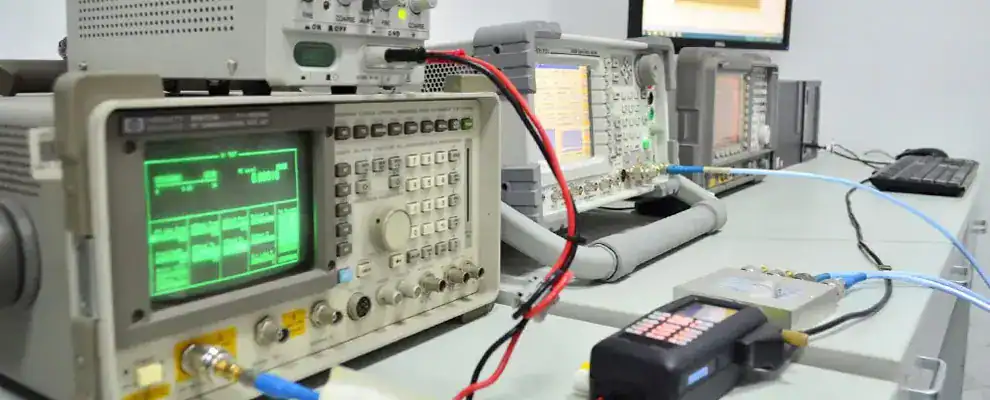
BNC cables serve as the reliable backbone for precise signal transmission in high-stakes environments. As you evaluate options for your telecom, aerospace, defense, or industrial automation projects, understanding these cables helps you maintain production continuity while keeping landed costs under control. Whether you need 50 ohm BNC cable for RF testing or 75 ohm RF cable for video feeds, the right choice directly impacts your MOQ flexibility, on-time delivery rates, and certification success.In this guide, you will discover clear distinctions, practical applications, and connector details. You will also learn how to avoid common pain points that disrupt your supply chain and quality checks. By the end, you will feel confident selecting BNC cables that support stable output, scalable expansion, and cost-effective sourcing.
Why BNC Cables Matter for Your Manufacturing Operations
You know the pressure: a single batch of mismatched BNC cables can halt testing labs, trigger rework, and push back delivery dates to key clients. In telecom OEMs and defense contract manufacturers, every component must deliver consistent impedance matching to prevent signal reflections that waste time and money. BNC cables—quick-lock coaxial solutions—offer the speed and reliability you need for prototype validation through full-scale production.
These cables keep your lines running without surprises. You gain from low unit prices on bulk orders, flexible MOQ that scales with your growth, and suppliers who provide full test reports and MIL-level certifications. When you choose correctly, you reduce inventory tie-up, cut expedited shipping fees, and build a resilient alternative supply chain. That peace of mind lets you focus on innovation instead of firefighting quality issues.
Distinctions Between 50 Ohm BNC Cable and 75-Ohm Coaxial Cable
You face a fundamental decision: 50 ohm or 75 ohm? The impedance difference is not just technical—it determines power handling, attenuation, and overall system performance in your specific application.
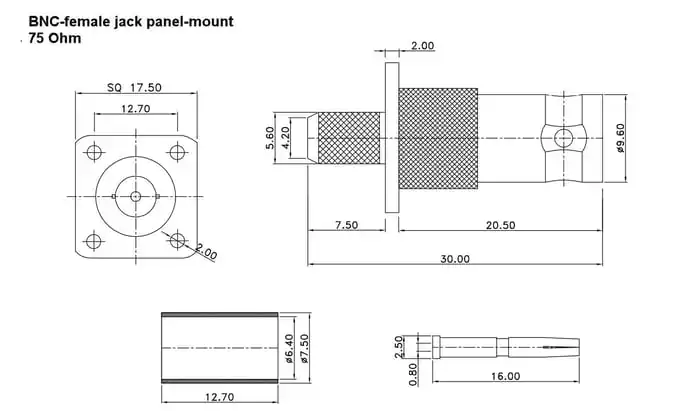
As explained in The Reasons for 50 Ω and 75 Ω Transmission Lines by DigiKey, 50 Ω offers the best compromise for transmitters, while 75 Ω minimizes loss for low-level antenna or video feeds. Mismatching them creates a 1.5:1 VSWR that you can tolerate at low frequencies but that grows costly above 10 MHz.on for video and broadcast signals, making it ideal for telecom distribution where clean, long-distance transmission matters most [1].
You benefit when you match impedance to your cable type. Using the wrong one forces costly redesigns or forces you to accept a higher insertion loss that shows up in your final product testing [2].
50 Ohm vs 75 Ohm BNC
| Comparison Point | 50 Ohm BNC | 75 Ohm BNC |
|---|---|---|
| Primary use | RF testing, instrumentation, communications, and higher-power signal paths | Video, broadcast, surveillance, and low-loss signal transmission |
| Best-fit environment | Labs, telecom racks, aerospace test benches, industrial measurement systems | CCTV systems, SDI video chains, broadcast equipment, monitoring systems |
| Impedance behavior | Better suited for systems where power transfer and signal integrity must stay balanced | Better suited for systems where low signal loss matters more than power handling |
| Typical cable families | RG-58, RG-174, RG-213 | RG-59, RG-6 |
| Signal focus | Optimized for transmit-side RF performance | Optimized for receive-side or continuous video delivery |
| Power handling | Generally stronger for RF and test applications | Generally less suitable for higher-power RF use |
| Long-run performance | Works well in RF setups, but is not the lowest-loss choice for video | Often preferred for longer video-style runs because of lower attenuation |
| Common connector version | 50 Ohm BNC connector assemblies | 75 Ohm BNC connector assemblies |
| Common mistake | Using 50 Ohm BNC in a video system that expects 75 Ohm | Using 75 Ohm BNC in RF test gear that requires 50 Ohm matching |
| Typical result of mismatch | Reflections, degraded measurement accuracy, or reduced RF efficiency | Image distortion, poorer test results, or unnecessary signal loss |
| Selection rule | Choose when the system is RF, measurement, or power-oriented | Choose when the system is video, broadcast, or low-loss oriented |
| One-line summary | Built for RF performance and test precision | Built for clean signal transport in video-focused systems |
Types of BNC Cables and Coaxial-RF Cable Assemblies You Can Rely On
You encounter several practical types of BNC cables in daily procurement. Start with standard RG-58-based 50-ohm BNC cable for RF and data work, or RG-59 and RG-6-based 75-ohm RF cable for CCTV and HD video. These form the core of most BNC plug-to-BNC plug assemblies you order for bench testing or panel integration.
Custom coaxial-RF cable assemblies give you exact lengths—whether a short 50-foot coax cable run inside an avionics bay or longer coax cable cords for factory floor distribution. BNC termination options include crimp, solder, or compression styles that you select based on vibration resistance and ease of field repair.
For high-density setups, you turn to micro BNC connector variants or BNC panel mount connector solutions that save space without sacrificing performance. Each type of BNC supports your need for quick mating cycles in production testing while maintaining signal integrity across repeated use.
BNC Connector Types, Male and Female, and Panel Options
You specify BNC connector types every time you release a drawing. The bayonet design—male with pins, female with slots—delivers quarter-turn locking that you appreciate during fast assembly lines. Connector BNC female and BNC connector male and female pairs come in both 50 ohm BNC connectors and 75 ohm versions, each engineered to match your coax cable.
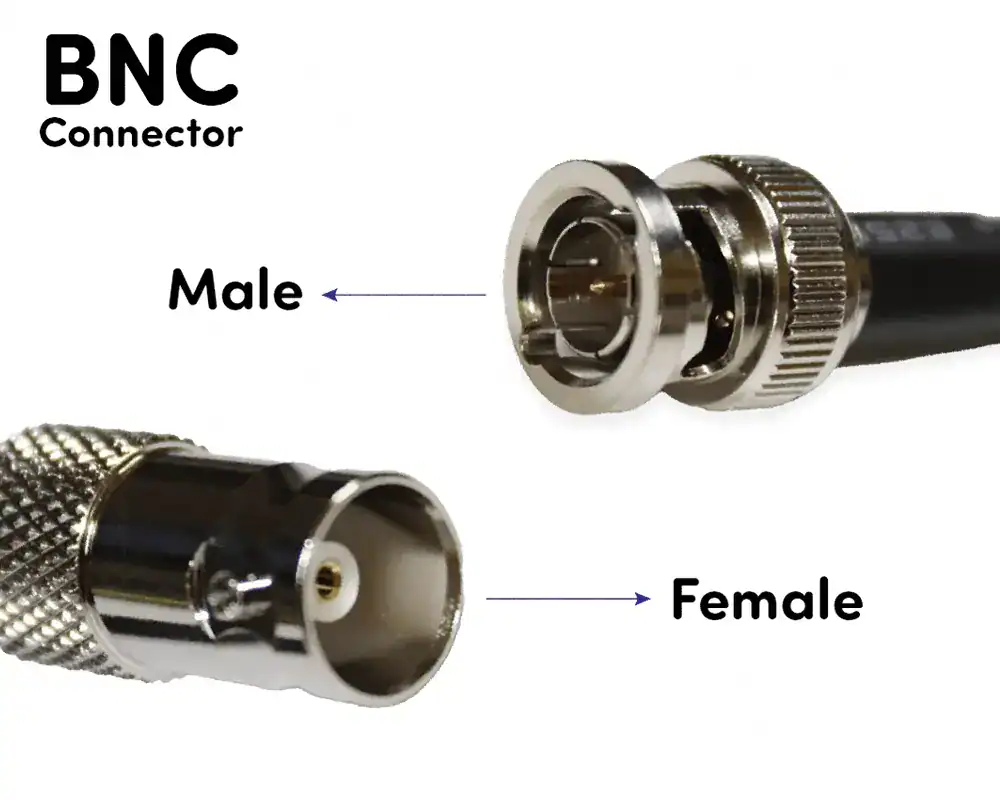
Type BNC connector choices include straight, right-angle, bulkhead, and BNC panel mount connector formats. You also find BNC-type connector adapters for hybrid setups where you bridge to SMA or Type N. For defense projects, you prioritize BNC connector cables built to MIL-PRF-39012 standards, so they survive shock, vibration, and temperature swings [3].
When you review BNC connector types, focus on gold-plated contacts and PTFE dielectrics that keep insertion loss low and VSWR stable. These details directly affect your quality reports and customer acceptance [4].
Real-World Applications in Telecom, Aerospace, Defense, and Automation
You apply 50 ohm coaxial cable types in aerospace radar, defense electronic warfare systems, and industrial test equipment, where power handling and frequency stability matter. A typical BNC cable coaxial run carries test signals up to 4 GHz without radiation from the slots.
In telecom, you rely on 75-ohm coaxial cable for video distribution, security camera feeds, and base station timing. Here, low attenuation keeps picture quality sharp over longer distances. BNC-bnc coaxial cable assemblies shine in these scenarios because the quick-lock feature speeds up rack installations [5].
Consider a real case from a defense contractor: their test lab switched to properly matched 50 ohm BNC cable for microwave qualification. Signal reflections dropped dramatically, cutting calibration time by 40 % and helping them meet tight delivery schedules to the prime. Another aerospace OEM faced repeated failures with off-the-shelf 75 ohm parts in an RF-heavy avionics module. By sourcing custom BNC termination with full certification reports, they eliminated rework, stabilized costs, and improved on-time delivery from 78 % to 96 %.
A third example comes from an industrial automation manufacturer building PLC test rigs. They needed 50-foot coax cable runs with BNC plugs to BNC plugs ends for vibration-heavy environments. Selecting a supplier offering scalable MOQ and rapid prototyping resolved their previous 8-week lead time bottleneck and kept per-unit landed cost 12 % lower than previous vendors.
How to Choose BNC Cables That Support Your Goals
You start by listing your exact requirements: impedance, frequency range, length, and environmental specs. Then compare suppliers on single-unit price, including door-to-door freight, minimum order quantities that match your ramp-up plans, and quoted lead times with on-time delivery history.
Request sample kits with test reports and third-party certifications. Ask about technical support—can their engineers suggest alternative coaxial-RF cable assemblies if your primary source faces delays? This extra step builds your backup supply chain and prevents production stops.
For quick reading, here is your checklist:
- Match a 50-ohm BNC cable to RF/power needs.
- Choose 75 ohm RF cable for video/low-loss runs.
- Verify the BNC frequency range fits your signals.
- Confirm BNC connector male and female compatibility.
- Prioritize suppliers with flexible MOQ and fast BNC termination options.
Following these steps eliminates guesswork and turns procurement into a competitive advantage.
Conclusion
You now hold the knowledge to select BNC cables that keep your lines moving, your costs predictable, and your quality rock-solid. Whether you need types of BNC cables for prototype runs or full production volumes of BNC cable coaxial solutions, the right impedance, connector style, and supplier partnership directly supports your core targets—continuous output, controlled expenses, and on-time delivery to demanding clients in telecom, aerospace, defense, and industrial automation. Take a moment today to review your current drawings against these distinctions. Small adjustments in your next RFQ can yield big gains in reliability and margin.