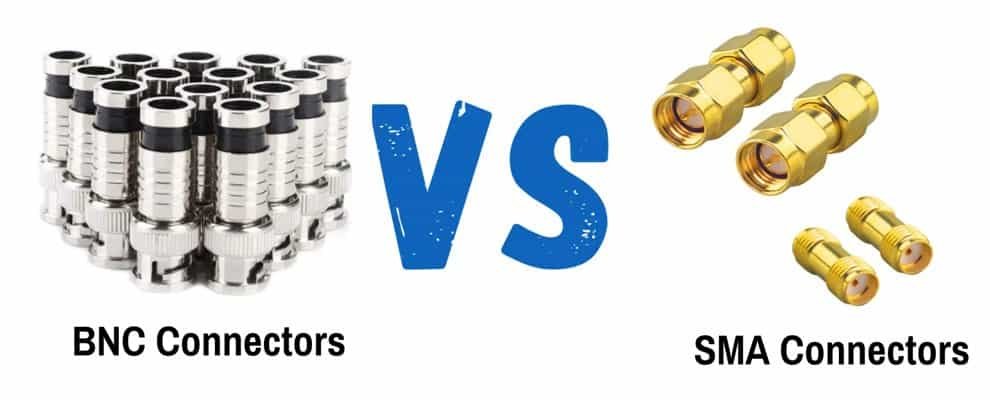
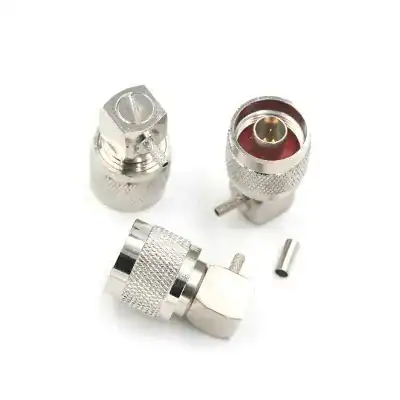
When it comes to RF connectors, two popular options stand out: SMA and BNC. Understanding the differences in the SMA vs BNC debate is key to picking the right one for your needs. Whether you’re setting up a high-frequency system or a simple audio setup, choosing between SMA vs BNC connectors can impact performance and efficiency. This article explores the problem of selecting the right connector, analyzes their differences, and offers solutions to help you decide.
Choosing the Right Connector
Selecting between BNC vs SMA connectors can be tricky. Do you need quick connections or high-frequency precision? Are size and durability factors in your project? Without clear guidance, you might end up with a connector that doesn’t meet your requirements, leading to signal issues or wasted costs. Let’s break down the difference between BNC and SMA connectors to solve this.
Analyzing the Differences
To make an informed choice, we’ll compare SMA vs BNC connectors based on frequency range, connection type, size, and applications.
Frequency Range
BNC Connectors: These handle frequencies up to 4 GHz. They’re great for lower-frequency tasks like video or audio systems but struggle with higher frequencies due to impedance issues.
SMA Connectors: Built for higher frequencies, SMA connectors can manage up to 18 GHz (some even 26.5 GHz). They shine in microwave and wireless systems.
If your project exceeds 4 GHz, SMA vs BNC cable performance leans heavily toward SMA.
Connection Mechanism
BNC Connectors: Featuring a bayonet-style coupling, BNC connectors offer fast connect/disconnect with a quarter-turn. Perfect for test labs or broadcast setups.
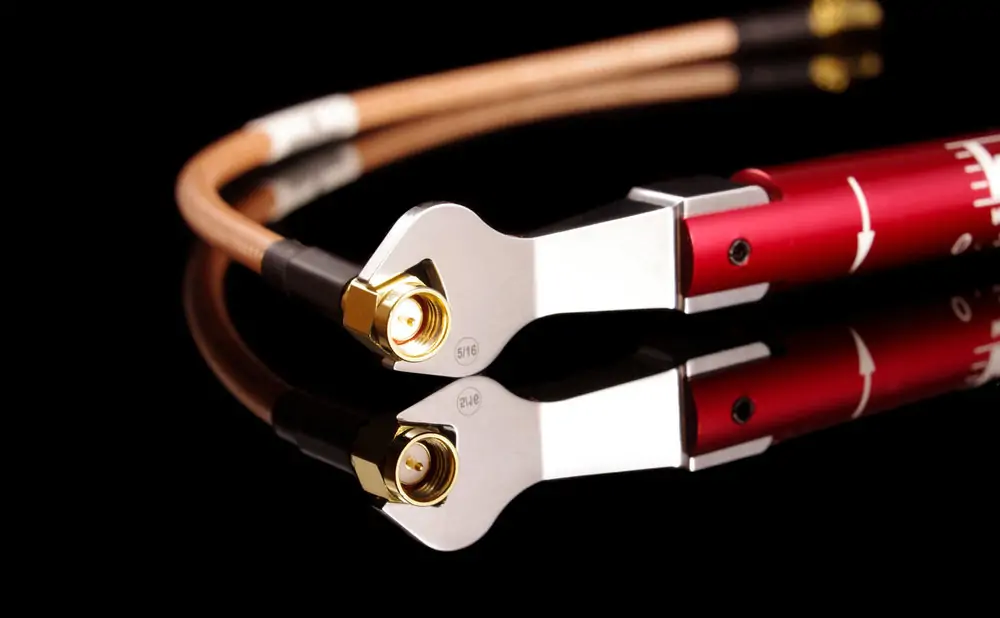
SMA Connectors: These use a threaded design for a secure, stable link. While slower to connect, they resist vibration and signal loss better.
For quick swaps, BNC vs SMA connector ease favors BNC. For stability, SMA wins.
Size and Durability
BNC Connectors: Larger in size, they’re less ideal for tight spaces but durable for frequent use
SMA Connectors: Smaller and compact, SMA connectors fit well in confined setups and hold up in high-vibration environments due to threading.
In SMA vs BNC connectors, SMA suits compact, rugged needs; BNC fits where size isn’t an issue.
Typical Applications
BNC Connectors: Used in CCTV, oscilloscopes, and amateur radio—think lower-frequency, quick-connect scenarios.
SMA Connectors: Found in antennas, spectrum analyzers, and microwave systems—high-frequency, precision-driven uses.
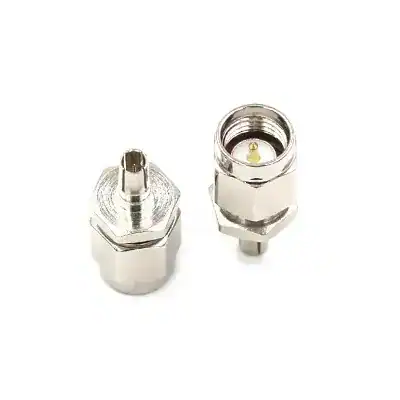
SMA Connector for Compact High-Frequency RF Applications
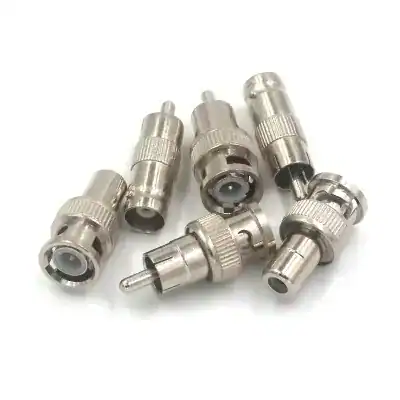
BNC Connector for Quick Lab and Video Signal Connections
N Type RF Connector for Rugged Outdoor Systems
The SMA connector vs BNC choice hinges on your application’s frequency and connection demands.
Practical Selection Guide For sma & bnc connectors
When you compare SMA & BNC connectors, do not stop at frequency alone. You should also check how often you need to connect and disconnect the system, whether the assembly will face vibration, and how much space you have for the connector body. BNC is usually better when you want fast bayonet coupling and lower-frequency routing, while SMA is usually better when you need a compact threaded connection, stronger vibration resistance, and more stable performance in higher-frequency RF systems. The page already states that BNC is suited to frequencies below 4 GHz and SMA to work above 4 GHz and up to 18 GHz, so this section works well as a buying decision guide rather than a second comparison block.
Connector Type
Main Role
Best Fit
Practical Benefit
sma conector
General SMA interface
High-frequency RF links
Secure threaded coupling
sma female connector
Socket side on modules or panels
RF ports, test gear, antennas
Cleaner panel integration
sma cable connector
Cable termination side
Cable assemblies and interconnects
Easier routing in compact layouts
Solving the Connector Choice Dilemma
When to Choose BNC
Frequency is below 4 GHz.
You need fast, frequent connections (e.g., testing equipment).
Working with audio, video, or basic RF systems.
Budget is a priority—BNC is often cheaper.
When to Choose SMA
Frequency exceeds 4 GHz.
A secure, vibration-resistant connection is critical.
Space is tight, requiring a compact design.
High-frequency precision is key (e.g., wireless or microwave).
Sometimes, you might mix them—BNC for low-frequency parts, SMA for high-frequency sections. Just ensure compatibility with adapters if needed.
Exploring Related Connectors
Beyond SMA vs BNC, other options might fit your needs:
TNC Connector: A threaded BNC variant, good up to 12 GHz and vibration-resistant.
SMB Connector: Smaller than SMA, ideal for tight telecom setups.
RP-SMA: A reverse-polarity SMA, common in wireless to secure connections.
These alternatives can refine your SMA vs BNC cable decision if neither fully fits.
Conclusion
In the SMA vs BNC comparison, neither is universally better because the right choice depends on your project. BNC is well-suited to quick, lower-frequency connections up to 4 GHz, while SMA is better for compact, secure, high-frequency links that demand stronger stability and better vibration resistance. When choosing an SMA connector vs. a BNC, weigh frequency, connection speed, size, and application needs. The right BNC cable connector can also help reduce signal loss, simplify installation, and prevent costly compatibility issues across test, broadcast, wireless, and industrial systems. Contact us for tailored connector recommendations that match your production and performance goals.
FAQs
1.Can BNC and SMA connectors work together?
Not directly—you’d need an adapter. But this might affect signal quality, especially at high frequencies.
2.Which is better: SMA or BNC?
It depends. SMA vs BNC connectors—SMA is superior for high frequencies; BNC is easier for quick, low-frequency use.
3.How does TNC compare to SMA and BNC?
The TNC connector blends BNC’s design with threading, handling up to 12 GHz—stronger than BNC, less precise than SMA.
4.Are SMA connectors good for video?
They can work, but BNC vs SMA connector practicality favors BNC for video due to its quick-connect nature.
5.Which connector for my frequency band?
Use BNC for up to ~4 GHz; use SMA for 4–18 GHz (precision SMA variants extend beyond 18 GHz).
6.What impedance should I specify?
Specify 50 Ω or 75 Ω explicitly. SMA = 50 Ω; BNC available in 50 Ω and 75 Ω.
7.Which is better for vibration and field use?
SMA (threaded) is more vibration‑resistant; BNC (bayonet) is faster to mate but less secure under shock.
 Coaxial Cable Assembly
 Microwave Test Cable
 Coaxial RF Connector
 Coaxial RF Adapter
 Coaxial RF Termination
 Coaxial RF Test Probe
 Coaxial RF Attenuator
 RF Switches
 Rotary Joints
 RF Circulators
 Coaxial RF Power Dividers
 RF Couplers
 RF Filters