Blog, Technical Articles

BNC Vs SMA: Coax Connector Performance VS Price

BNC Vs SMA Coax Connector Performance VS Price

Introduction

Coaxial connectors are vital for reliable signal transmission in industries like telecommunications and testing. This article dives into BNC vs SMA connectors, comparing their performance and price to guide engineering and procurement teams in choosing the right option.

What is a BNC Connector?

Design and Features

The BNC connector, or Bayonet Neill-Concelman, uses a bayonet-style coupling for quick, secure connections. It’s optimized for signals from DC to 4 GHz, with best performance below 3 GHz, and is a go-to for cost-conscious projects.

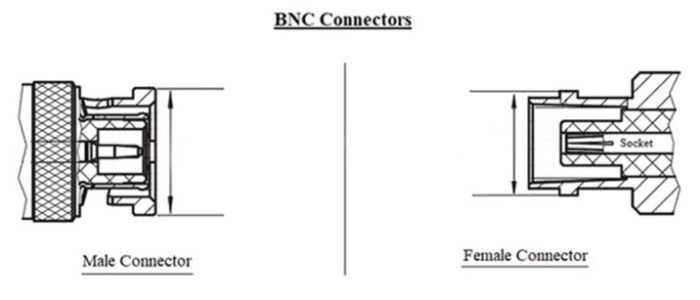
BNC Connectors

Common Applications

  • Video equipment (e.g., CCTV)
  • RF signals in test gear
  • Oscilloscopes and audio systems

BNC connectors are commonly used in broadcasting applications to connect antennas with radio and TV station equipment.

Advantages of BNC Connectors

  • Ease of Use: Fast connect/disconnect with its bayonet design.
  • Affordable: A budget-friendly option for BNC cable connectors.

Limitations

  • Frequency capped at 4 GHz.
  • Bulkier than alternatives like SMA.

What is an SMA Connector?

Design and Features

The SMA connector (SubMiniature version A) features a screw-type mechanism for precision and durability. It excels in high-frequency applications, supporting up to 18 GHz, making it ideal for advanced systems.

sma_rpsma-male-female

Common Applications

  • Microwave systems
  • Telecommunications (e.g., antennas)
  • High-frequency RF setups

Advantages of SMA Connectors

  • High Performance: Handles frequencies up to 18 GHz.
  • Compact Size: Perfect for dense, space-limited setups.

Limitations

  • Higher cost due to precision manufacturing.
  • Screw mechanism slows installation.

Key Differences Between BNC and SMA Connectors

AspectBNC ConnectorSMA Connector
Main UseVideo, lab testing, broadcast, general RFHigh-frequency RF, microwave, antennas, compact modules
Coupling StyleQuick twist-lock bayonetThreaded screw coupling
Ease of MatingFaster to connect and disconnectSlower, but more secure
Frequency RangeBest for low to mid RF and video signalsBetter for higher-frequency RF applications
SizeSlightly larger and easier to handleSmaller and more compact
Mechanical SecurityGood for quick field useStronger vibration resistance and tighter retention
Signal PerformanceReliable for many general-purpose setupsBetter suited for low-loss, high-precision RF paths
Typical ApplicationsCCTV, test gear, broadcast systemsWireless devices, RF boards, antennas, lab equipment
Best StrengthConvenience and speedFrequency performance and compact design
Common LimitationNot ideal for very high-frequency workLess convenient for rapid repeated plugging

The difference between BNC and SMA connectors lies in balancing performance needs with budget. Unsure about BNC or SMA? It depends on your project’s demands.

Exploring SMA to BNC Adapters

Purpose and Use Cases

An SMA to BNC adapter bridges these two connector types, offering flexibility. It’s handy when:

  • Mixing legacy BNC systems with modern SMA equipment.
  • Testing across frequency ranges without rewiring.

These adapters are a practical solution for B2B users integrating diverse hardware.

SMA Cable Vs Coaxial Cable: Clearing the Confusion

What’s the Difference?

While all SMA cables operate on coaxial principles, they are specifically optimized for high-frequency interfaces where precision is paramount. In comparison, a versatile sma male to bnc adapter cable bridges connectivity between equipment types, offering a pragmatic solution for hybrid setups. BNC coaxial systems, meanwhile, provide a robust, cost-effective platform for video and data links, prioritizing quick installation and reliable performance in industrial environments. Our product range delivers enhanced durability, stable phase response, and low PIM characteristics, effectively solving integration challenges, minimizing signal degradation, and future-proofing communications infrastructure for applications from test instrumentation to 5G networks.

Performance Insights

  • SMA Cable: Optimized for precision and frequencies up to 18 GHz.
  • Coaxial Cable: Varies widely, often paired with BNC for lower frequencies.

Choosing between SMA cable vs coaxial cable hinges on your connector and frequency needs.

How to Choose: BNC Vs SMA Connectors

Factors to Consider

  • Frequency Needs: Below 4 GHz? BNC works. Above? SMA is your pick.
  • Budget: BNC saves money; SMA invests in performance.
  • Space Constraints: SMA’s compact size wins in tight layouts.

Decision Tips

For cost-effective, lower-frequency setups (e.g., video or basic RF), SMA connector vs BNC debates lean toward BNC. For high-frequency, precision-driven projects (e.g., telecom), SMA shines despite the price.

Practical Selection Guide for sma coax connector

When you compare a sma coax connector with BNC, do not look only at price. You should also check frequency headroom, coupling style, size, and vibration retention. This page clearly shows the key trade-off: BNC is presented as a quick, budget-friendly choice up to 4 GHz, while SMA is shown as a threaded, more compact option that supports up to 18 GHz. That makes BNC a good fit for speed and cost control, while a sma coax connector is the better choice when higher-frequency margin and stronger retention matter.

When BNC is the better value

BNC is the better option when you need lower cost, faster mating, and a simple connector for general RF, test gear, or broadcast work. It is easier to handle and usually fits projects where 4 GHz performance is enough.

When a sma coax connector is worth the extra cost

A sma coax connector is worth the extra cost when you need a higher-frequency margin, smaller size, and stronger mechanical retention. It fits compact RF layouts, microwave paths, and vibration-prone systems better than BNC.
Selection FactorBNCSMAPractical Takeaway
Frequency rangeup to 4 GHzup to 18 GHzChoose SMA for higher-frequency headroom
Coupling stylebayonetthreadedChoose BNC for faster mating, SMA for stronger retention
SizelargersmallerChoose SMA for dense layouts
PricelowerhigherChoose BNC when cost is the main driver
Best fittest gear, video, general RFmicrowave, antennas, compact modulesMatch the connector to the real operating band

Conclusion

Selecting between SMA vs BNC connector depends on your specific application needs and system requirements. BNC connectors with BNC connector RG6 compatibility are an affordable solution for quick-locking connections in test benches and video systems, offering reliable performance up to 4 GHz. For higher-frequency applications demanding precision, the SMA male connector is ideal, providing threaded coupling with excellent tolerance control and minimal insertion loss. When implementing your system, ensure proper integration with a quality BNC coaxial cable to maintain signal integrity across commercial and industrial environments. These connectivity solutions address critical issues including vibration resistance, phase stability, and interoperability while supporting hybrid configurations through BNC to coax cable assemblies. This comprehensive approach enables faster deployment, reduces long-term maintenance costs, and enhances overall system reliability across various operational conditions.

FAQ

1. What are the advantages of BNC connectors?

A BNC jack offers quick locking, reliable 4GHz performance, and stable low-loss connections.

2. What is the alternative to BNC connectors?

Choose SMA as an alternative to BNC male connectors for flexibility.

3. Why use SMA connectors?

Use SMA connectors for their durable, threaded coupling and excellent performance up to 18 GHz, ideal for applications like Wi-Fi routers.

4. What are SMA connectors used for?

Find SMA connectors used for high-frequency applications in Wi-Fi, GPS, and cellular systems.

5. When should you choose a sma coax connector over BNC?

Choose a sma coax connector over BNC when you need stable RF to ~12GHz, low VSWR, and threaded repeatability.

6. Is BNC still suitable for modern RF systems?

Use BNC for low‑freq, lab, legacy links; for >500MHz or precision, pick SMA/N.

7. Which connector is better for compact RF assemblies?

Use SMB for tight, snap-on links under ~4GHz; pick SMA for compact RF assemblies when you need repeatable, higher‑freq.

8. How do you choose between BNC and SMA for new projects?

Check the operating frequency, available space, mating cycles, vibration conditions, and budget before selecting between BNC and SMA connectors.