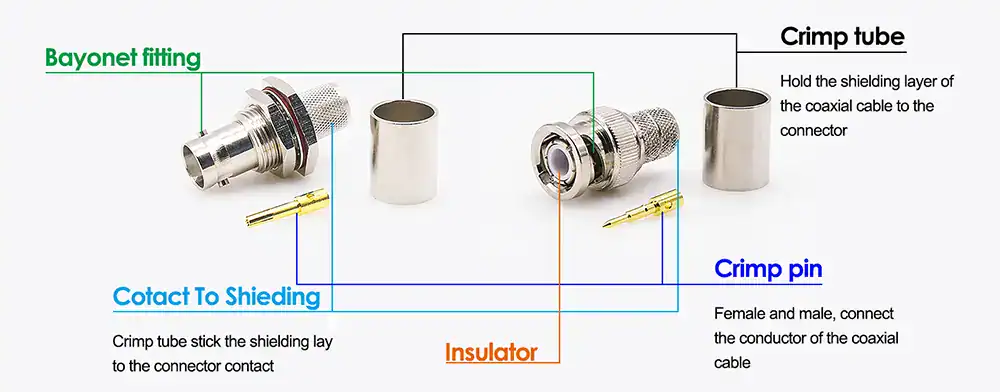
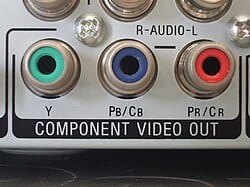
In the realm of signal transmission, connectors like BNC and RCA play vital roles. For professionals and businesses seeking reliable connections, understanding the difference between BNC and RCA connectors is key. Whether you’re using a BNC a BNC cable for video setups or an RCA for audio, each has unique strengths. This article addresses the question, analyzes the distinctions, and offers solutions to choose the right connector, ensuring B-end users can optimize their systems and potentially spark inquiries.
Why Does Connector Choice Matter?
Choosing between BNC and RCA connectors can be confusing. Both are used to transmit signals, but their applications differ. A poor choice could lead to signal loss, equipment mismatch, or costly reworks. For instance, using a BNC to BNC cable 50 ohm in an audio setup might overcomplicate things, while an RCA in a high-frequency video system could degrade quality. This section explores why these differences matter and how they impact performance.
Analyzing the Differences Between BNC and RCA Connectors
Design and Build
BNC Connectors: Named after Bayonet Neill-Concelman, BNC connectors feature a twist-lock mechanism. This secure design, found in products like BNC to BNC coax cable or BNC to BNC female connector, prevents accidental disconnection—ideal for professional settings.
RCA Connectors: Developed by the Radio Corporation of America, RCA connectors rely on a push-in fit. Simple and user-friendly, they’re common in consumer devices but lack the locking stability of BNC.
Impedance and Performance
BNC Connectors: Available in 50 ohm and 75 ohm variants. A BNC to BNC cable 50 ohm suits RF signals, while a BNC to BNC cable 75 ohm excels in video applications. Impedance matching ensures minimal signal reflection.
RCA Connectors: Typically 75 ohm, RCA connectors handle analog audio and video well but falter at higher frequencies compared to BNC.
Typical Applications
BNC Connectors: Shine in professional environments:
Security systems (e.g., CCTV with BNC to BNC male cable)
Broadcast studios using BNC to BNC panel mount
Networking with BNC BNC RG58 cables
RCA Connectors: Dominate consumer electronics:
Home theater systems
Audio equipment like amplifiers
Frequency and Signal Integrity
BNC Connectors: Support up to 4 GHz (50 ohm) or 2 GHz (75 ohm), making them reliable for high-frequency tasks with tools like BNC BNC adapter.
RCA Connectors: Limited to around 1 GHz, better for lower-frequency consumer signals.
BNC-Type Connector Vs RCA For Professional RF And Video Systems
When you compare a BNC-type connector with RCA, BNC is usually the better fit for professional RF and video work because it uses a twist-lock design, comes in 50 ohm and 75 ohm versions, and supports higher frequency use than RCA. In the page’s own comparison, BNC reaches up to 4 GHz in 50 ohm form or 2 GHz in 75 ohm form, while RCA is typically 75 ohm and closer to 1 GHz. That makes a BNC 50 ohm connector more suitable for CCTV, broadcast, and test setups where retention strength and signal stability matter.
Factor
BNC
RCA
Practical Takeaway
Coupling Style
Twist-lock
Push-in
BNC resists accidental disconnects
Impedance
50 ohm or 75 ohm
Typically 75 ohm
BNC covers more RF use cases
Frequency Range
Up to 4 GHz in 50 ohm, 2 GHz in 75 ohm
Around 1 GHz
BNC supports higher-frequency work
Best Use
RF, CCTV, broadcast
Audio, consumer video
Choose by application, not only cost
Types Of BNC Connector For RF And Video Systems
When you compare a rf bnc connector with an RCA, the key differences are locking strength, impedance, and frequency headroom. The most common types of BNC connector buyers evaluate are 50 ohm and 75 ohm versions, plus male, female, and panel-mount styles. That makes a BNC coax connector a better fit for RF, CCTV, broadcast, and test setups where retention strength and signal stability matter more than push-in convenience. The page already shows that BNC supports up to 4 GHz in 50 ohm form or 2 GHz in 75 ohm form, while RCA is typically closer to 1 GHz, so this section fits naturally before the decision-making part.
Option
Coupling Style
Impedance
Frequency Range
Best Fit
BNC
Twist-lock
50 ohm or 75 ohm
Up to 4 GHz in 50 ohm, 2 GHz in 75 ohm
RF, CCTV, broadcast
RCA
Push-in
Typically 75 ohm
Around 1 GHz
Audio, consumer video
Solving the Problem: How to Choose the Right Connector
Step 1: Define Your Needs
Ask yourself:
Application: Is it professional (e.g., video surveillance) or consumer (e.g., home audio)?
Frequency: Does it require high-frequency support?
Budget: Are you prioritizing cost or performance?
For a security setup, a BNC a BNC connection with a BNC to BNC male adapter ensures reliability. For a DVD player, RCA suffices.
Step 2: Match Impedance
Use a BNC to BNC cable 50 ohm for RF or data.
Opt for a BNC to BNC cable 75 ohm for video.
RCA’s 75 ohm fits most analog needs but lacks versatility.
Step 3: Consider Adapters
Need flexibility? Adapters bridge the gap:
BNC to RCA Adapter: Connects BNC outputs to RCA inputs.
BNC to BNC Adapter: Extends BNC a BNC connections, like with a BNC to BNC female connector.
Comparison Table
Practical Examples
Studio Setup: Use BNC BNC plug with BNC to BNC coax cable for video feeds.
Home Audio: RCA connectors link speakers to receivers cheaply.
Conclusion: Making the Right Choice
BNC and RCA connectors serve distinct purposes for industrial trade and procurement teams, and this concise comparison helps engineers choose the right interface for demanding installations. For professional installations, BNC, with options like BNC to BNC male cable, offers durability, reliable shielding and precision, and a BNC to BNC cable 75 ohm for video preserves signal integrity across long runs, while RCA remains a simpler, more affordable choice for consumer audio, where ease and cost matter. For engineers researching TNC vs BNC connectors, this practical guidance clarifies when to prefer a locking, impedance-matched BNC over RCA-style plugs, and it highlights compatibility with legacy systems and test equipment, including devices using the type BNC connector. The comparison also points out additional advantages such as reduced ground loop risk, better EMI rejection, and easier maintenance through standardized terminations, helping procurement teams select connectivity that solves performance challenges, strengthens system reliability, shortens installation time, and lowers total cost of ownership for B-end clients seeking industrial trade solutions.
FAQ
1.What is bnc cable
A BNC cable is a BNC coaxial cable you commonly use to connect devices like video surveillance systems for stable signal transmission.
2.Is BNC the same as RF?
BNC is a connector, while RF is a signal type. A BNC connector is often used to carry RF signals for video or data transmission.
3.What is the difference between TNC and BNC connectors?
You use TNC for threaded mating and BNC for bayonet quick-connect; choose the TNC connector with cable!
4.What does BNC connector stand for?
BNC stands for Bayonet Neill-Concelman, and you use a BNC RF connector for quick coax connections.
5.How to connect BNC connector to coaxial cable?
Strip the cable, slide on the BNC parts, solder or crimp them, and test the BNC coaxial connector now.
6.Is a BNC connector the same as a TNC?
You’ll find that BNC and TNC connectors aren’t the same; BNC uses a bayonet mount for quick connects, while TNC has threads. Both are common BNC connector types for coax.
7. Are all BNC connectors 50 ohm?
You shouldn’t assume all BNCs are 50Ω; some are 75Ω—verify specs: 50 ohm BNC connector before buying.
8. What are the different types of RCA connectors?
You’ll find the different types of RCA connectors in mono, stereo, component, and coaxial setups.
 Coaxial Cable Assembly
 Microwave Test Cable
 Coaxial RF Connector
 Coaxial RF Adapter
 Coaxial RF Termination
 Coaxial RF Test Probe
 Coaxial RF Attenuator
 RF Switches
 Rotary Joints
 RF Circulators
 Coaxial RF Power Dividers
 RF Couplers
 RF Filters