
 Coaxial Cable Assembly
 Microwave Test Cable
 Coaxial RF Connector
 Coaxial RF Adapter
 Coaxial RF Termination
 Coaxial RF Test Probe
 Coaxial RF Attenuator
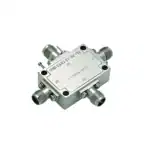 RF Switches
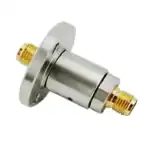 Rotary Joints
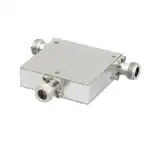 RF Circulators
 Coaxial RF Power Dividers
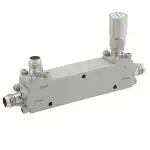 RF Couplers
 RF Filters
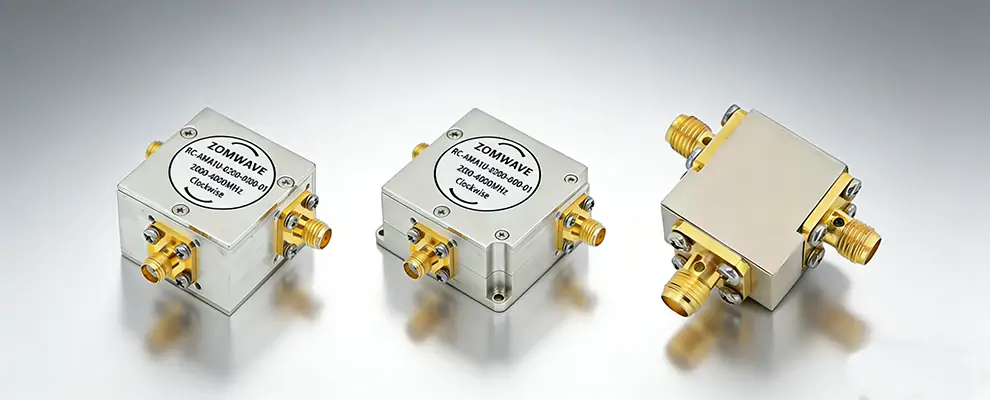
In RF systems, the coaxial circulator acts as a “signal traffic controller”—it ensures signals flow in only one direction, preventing reflected signals from traveling back and damaging expensive transmitters. As a core product line at ZOMWAVE, coaxial circulators are widely used in base stations, test systems, broadcast transmission, military radar, and more, thanks to their wide frequency coverage, high power handling, and easy installation.
This guide will walk you through the three key parameters — frequency, power, and connector type—to help you select the right coaxial circulator with confidence.
I.Frequency: Get the Band Right
Coaxial circulators are narrowband devices and must operate within their specified frequency range. Choose the wrong frequency, and you’ll face either excessive insertion loss or complete loss of isolation.
Typical Frequency Ranges for Coaxial Circulators
Band | Frequency Range | Typical Applications |
VHF | 30-300 MHz | Broadcast transmission, military communications |
UHF | 300-1000 MHz | RFID, private network communications |
L-Band | 1-2 GHz | GPS, satellite communications |
S-Band | 2-4 GHz | Radar, 5G base stations |
C-Band | 4-8 GHz | Satellite downlink, Wi-Fi |
X-Band | 8-12 GHz | Radar, point-to-point communications |
Ku-Band | 12-18 GHz | Satellite uplink, VSAT |
K/Ka-Band | 18-40 GHz | 5G backhaul, millimeter-wave testing |
II.Power: Handle It Safely
The primary job of a coaxial circulator is to protect your transmitter—if it can’t handle power, it won’t just fail to protect; it may burn out itself.
Coaxial Circulator Power Ratings
Power Level | Typical Applications | Selection Tips |
<10W | Small cells, test equipment, labs | Standard coaxial circulator, SMA connector |
10-100W | Macro base stations, repeaters, private networks | Consider thermal management; models with heatsinks preferred |
100-500W | Broadcast transmission, industrial heating, radar | High-power coaxial circulator required; pay attention to mounting and cooling |
>500W | Broadcast towers, satellite ground stations | Custom solutions recommended; forced air or liquid cooling may be needed |
Power Parameters Explained
- CW Power (Continuous Wave): The average power the circulator can handle continuously, measured in watts
- Peak Power: The maximum instantaneous power the circulator can withstand in pulsed applications
- Reverse Power: The power the circulator can handle when signals come from the reverse direction, comparable to forward power
- Rule of thumb: Always derate—choose a circulator with power capacity at least 1.5 times your transmitter’s output power.
III. Connector: Make the Right Connection
Coaxial circulators connect to your system via connectors. Choose the wrong connector, and you’ll face mismatched interfaces, increased signal reflections, or even equipment damage.
Common Connector Types Compared
Connector Type | Frequency Limit | Power Capability | Typical Applications |
SMA | 18 GHz | Low to medium (<100W) | Most common; test equipment, small cells |
N-Type | 11 GHz | High (up to 500W+) | Base stations, broadcast, high-power applications |
3.5mm | 34 GHz | Low to medium | High-frequency testing, instrumentation |
2.92mm | 40 GHz | Low to medium | Millimeter-wave testing, satellite communications |
Selection Points
- Frequency matching: The connector’sfrequency limit must be ≥ the circulator’s operating frequency
- Power matching: For high-power applications, prioritize N-Type or TNCA
- Compatibility: SMA can mate with 3.5mm/2.92mm, but performance may be compromised
Rule of thumb:
Choose 2.92mm for high frequencies, N-Type for high power, and SMA for general-purpose applications.
IV. Other Key Parameters to Consider
Beyond the three core parameters, keep an eye on these specifications:
Parameter | Typical Value | Explanation |
Insertion Loss | ≤0.3-0.6 dB | Lower is better; affects transmitter power and receive sensitivity |
Isolation | ≥20-25 dB | Higher is better; determines how well transmit and receive paths are separated |
VSWR (Voltage Standing Wave Ratio) | ≤1.25-1.5:1 | Lower is better; affects system matching |
Operating Temperature | -40°C to +85°C | Outdoor equipment requires wide-temperature models |
V.Three-Step Coaxial Circulator Selection Process
Step 1: Determine Frequency
- Identify your system’s operating band (e.g., 2.4-2.5 GHz)
- Select a coaxial circulator that covers that frequency
Step 2: Calculate Power
- Determine your transmitter’s maximum output power (CW or peak)
- Choose a circulator with power capacity ≥ 1.5× transmitter power
Step 3: Choose Connector
- Select SMA, N-Type, or 2.92mm based on frequency and power requirements
- Ensure the connector matches your system cables
- Need help selecting the right circulator? Send us your frequency, power, and connector requirements, and the ZOMWAVE engineering team will recommend the optimal coaxial circulator for your application.