
 Coaxial Cable Assembly
 Microwave Test Cable
 Coaxial RF Connector
 Coaxial RF Adapter
 Coaxial RF Termination
 Coaxial RF Test Probe
 Coaxial RF Attenuator
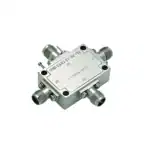 RF Switches
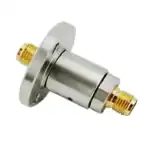 Rotary Joints
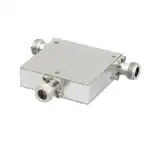 RF Circulators
 Coaxial RF Power Dividers
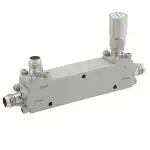 RF Couplers
 RF Filters

Introduction
When you source RF components for telecom, aerospace, defense, or test-and-measurement systems, choosing between a 2.92mm connector and an SMA connector directly affects signal integrity, project timelines, and landed costs. You need connectors that deliver reliable performance while supporting your MOQ flexibility, on-time delivery targets, and certification requirements.
In this buyer’s guide, you will see clear performance differences, real-world applications, and a practical comparison table. You will also learn how to avoid common procurement pain points that cause rework, delayed shipments, or failed qualification tests. By the end, you will confidently select the right RF connectors for your specific frequency, power, and budget needs.
Why the Right Choice Between the 2.92mm Connector and the SMA Connector Matters to You
You feel the pressure every time an RFQ lands on your desk. A mismatched connector can create VSWR spikes, damage expensive test equipment, or force last-minute redesigns that blow your schedule and budget. As a technical procurement professional or system integrator, you must balance performance with cost control, supply-chain resilience, and future-proof scalability.
SMA connectors remain the workhorse for many applications below 18 GHz, while 2.92mm connectors (also called K connectors) extend reliably to 40 GHz and beyond. Understanding when to use each helps you keep production lines running, minimize inventory risk, and deliver on time to demanding OEM customers.
Key Distinctions: Frequency Range, Dimensions, and Electrical Performance
You start every evaluation with frequency requirements. Standard SMA frequency range covers DC to 18 GHz (some extended versions reach 26.5 GHz), making them suitable for most wireless infrastructure and lower-microwave work.[1] In contrast, 2.92mm connectors deliver mode-free performance from DC to 40 GHz, ideal for mmWave 5G, radar, and high-speed digital testing.[2]
Dielectric choice drives the difference. SMA connectors use PTFE, which is cost-effective but introduces higher insertion loss and potential phase instability at elevated frequencies. 2.92mm RF connectors use air dielectric for lower loss and better repeatability—critical when your VNA calibration must stay accurate across temperature swings.
SMA dimensions feature a larger center conductor and threaded coupling that you know well from thousands of deployments. 2.92mm connector dimensions are tighter, with a 2.92 mm air-line interface that maintains 50 Ω impedance at higher frequencies but requires more precise torque control during mating.
SMA Male Connector, SMA Female Connector, and 2.92mm Variants You Specify Daily
You specify SMA male connector or SMA female connector (also called SMA jack) on nearly every drawing. You also choose SMA PCB connector, SMA right-angle connector (or 90-degree SMA connector), SMA bulkhead connectors, SMA panel mount connector, SMA solder connector, and even SMA shorting connector or SMA barrel connector for test fixtures.
For higher-frequency work, you turn to a 2.92mm male connector, a 2.92mm female connector, a 2.92mm panel mount connector, a 2.92mm PCB connector, a 2.92mm bulkhead connector, or a 2.92mm end launch connector. Many of these are available as 2.92mm k connector versions engineered for precision instrumentation.
SMA connector RG223 assemblies remain popular for flexible cable runs, while 2.92mm microwave connectors pair best with semi-rigid or conformable cables that preserve phase stability.
Side-by-Side Performance Comparison Table
You need quick, scannable data when comparing quotes. Here is a practical table based on manufacturer-published specifications and industry standards:
| Parameter | SMA Connector | 2.92mm Connector |
|---|---|---|
| Frequency Range | DC–18 GHz (standard); up to 26.5 GHz extended | DC–40 GHz |
| Dielectric | PTFE | Air |
| Typical VSWR | ≤1.3 (to 18 GHz) | ≤1.3 (to 40 GHz) |
| Mating Cycles | ~500 | 1,000+ (precision designs) |
| Power Handling (at 10 GHz) | Higher at lower frequencies | Excellent at mmWave |
| Relative Cost (per unit) | Lower | 2–4× higher |
| Mechanical Compatibility | Mates with 2.92mm (with care) | Mates with SMA & 3.5 mm |
| Best Use Case | Cost-sensitive <18 GHz | High-frequency test & mmWave |
Real-World Applications and Procurement Pain Points You Face
You apply SMA connector solutions in high-volume telecom base stations, antenna arrays, and industrial automation, where frequencies stay below 18 GHz, and cost per connection drives decisions. 2.92mm connectors shine in aerospace radar modules, defense EW systems, and 5G/6G test labs where you cannot tolerate mode propagation or calibration drift.
Consider a defense system integrator who qualified SMA panel mount connector assemblies for a radar subsystem operating at 12 GHz. When the program was pushed to 28 GHz for next-gen upgrades, excessive insertion loss and VSWR spikes caused repeated chamber test failures. Switching to a 2.92mm panel mount connector and a 2.92mm end launch connector on the same semi-rigid lines cut calibration time by 35 % and eliminated two full redesign cycles—saving weeks of schedule and thousands in rework costs.
Another aerospace OEM faced supply shortages of extended-frequency SMA right-angle connector variants during a ramp-up. Long lead times (12+ weeks) and high MOQ threatened delivery penalties. By qualifying 2.92mm bulkhead connector options from an alternative supplier with shorter 4-week turns and lower minimums, they stabilized the line, reduced per-unit landed cost by 18 %, and built a dual-source strategy that protected future programs.
A third case involved a contract manufacturer building VNA test fixtures. Repeated mating of low-cost SMA female connectors to precision ports damaged expensive 2.92mm interfaces. Implementing torque-wrench training and specifying 2.92mm k connector interfaces on fixtures extended equipment life and cut annual maintenance spend by over 40 %.[2]
How to Choose the Right RF Connectors for Your Project Goals
You begin by listing exact requirements: maximum frequency, power level, cable type, environmental rating, and mating-cycle expectations. Then compare suppliers on unit price (including door-to-door freight), MOQ that matches your production forecast, quoted lead times, and availability of full test reports or MIL-STD certifications.
Ask targeted questions:
- Can they supply both sma connector and 2.92mm connector families from the same drawing set to simplify qualification?
- Do they offer SMA bulkhead connectors or 2.92mm PCB connector variants with the same plating and torque ratings?
- What is their on-time delivery history and technical support for custom lengths or right-angle configurations?
Use the checklist below for fast decisions:
- Choose SMA male connector / SMA female connector families when frequency stays under 18 GHz, and cost is primary.
- Move to 2.92mm connectors when you need 26.5 GHz+ performance or air-dielectric stability.
- Always verify mechanical compatibility and use proper torque to protect expensive precision interfaces.
- Request samples with measured VSWR and insertion-loss data before committing to production volumes.
These steps turn connector selection from a recurring headache into a repeatable competitive advantage.
Conclusion
You now have the clear, data-backed framework to evaluate the 2.92mm connector versus the SMA connector options with confidence. Whether you need economical SMA PCB connector solutions for today’s volume production or future-proof 2.92mm microwave connectors for next-generation mmWave systems, the right choice protects your schedule, controls costs, and ensures repeatable performance for your telecom, aerospace, defense, and test customers.