Blog, Technical Articles

Which is better RG-6 or RG11 coaxial cable?

Which is better RG-6 or RG11 coaxial cable

When selecting the right coaxial cable for your project, the choice between RG-6 and RG11 can be pivotal. These two types of custom coax cables are widely used across industries, from home entertainment to large-scale telecommunications. But which one is better? This article explores the key differences, analyzes their strengths, and provides clear guidance to help customers like you choose the ideal solution—whether it’s RG-6, RG11, or even custom coaxial cable assemblies tailored to your needs.

The Problem: Choosing the Right Coaxial Cable

Coaxial cables are essential for transmitting radio frequency (RF) signals, powering everything from internet connections to TV broadcasts. However, picking the wrong cable can lead to signal loss, higher costs, or installation challenges. RG-6 and RG11 are two popular options in the coax cable assemblies market, but their differences in performance, cost, and application make the decision complex. How do you determine which is best for your specific setup? Let’s break it down.

Why It Matters for Your Business

For businesses, signal quality and reliability are non-negotiable. Whether you’re wiring a small office or a large facility, the right rf coax cable ensures seamless connectivity. Custom coax cables like RG-6 and RG11 offer distinct advantages, but misjudging your needs could mean overspending or compromising performance. Let’s analyze the options.

Analyzing RG-6 vs. RG11: Key Differences

To solve the dilemma, we’ll compare RG-6 and RG11 based on critical factors: signal performance, cost, and installation. This analysis will highlight when each cable shines and where custom made coax cables might bridge the gap.

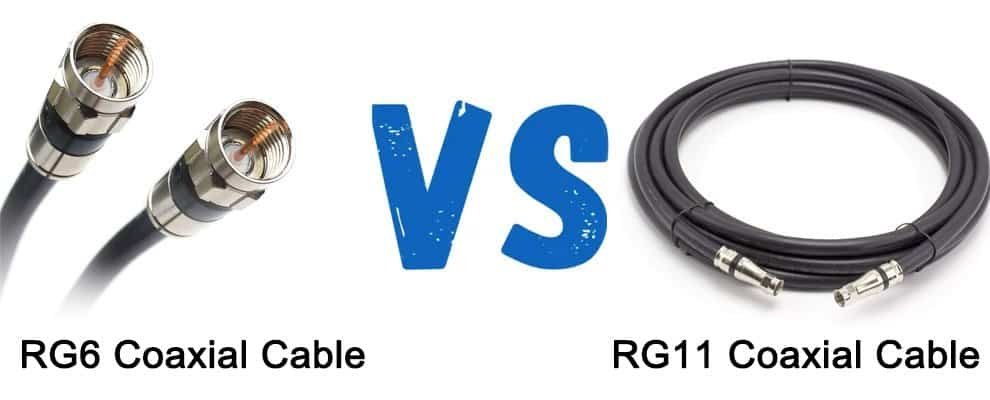
What is RG-6 Coaxial Cable?

RG-6 is a go-to choice for many applications due to its balance of performance and affordability. Here’s what you need to know:

  • Size: Smaller diameter (about 6.86 mm), making it flexible and easy to install.
  • Signal Range: Handles frequencies up to 1 GHz, perfect for most standard uses.
  • Attenuation: Higher signal loss over distance (around 6-8 dB per 100 feet at 1 GHz).
  • Best For: Short to medium runs, like home TV setups or office internet.

RG-6 is a staple in custom coax cable assemblies for its versatility and cost-effectiveness, especially in smaller-scale projects.

What is RG11 Coaxial Cable?

RG11 steps up for more demanding needs, prioritizing signal strength over long distances. Its key features include:

  • Size: Larger diameter (about 10.3 mm), less flexible but more robust.
  • Signal Range: Also supports up to 1 GHz, but with less signal loss.
  • Attenuation: Lower loss (around 4-5 dB per 100 feet at 1 GHz).
  • Best For: Long runs, such as connecting buildings or professional setups.

RG11’s design makes it a premium option in coax cable assemblies, ideal for industrial or high-stakes applications.

Head-to-Head Comparison

Let’s dive deeper into how RG-6 and RG11 stack up:

  • Signal Loss: RG11 wins for long distances, losing less signal than RG-6.
  • Cost: RG-6 is cheaper, saving you money on shorter runs.
  • Ease of Use: RG-6’s smaller size makes it simpler to route through tight spaces.
  • Applications: RG-6 suits homes and small businesses; RG11 excels in large-scale or outdoor projects.

For unique requirements, custom coaxial cable solutions can combine the best of both worlds, offering tailored performance.

Solving the Dilemma: Which Cable Should You Choose?

The “better” cable depends on your project’s specifics. Here’s how to decide, plus how custom solutions can elevate your setup.

When to Choose RG-6

  • Short Distances: Runs under 100 feet? RG-6 keeps costs low without sacrificing quality.
  • Budget Constraints: Need an economical option? RG-6 delivers reliable performance.
  • Easy Installation: Tight spaces or complex layouts? RG-6’s flexibility simplifies the job.

For many clients, RG-6 paired with custom coax cable assemblies meets everyday needs efficiently.

When to Choose RG11

  • Long Distances: Runs over 100 feet? RG11 ensures signal integrity.
  • High Signal Quality: Broadcasting or data centers? RG11’s low attenuation is key.
  • Professional Use: Large-scale projects? RG11 handles the demands.

RG11 shines in custom made coax cables for businesses needing top-tier performance over extended lengths.

The Custom Solution Advantage

Standard RG-6 or RG11 not quite right? Custom coax cable assemblies offer precision:

  • Tailored Lengths: Get exactly what you need, no excess.
  • Special Connectors: Match your equipment perfectly.
  • Enhanced Shielding: Boost signal protection for sensitive applications.

Partnering with a provider of custom coaxial cable solutions ensures your setup is optimized, whether you’re scaling up or fine-tuning.

Practical Tips for Your Next Project

Ready to choose? Follow these steps:

  1. Measure Your Run: Calculate the distance to assess signal loss risks.
  2. Set a Budget: Balance cost with performance needs.
  3. Evaluate Space: Consider installation challenges—flexibility vs. durability.
  4. Consult Experts: For complex needs, explore custom coax cables with a supplier.

These steps help buyers like you secure the best rf coax cable for the job, driving efficiency and reliability.

Conclusion: RG-6, RG11, or Custom Coax Cables?

When you compare RG-6 and RG11 for professional projects, the rg11 coax cable is the better low-loss coaxial cable choice when you need longer runs, stronger signal integrity, and less attenuation, while RG-6 is usually the more flexible and cost-effective option for shorter installations. ZOMWAVE’s guidance shows that RG-6 is easier to route in tight spaces, but RG11 is larger, more robust, and better suited to long-distance or large-scale setups, with custom coaxial cable assemblies available when you need a tailored balance of shielding, dielectric structure, connectors, and installation convenience. For your network, the smartest choice is the one that reduces signal loss, avoids overspending, and matches the real distance and performance demands of the job.

FAQ

1.What is RG6 coaxial cable used for?

You use RG6 coaxial cable for TV, satellite, broadband, and CCTV; flexible RG6 coax cable eases routing.

2.How far can you run a RG6 coax cable?

You can run RG6 about 100–250 ft, depending on signal and splitter loss; RG6 coax cable impedance 75Ω.

3.Are all RG6 coax cables the same?

No, you must compare jacket, braid, dielectric and shielding before choosing RG6 coax cables. now!

4.How to tell if coaxial cable is RG6?

You can tell coaxial cable is RG6 by jacket printing, ~6.9mm OD, 75Ω rating, and copper core. today.

5.How much signal does RG6 loss per 100 feet?

You’ll lose about 3-10 dB per 100 feet with RG6, depending on frequency. That’s why RG6 low-loss coax cable delivers a reliable signal for TV and the internet.

6.Will RG6 coax cable work for internet?

Yes, RG6 works for the internet, especially with cable broadband. Your connection quality improves using RG6 low-loss coax cable to handle higher frequencies needed for modern speeds. Just ensure proper shielding.

7.Which coax cable is better, RG6 or RGl1?

For a typical home internet, RG6 wins. RG11 has lower loss but is thicker and harder to work with. You’d only choose RG11 for long cable runs over 100 feet. Stick with RG6.

8.Is RG6 good for high speed internet?

Yes, RG6 handles high-speed internet well. It supports frequencies up to 1GHz or more, so you get reliable speeds. Upgrading to a quad-shielded RG-6 low-loss coax cable helps if you experience interference or signal drops.

9.How long can coaxial cable run?

You can run it farther at lower frequencies if loss stays within spec.

10.How long can a coax cable be before signal loss?

A coax cable loses more signal as it gets longer, so you check frequency, cable type, and power first.