
 Coaxial Cable Assembly
 Microwave Test Cable
 Coaxial RF Connector
 Coaxial RF Adapter
 Coaxial RF Termination
 Coaxial RF Test Probe
 Coaxial RF Attenuator
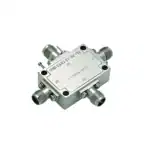 RF Switches
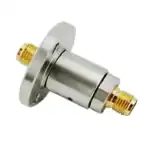 Rotary Joints
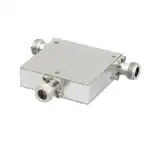 RF Circulators
 Coaxial RF Power Dividers
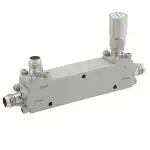 RF Couplers
 RF Filters
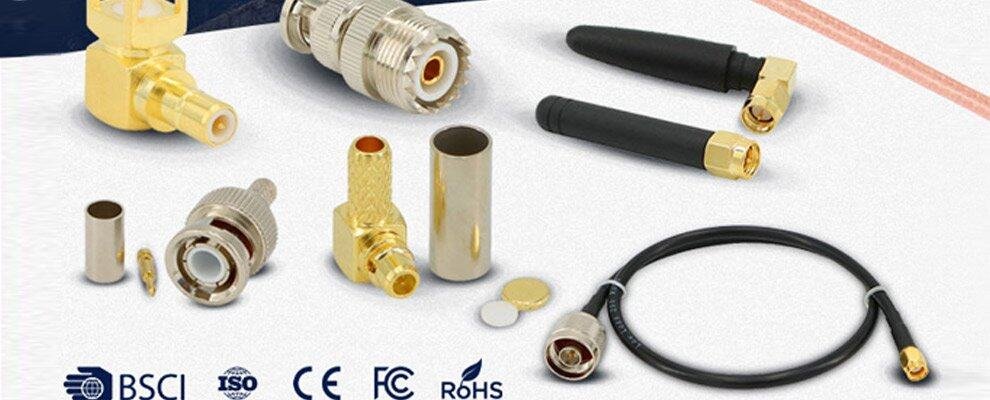
When selecting RF connectors for your business, understanding the difference between MCX and MMCX is crucial. For instance, an mmcx connector female is a key component in many compact devices, and knowing its role versus an MCX connector can impact your project’s success. This article explores these connectors, compares their features, and guides you to the right choice for your B2B needs, incorporating solutions like custom mmcx cables and mmcx sma adapters.
MMCX vs MCX Connector Comparison and Selection Guide
Executive summary
Compact data comparison table
| Attribute | mmcx rf connector | mcx coaxial connector | Practical guidance |
|---|---|---|---|
| Outer diameter | ~2.4 mm | ~3.6 mm | Choose MMCX for denser PCB or module layouts |
| Typical frequency range | DC to 6 GHz | DC to 6 GHz | Both cover common RF bands; verify vendor spec for extended ranges |
| Typical VSWR | ≤1.30 (application dependent) | ≤1.25 (application dependent) | MCX marginally better for tight return‑loss budgets |
| Mating cycles | ~500 cycles | ~500–1000 cycles | Prefer MCX for frequent mating or field service |
| Power handling | Lower (small form factor) | Higher (larger body) | Use MCX for higher transmit power or antenna feeds |
| Blind‑mate suitability | Excellent | Good | MMCX often used in compact blind‑mate assemblies |
| Mechanical retention | Snap‑on with retention feature | Snap‑on with reinforced body options | MCX variants available for vibration environments |
| Typical use cases | Dense modules, handhelds, test fixtures | Instrumentation, antenna leads, automotive harnesses | Match to space, power, and service needs |
Selection checklist for procurement and integration
Match electrical spec first: confirm impedance, frequency band, and vendor VSWR curves for your operating band.
If PCB real estate or blind‑mate density is the limiting factor, prioritize the mmcx rf connector.
If repeated mating, vibration, or higher power is expected, prefer the mcx coaxial connector or specify reinforced housings.
Add procurement line items: required mating‑cycle data, lot traceability, RF verification reports, and PIM or environmental test results where relevant.
For automated assembly, confirm polarization/keying, overmold options, and recommended torque/mating procedures to reduce mis‑mating and rework.
What Are MCX and MMCX Connectors?
When selecting between MCX and mmc connectors – both snap-on types for RF applications – businesses must evaluate critical differences in size, performance, and durability. MCX connectors provide robust durability for frequent connections, while mmc connectors deliver a 30% smaller footprint for space-constrained designs with reliable performance up to 6 GHz. This distinction becomes essential when implementing mcx to mmcx solutions, where mechanical stability and consistent signal integrity in dense layouts are paramount. Understanding these technical trade-offs ensures optimal reliability in wireless communications, IoT devices, and test equipment deployments, while addressing common challenges like connector wobble and field failure in compact systems.
Understanding MCX Connectors
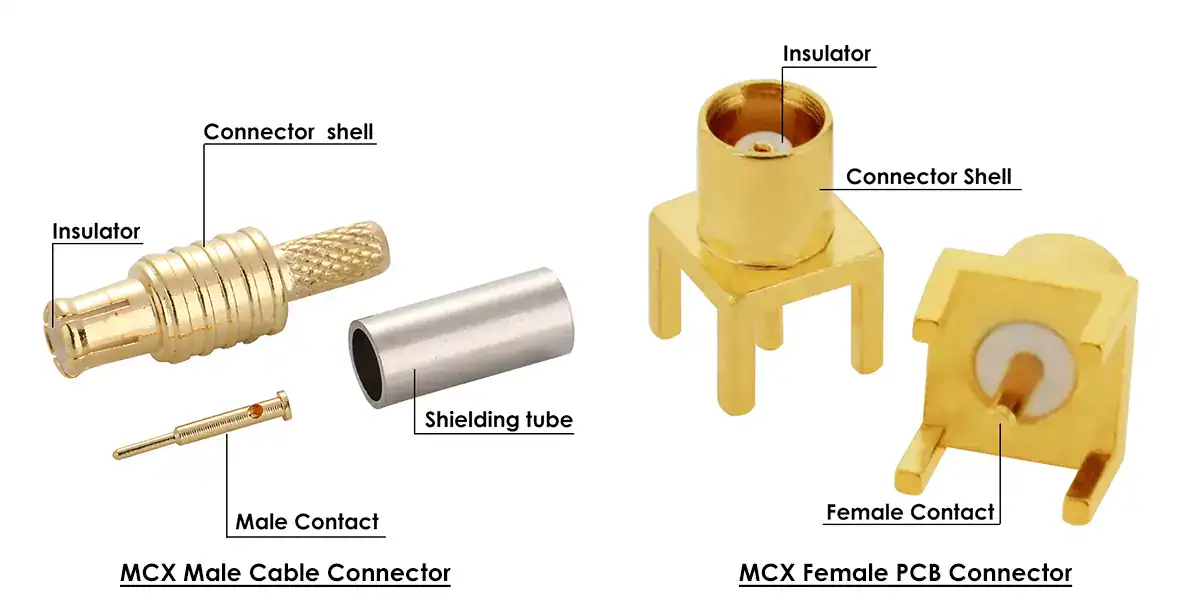
MCX to RF connector solutions deliver a compact form factor with a 3.5 mm diameter interface and broadband performance up to 6 GHz, making them ideal for GPS modules, wireless communication systems, and larger antenna assemblies where space efficiency is critical. The mcx coax connector design supports robust signal integrity and stable RF performance in demanding industrial and telecom environments, thanks to its snap-on mechanical coupling for quick mating and reliable retention. These products simplify inventory and assembly processes by enabling short, standardized cable runs and easy field installation using mcx plug with cable options, which reduces custom harness costs and accelerates integration for OEMs and system integrators. Stocked mcx connector antenna variants and rapid ship services from ZOMWAVE help cut lead times and support production scaling without sacrificing durability or electrical specs. Additionally, the mcx coax connector addresses vibration resistance and environmental adaptability, ensuring long-term reliability and minimal maintenance in infrastructure deployments where consistent connectivity is essential.
Understanding MMCX Connectors
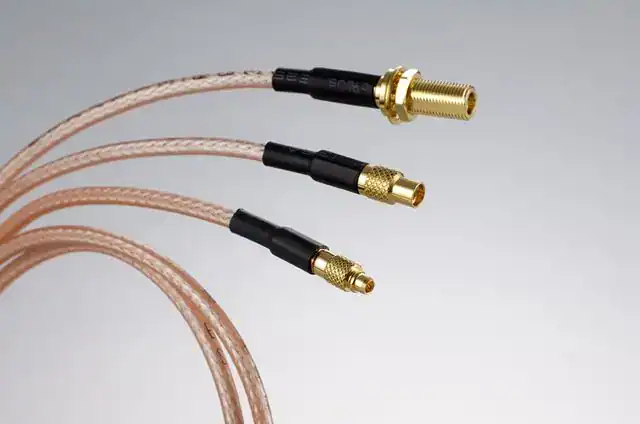
MMCX connectors, with a compact 2.5 mm diameter, are engineered for extremely tight spaces and high-density applications. Paired with an mmcx male connector or an mmcx connector female, these reliable mmcx connector types are commonly utilized in headsets, small antennas, and portable devices. An MMCX connector cable or custom mmcx cable is ideal for low-power, high-frequency scenarios where minimal size and weight are critical. These connectors provide enhanced durability with up to 500 mating cycles, superior vibration resistance, and stable performance in challenging environments, helping OEMs streamline assembly, reduce total cost of ownership, and accelerate time-to-market for compact consumer and IoT solutions.MMCX connectors also include mmcx right angle connectors and MMCX straight connectors.
Analyzing the Key Differences
To solve the MCX vs. MMCX dilemma, let’s analyze their distinctions:
- Size: MCX (3.5 mm) is larger than MMCX (2.5 mm), affecting where they can be used.
- Power and Frequency: MCX handles higher power and up to 6 GHz, while MMCX is suited for lower power setups.
- Applications: MCX fits broader RF uses; MMCX excels in compact, space-limited designs.
These differences impact compatibility with tools like an mmcx sma adapter or a custom mmcx female cable.
Solving the Selection Challenge
Choosing between MCX and MMCX depends on your project’s needs:
- Space-Constrained Projects: Opt for MMCX connectors. Their small size and options like mmcx cables make them perfect for compact devices.
- High-Performance Needs:Choose MCX cables for applications requiring higher power handling and a wider frequency range.
- Compatibility: Need to adapt? An mmcx sma adapter bridges MMCX setups to other systems seamlessly.
Excellent article! MMCX and MCX connectors are a crucial part of any wireless system, ensuring minimal signal loss and strong connectivity. At Eteily Technologies, we design and manufacture a wide range of RF connectors including SMA, TNC, N-type, and MCX — all engineered for high durability, low VSWR, and superior performance across communication applications
Awesome
Great information!