
 Coaxial Cable Assembly
 Microwave Test Cable
 Coaxial RF Connector
 Coaxial RF Adapter
 Coaxial RF Termination
 Coaxial RF Test Probe
 Coaxial RF Attenuator
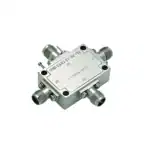 RF Switches
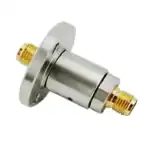 Rotary Joints
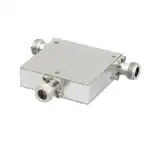 RF Circulators
 Coaxial RF Power Dividers
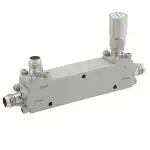 RF Couplers
 RF Filters
Introduction
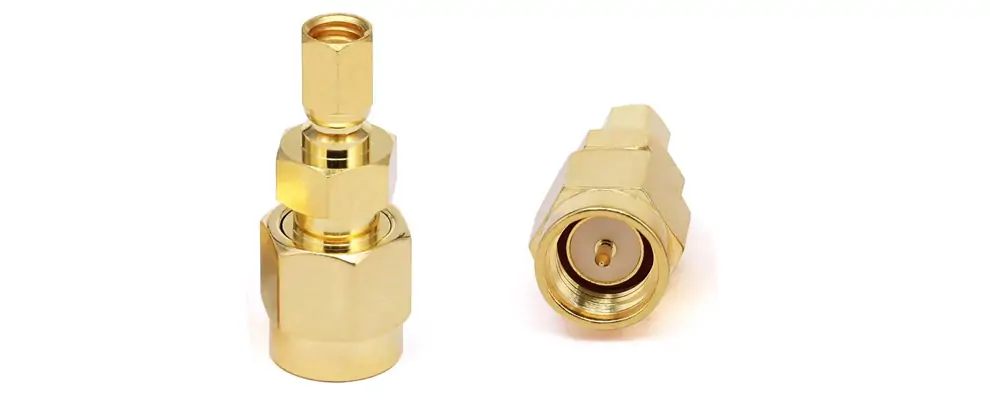
You are usually trying to protect a measurement chain, not just connect two ports. An SSMC to SMA adapter matters when your RF test rack needs a compact SSMC interface on one side and a broader SMA ecosystem on the other, especially in low PIM work where every mismatch, loose joint, or extra re-mate can create noise and rework. The adapter page describes a 50 ohm straight-body part with low insertion loss, excellent VSWR up to 6 GHz, more than 500 mating cycles, RoHS-compliant materials, and MIL-STD-202 environmental testing.
Why the SSMC To SMA Adapter Matters in Low PIM Racks
Low PIM systems are unforgiving. Keysight explains that low PIM coaxial hardware is used where two or more transmitted signals share a common antenna, or where the receiver is sensitive to intermodulation, and that low PIM designs help keep system PIM levels low [3]. Anritsu also warns that connector mounting mechanics can be weak and that repeated testing and torque cycling can loosen the base of a connector [4]. In that context, the SSMC to SMA adapter is not just a format bridge. It is part of the signal-quality path.
That is why you should compare the SSMC to the SMA adapter early in the design phase. If the rack is built for sensitive measurements, a poor fit can trigger extra noise, longer troubleshooting cycles, and more repeat validation. Your goal is simple: keep the impedance stable, preserve signal integrity, and make the rack easy to service.
How to Choose the Right Adapter
Begin with the connector, not the label
You should begin by matching the interface on both ends. Amphenol RF describes SSMC connectors as compact, threaded, 50 ohm parts that support stable performance up to 12.4 GHz, with cable and PCB-mounted options for space-constrained designs [1]. Amphenol RF also notes that SMA connectors are 50 ohm parts with performance up to 18 GHz [2]. That is why the SSMC to SMA adapter is so practical: it links a smaller high-frequency port to a more widely used RF platform without forcing a redesign of the whole rack.
In sourcing work, you may also search for SMA to ssmc adapter or SMA female to ssmc plug adapter. Those terms usually express the same buying intent: you need a dependable bridge between a compact SSMC interface and an SMA cable or instrument path.
Choose the SMA Variant That Fits the Rack
Not every build needs the same form. If you are extending a line, an SMA female-to-female adapter may be the simplest choice. If space is tight, a right-angle SMA adapter can reduce strain and improve routing. If the connection lands on a board, an SMA adapter PCB mount is often more practical than an inline coupler. For cable work, the SMA coax adapter is the clearest search term when you want a straightforward mechanical You may also need an SMA adapter male to female, an SMA male adapter, an SMA female adapter, an SMA male to female adapter, an SMA male to male adapter, or an SMA adapter male to male, depending on the rack, cable, and instrument combination.ation. The best choice is the one that reduces complexity downstream rather than adding more adapters to the chain.
Quick Data Comparison for Faster Selection
| Checkpoint | What you should look for | Why it matters |
| SSMC side | 50 ohm, DC to 12.4 GHz, threaded retention | Compact fit for dense layouts |
| SMA side | 50 ohm, DC to 18 GHz | Broad compatibility with RF test systems |
| Adapter structure | Straight-body 50 ohm design | Easier integration and lower mechanical stress |
| Reliability | More than 500 mating cycles, MIL-STD-202 testing | Fewer repeat failures and less rework |
| Low PIM risk | Strong mounting and clean interfaces | Helps keep system PIM low in shared-antenna systems |
Two Practical Cases You Will Recognize
A test lab may inherit a compact DUT with SSMC ports, while the analyzer and reference cables are already SMA. In that case, the ssmc to sma adapter lets you reuse existing cable sets, keep the rack tidy, and avoid a last-minute fixture redesign. The adapter page positions the part for reliable interconnection of coaxial components and sub-systems, which is exactly the kind of job a rack builder wants to simplify.
A procurement team may already have a rack that passed bench testing but started showing issues after repeated mating cycles. Because the listed adapter uses a straight 50 ohm structure, gold and nickel plating, and environmental qualification, it can be standardized across builds and reordered with less risk of interface mismatch. That makes the SSMC to SMA adapter useful not only for initial integration, but also for long-term supply stability.
Conclusion
For RF test racks, the SSMC to SMA adapter is more than a small accessory. It helps you solve interface mismatch, reduce mechanical stress, preserve signal integrity, and support cleaner low PIM performance. If you are comparing the SSMC to SMA adapter with other SMA variants, choose by frequency, body style, mating life, and the actual geometry of your rack. That is how you avoid hidden losses, shorten qualification work, and keep the system ready for testing.