Blog, Technical Articles

SMB vs. Coaxial Connectors: Long-Term Durability Compared

SMB vs. Coaxial Connectors: Long-Term Durability Compared

Introduction

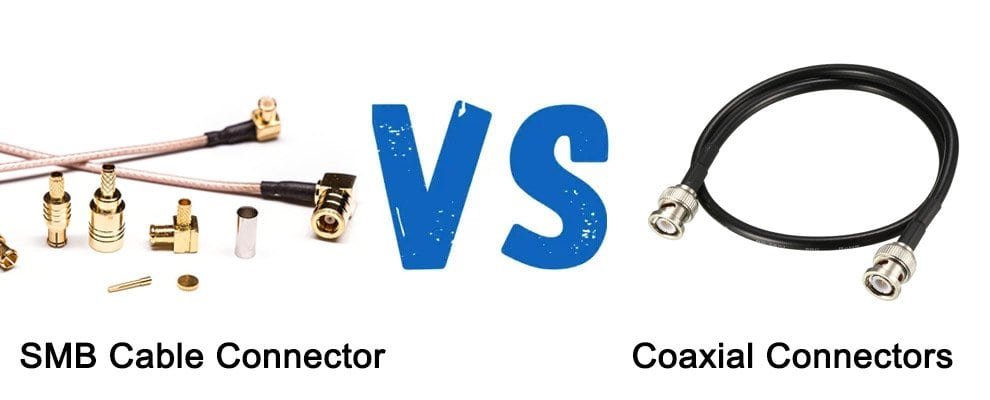
In RF and microwave applications, connectors ensure reliable signal transmission. Among the options, SMB cable connectors and other coaxial connectors stand out for their widespread use. Understanding their long-term durability is key to selecting the right solution for your needs. This article compares SMB cable connectors with coaxial connectors, focusing on durability to guide B2B users in making informed choices.

Understanding SMB Connectors

What Are SMB Connectors?

SMB connectors (SubMiniature version B) are compact coaxial RF connectors developed in the 1960s. Smaller than SMA connectors, they feature a snap-on coupling mechanism for tool-free connections. Available in 50 Ω or 75 Ω impedance, SMB connector types perform well from DC to 4 GHz, making them versatile for various applications.

Applications of SMB Connectors

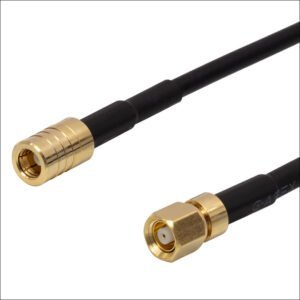
SMB cables shine in space-constrained environments requiring frequent mating. Common uses include GPS modules, wireless LANs, and automotive electronics. The smb male connector and its snap-on design ensure quick, secure connections, ideal for moderate-vibration settings. For internal device links, smb to smb coax cable options are popular.

Exploring Coaxial Connectors

What Are Coaxial Connectors?

Coaxial connectors encompass a wide range, including BNC, SMA, N-type, and F-type, designed for high-frequency signal transmission with minimal interference. Their structure—inner conductor, insulator, shield, and jacket—varies by type, affecting durability and performance.

Applications of Coaxial Connectors

From broadcasting to telecommunications, coaxial connectors connect antennas, cables, and equipment over long distances. Their durability depends on design and materials, making them suitable for both indoor and outdoor use, unlike some SMB cable connector types.

Comparing Long-Term Durability

Mechanical Strength and Mating Cycles

SMB cable connectors offer convenience with their snap-on mechanism, but this can compromise durability in high-vibration settings. Rated for about 500 mating cycles, they suit applications with infrequent disconnections. Conversely, threaded coaxial connectors like SMA or N-type withstand 1,000+ cycles, thanks to their secure fit. For example, an industrial sensor system using smb cables faced disconnections due to machinery vibrations, prompting a switch to threaded coaxial connectors for enhanced reliability.

Environmental Resistance

Outdoor coaxial connectors often feature weatherproofing and UV resistance, outlasting SMB connectors in harsh conditions. While smb cable connector adapters can extend use, SMB designs typically need extra protection outdoors. A telecom provider using smb to smb cable indoors enjoyed efficient maintenance, but outdoor setups favored coaxial durability.

Material Quality

Durability hinges on materials. Gold-plated brass or stainless steel in coaxial connectors resists corrosion better than some SMB connector types. This makes threaded options ideal for aerospace or military applications where longevity is critical.

Practical Case Studies

  • Case 1: A factory deployed SMB cable connectors for sensor connections. Vibration issues led to frequent failures, costing downtime. Switching to N-type coaxial connectors reduced maintenance by 40%.
  • Case 2: A wireless provider used ssmb connectors (a smaller SMB variant) in compact base stations. Controlled conditions ensured durability, saving installation time.

Cost and Compatibility

SMB cables are cost-effective initially but may incur higher long-term costs in rugged environments. Threaded coaxial connectors, though pricier upfront, lower replacement needs. Compatibility matters too—integrating smb cable connector adapters with existing systems can affect signal integrity if not planned carefully.

SMB-cables

Conclusion

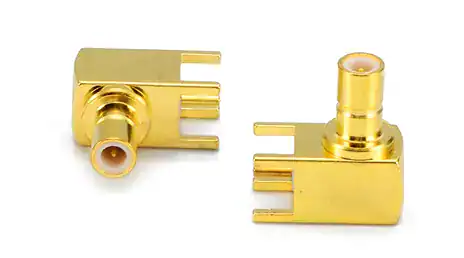
For compact, blind-mate assembly needs, the smb rf coaxial connector solutions, including the SMB connector male-female and the SMB right-angle connector, enable efficient, high-density installations while enduring high mating cycles. These components address space constraints in robotic and manual assembly, cutting installation time, and minimizing signal path disruption. Engineered by ZOMWAVE with superior mechanical retention and extended temperature tolerance, they significantly improve system MTBF in industrial environments. Our precision SMB connector, male and female, and SMB right-angle connector variants maintain stable electrical performance under vibration and shock, while simplified polarization prevents mating errors. With enhanced long-term durability and consistent signal integrity as validated in comparative performance studies, these connectors further reduce maintenance frequency and lifecycle costs. This comprehensive approach balances production efficiency with proven reliability, supported by custom configurations and volume manufacturing for global industrial applications.

FAQ

1. What are SMB/SMC connectors?

SMB and SMC are sub-miniature RF coaxial connectors. You’ll find the snap-on smb-type connector in compact spaces, while the threaded SMC offers superior vibration resistance for demanding applications.

2. What is an SMB male connector?

An SMB male connector is the plug in an SMB-type connector pair, featuring a center pin that mates with the female jack for quick, compact RF connections.

3. What are SMB and SMC coaxial RF connectors?

SMB and SMC are compact RF coaxial connectors. The snap-on smb-type connector is for quick connects, while the threaded SMC resists vibration better.

4. What is the difference between SMB and SMA RF connectors?

SMA connectors use a threaded coupling for higher frequencies, while SMB-type connectors have a quick snap-on design for compact, lower-frequency applications.

5. How to connect smb cable?

Just align the smb cable connector and push until it clicks, ensuring a secure snap-on mating for a proper RF connection.

6. What is the frequency range of SMB connectors?

Furthermore, standard SMB connectors typically handle frequencies up to 4 GHz, though performance depends on the specific connector’s build quality and cable assembly.

7. What tools do I need to install an SMA connector?

To assemble these connectors, you need a coaxial stripper, a crimp tool for the SMA connector, and typically a wrench to tighten the threaded coupling securely.

8. What is the difference between SMA and SMB coax?

In comparison, an SMA connector uses a threaded coupling for superior durability and shielding, while an SMB connector relies on a quick snap-on mechanism, making it ideal for compact spaces requiring frequent connections.

8.How to connect a flexible flat cable?

Align the cable’s conductors with the contact points. If Use SMB connectors for flexible cables to secure the connection through crimping or clamping.

Leave a Reply

Your email address will not be published. Required fields are marked *