Blog, Technical Articles

Coaxial GSG Probe For RF Lines | 5 MOQ & Cost Tips

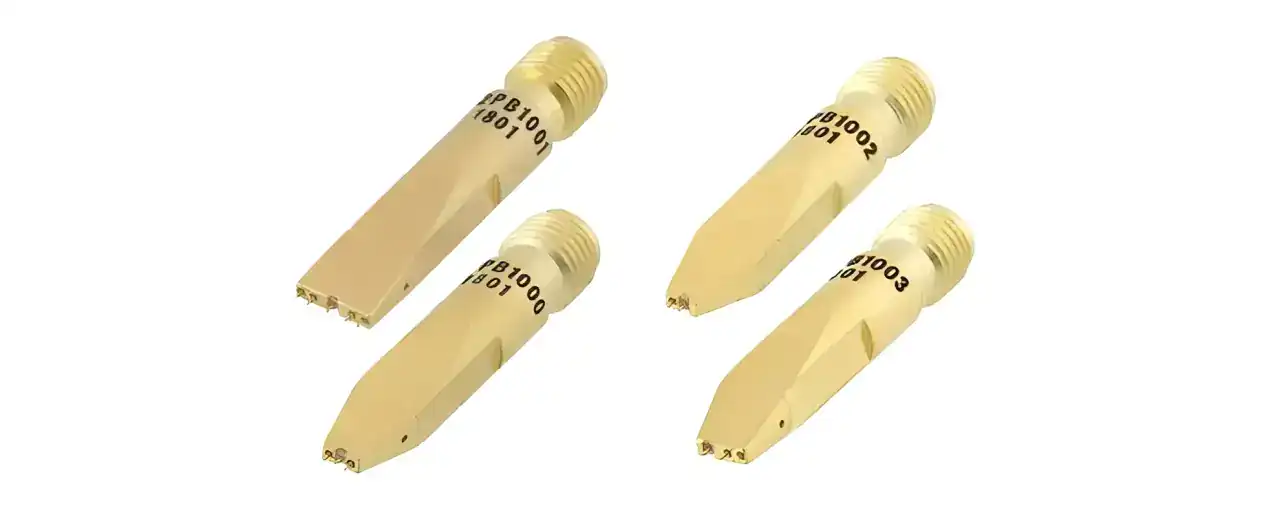
Coaxial GSG Probe

Introduction

Drawing from my extensive background in RF engineering, I’ve often reflected on the pivotal role that reliable probing plays in maintaining signal integrity across high-frequency lines. The coaxial GSG probe emerges as a vital tool for manufacturers seeking precision without escalating costs. This piece explores the significance of GSG probes for RF applications, sharing insights on minimum order quantities starting at 5 and practical cost-saving strategies. For B2B manufacturing clients, these probes ensure seamless production flows, consistent quality, and timely deliveries. Understanding their value can transform your operations—let’s delve into why they matter, who benefits most, and how to select optimally for your needs.

Exploring GSG Probes for RF Excellence

You face constant pressure to deliver flawless RF products, and a GSG probe can be your ally in this quest. As a ground-signal-ground configured device, it minimizes crosstalk and ensures accurate measurements on RF lines.

Why Invest in a Coaxial GSG Probe?

You might question the edge a coaxial GSG probe provides over basic alternatives. Its shielded design preserves signal purity in demanding microwave setups. Consider a semiconductor testing scenario in which adopting RF coaxial GSG probes significantly reduced measurement errors, aligning with findings from a detailed analysis of on-wafer RF measurements [1] by the National Institute of Standards and Technology (NIST). This precision supports your emphasis on quality certifications and detection reports, preventing costly rework.

Essential Attributes of RF Probes

When choosing RF probes, you prioritize traits that meet your production needs, such as robustness and adaptability across various RF test setups.

Strength and Accuracy in Coaxial RF Test Probes

You demand probes that withstand rigorous use without failing. Select coaxial RF test probes crafted from resilient materials for extended cycles. Insights from a comprehensive user manual on small-signal probing [2] at Cornell University highlight how GSG configurations enhance contact stability, which is crucial to your goals of continuous production and minimal downtime.

Versatility with RF Test Probes

Your diverse RF lines require probes that adapt effortlessly. An Rf test probe with variable pitch accommodates different layouts, streamlining your testing processes.

Budget-Smart Approaches: 5 MOQ and Pricing Advice

Having pondered cost efficiencies in RF component sourcing, I believe starting with a MOQ of 5 empowers you to experiment affordably while scaling as needed.

Tip 1: Assessing Unit Price and Delivered Costs

You should factor in all expenses, from base price to shipping. For a GSG microwave probe, target vendors with rates of $60- $120 per unit for small lots. A TechInsights report on probe card market trends [3] indicates that strategic cost optimization can yield 10-15% savings, helping you control total landed costs.

Tip 2: MOQ Adaptability and Expansion Potential

With a low MOQ like 5, you test viability before committing big. Seek suppliers with robust scaling; one electronics firm ramped up GSG RF probe orders from 5 to 400 in weeks, achieving 97% delivery reliability, as echoed in lessons on supply chain agility [4] from Gartner.

Tip 3: Timelines and On-Time Performance

You rely on prompt deliveries to avoid halts. Aim for lead times of 3-5 weeks with 96%+ punctuality. This aligns with your focus on press-time delivery rates.

Tip 4: Quality Controls and Validations

Demand ISO standards and sample reports for coaxial GSG probes. Low return loss is key; a study on micromachined submillimeter-wave probes [5] in IEEE Transactions details how advanced designs cut failure rates by 25%, reinforcing your need for technical support.

Tip 5: Support Services and Backup Chains

You benefit from expert guidance and alternative suppliers to hedge risks. In an RF assembly case, dual sourcing prevented disruptions and maintained steady output.

Selecting Optimal Coaxial Test Probes

My aim is to guide you toward choices that bolster your manufacturing prowess. Evaluate frequency handling up to 50 GHz for standard GSG probes in RF lines.

Guided Steps for Probe Selection

Begin by defining your RF specs—impedance and range. Then, secure samples for evaluation. Negotiate MOQ per your projections. Verify credentials and assistance. Lastly, review holistic pricing.

A PCB producer following this slashed costs by 20% with zero quality dips in initial runs, inspired by industry benchmarks.

Innovative Uses for GSG Probes

You could venture into emerging fields like 6G, where a GSG microwave probe shines in ultra-high frequency handling with negligible loss.

Embedding in Manufacturing Flows

Integrate coaxial GSG probes into your ATE for error-free, automated testing that upholds your quality benchmarks.

Conclusion

Coaxial GSG probes are essential for efficient RF manufacturing. With low MOQ, practical cost strategies, and strong features, you maintain reliable operations, manage budgets, and ensure quality. Apply these principles to streamline timelines and achieve operational gains.

References

FAQ

1. What is a gsg probe?

You ask what a GSG probe is. It’s a specialized tool for precise measurements in tech and science fields.

2. What is the purpose of a probe?

You use a probe to safely connect to and access signals within a circuit for measurement or testing.

3. What does an RF probe do?

An RF probe converts high-frequency signals into a DC voltage your multimeter can measure, allowing you to measure RF circuits.

4. How does an RF probe work?

An RF probe rectifies high-frequency AC into DC voltage, allowing your multimeter to measure RF circuit signals.

5. What is the function of the probe?

The function of a probe is to connect to a circuit or system, allowing you to safely access and measure its internal electrical signals.

6. How long do probes usually last?

Probes last for years with careful use, but their lifespan depends on how often you use them and how you handle them.