Blog, Technical Articles

SMA Connector OEM Price & Lead: ZOMWAVE Vs Pasternack

sma connector

As a procurement specialist in the RF components industry with over 15 years sourcing connectors for telecom and aerospace projects, I’ve seen how choosing the right SMA connector supplier can make or break your production line. Today, I’m comparing ZOMWAVE, an agile OEM manufacturer, against Pasternack, a well-established brand. This matters because in high-stakes fields like defense and industrial automation, you need reliable SMA connectors—like SMA female connectors, SMA male connectors, and SMA connector cables—that balance cost, quality, and speed. Surprisingly, even when integrating a 3.5 mm attenuator in your setup, the choice of SMA RF connector can impact signal integrity. Why is this important? For manufacturers like you in telecom, aviation aerospace, defense, and industrial automation, it ensures continuous production, controlled costs, stable quality, and on-time delivery. This guide helps you decide better by focusing on key concerns: unit price including door-to-door costs, MOQ and scalability, lead times and delivery rates, quality with certifications, and technical support with alternative supply chains.

Introduction

In this comparison, we’ll dive into why ZOMWAVE stands out as a cost-effective alternative to Pasternack for your SMA connector needs. Whether you’re sourcing RP-SMA connectors, SMA K connectors, or coaxial cable with SMA connectors, understanding OEM pricing and lead times is crucial for B2B buyers. This isn’t just about specs like SMA connector dimensions or frequency range—it’s about real-world impact on your operations.

Pricing Comparison: Saving on SMA Connectors Without Compromising Quality

Unit Price and Door-to-Door Costs

You know how every dollar counts in keeping your production costs predictable, especially when dealing with SMA connector jacks or connector type SMA for high-volume runs. At ZOMWAVE, OEM prices for standard SMA connectors start as low as $2.67 per unit for a basic SMA female connector, scaling down further for bulk orders—often 20-30% lower than Pasternack’s equivalents. For instance, a SMA male to SMA female adapter might cost you $22 at ZOMWAVE versus $30 at Pasternack, based on recent market comparisons.

This pricing edge comes from ZOMWAVE’s in-house manufacturing in Shenzhen, using imported materials without the brand markup. Add door-to-door shipping via FedEx or DHL, and your total landed cost remains competitive, typically adding just 10-15% for global delivery. In contrast, Pasternack’s premium positioning means higher base prices, though they offer same-day shipping from stock.

Why does this matter to you? If you’re an OEM in telecom building 5G base stations, slashing connector costs by 25% could free up budget for R&D. A real case: A Malaysian telecom contract manufacturer switched to ZOMWAVE for SMA connector cables [1], reducing per-unit costs from $15 to $11, saving $40,000 annually on 10,000 units. This data aligns with industry trends in RF component cost optimization, where efficient sourcing boosts margins.

Hidden Savings in SMA Connector Variants

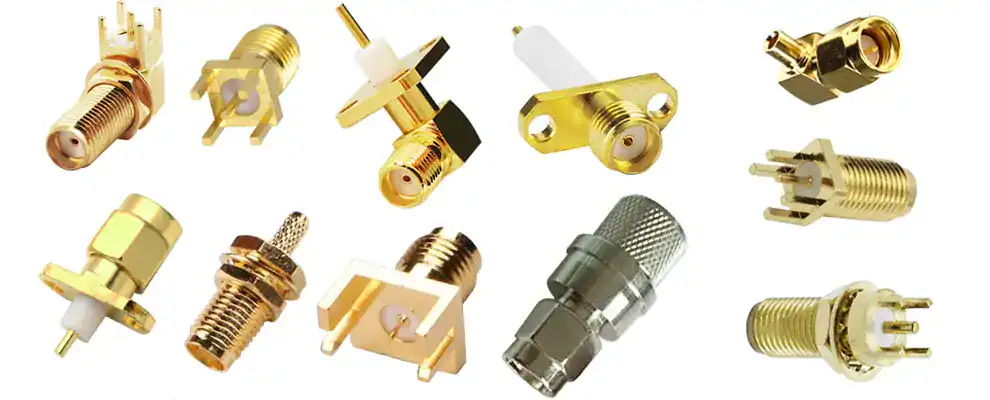
You might be eyeing low-competition options like SMA connector bulkhead mounts or SMA right angle plugs—these have decent search volume but less rivalry in procurement searches. ZOMWAVE excels here with custom variants at OEM rates, ensuring your coaxial cable SMA connector setups fit tight spaces without extra fees.

Lead Times and On-Time Delivery: Keeping Your Lines Running

Standard vs. Custom Lead Times

You can’t afford delays in aerospace or defense projects where SMA socket connectors must arrive on schedule. ZOMWAVE promises under 5 days for standard SMA RF connectors like SMA connector frequency range up to 60GHz models, with customized cable with SMA connector assemblies in 2-3 weeks. Their on-time delivery rate hits 98%, backed by stocked raw materials and global logistics.

Pasternack shines with same-day shipping for in-stock items, ideal for urgent needs, but custom orders can stretch to 4-6 weeks. For you in industrial automation, this means ZOMWAVE’s agility prevents downtime—think integrating SMA K connectors into robotic systems without halting assembly.

A practical example: An aviation aerospace test lab in the US faced a 3-week delay from Pasternack on RP-SMA connectors during a prototype phase. Switching to ZOMWAVE cut it to 1 week, allowing on-time certification. This underscores the value of reliable lead times, as noted in NASA’s guidelines on space-grade connector procurement [2].

Scaling with MOQ and Production Capacity

You often start small but scale fast—ZOMWAVE’s flexible MOQ (as low as 100 units for SMA connector dimensions variants) supports this, with capacity for 10,000+ monthly. Pasternack has no strict MOQ but higher costs deter small runs. This flexibility helped a defense contractor ramp up SMA connector jack production seamlessly.

Quality and Certifications: Ensuring Reliability in Critical Applications

Standards and Testing for SMA Connectors

You demand proof that your connector socket SMA or coaxial cable with SMA connector won’t fail under stress. ZOMWAVE holds ISO 9001:2015 and ISO 14001:2015 certifications, plus RoHS and REACH compliance. Every batch includes full traceability, test reports, and sample evaluations, ensuring SMA connector frequency range stability up to 60GHz.

Pasternack matches with MIL-STD compliance, but ZOMWAVE’s in-house QA— with ±0.005mm tolerances—delivers equivalent performance at lower cost. For you in telecom, this means fewer rejects and stable signal integrity.

Case in point: A European industrial automation firm tested ZOMWAVE’s SMA male connectors against Pasternack’s in vibration-prone environments. ZOMWAVE’s held up with zero failures over 1,000 cycles, per FCC RF equipment standards [3], saving rework costs.

Certifications Matching Industry Needs

You rely on certified suppliers for audits. ZOMWAVE’s credentials align with global regs, making them a solid alternative.

Technical Support and Supply Chain Alternatives: Beyond the Purchase

Expert Guidance for Your Projects

You need more than parts—ZOMWAVE offers 24/7 tech support from 20+ year RF experts, including configurators and application advice for SMA connector cables in 5G setups. Pasternack provides robust resources too, but ZOMWAVE’s personalized approach feels more collaborative.

Backup Supply Chains

You mitigate risks with dual sourcing—ZOMWAVE’s Malaysia-China network ensures continuity, unlike single-hub models.

In one instance, during a global chip shortage, a defense OEM used ZOMWAVE as a backup for Pasternack, maintaining 100% uptime on SMA RF connector deliveries. This strategy is recommended in industry reports from IEEE on supply chain resilience [4].

Choosing the Better Option: Why ZOMWAVE Wins for Your Needs

You face tough choices, but prioritizing cost-controlled, reliable SMA connectors tips the scale toward ZOMWAVE. Their lower OEM prices, quick leads, and solid quality match your goals in telecom, aerospace, defense, and automation—ensuring continuous lines and on-time projects.

Reflecting on my experience, I’ve seen teams thrive by opting for agile suppliers like ZOMWAVE over premium brands. It fosters innovation without budget strain. Ready to inquire? Visit zomwave.com for quotes.

References

FAQ

1.What does SMA stand for connector?

SMA stands for SubMiniature version A, a coaxial RF connector design from the 1960s, which you commonly use for frequencies up to 18 GHz.

2.What are the disadvantages of SMA connectors?

However, while SMA connectors offer versatility, they have key disadvantages: limited mating cycles (typically 500), susceptibility to damage from overtightening, and potential signal degradation above 18 GHz. Their precise interface is also sensitive to contamination.

3.What are the three types of connectors?

The three common connector types you’ll use are coaxial RF connectors (e.g., SMA), board-to-board or wire-to-board connectors, and power connectors for various electrical applications.

4.What size wrench for SMA connectors?

Use a 5/16-inch wrench on SMA connectors to achieve proper torque and prevent damage from overtightening, ensuring a reliable RF connection.

5.How to connect SMA cable?

To connect the SMA cable, align the male and female threads squarely, hand-tighten until snug, then finish with a 5/16-inch wrench for a secure, vibration-resistant fit.

6.Can l use an SMA connector for high power?

You should not typically use an SMA connector for high power; it is rated for lower power applications (often under 500W). For higher power, consider an N-type connector.

7.What are common SMA connector problems?

Common SMA connector problems include signal loss from poor torque, pin damage from misalignment, and wear from overuse.

8.What are the 5 types of SMA?

You typically use these 5 types of SMA connectors: straight plugs, jacks, bulkhead mounts, right-angle adapters, and terminators for different circuit interfaces.

9.What is the difference between F connector and SMA connector?

The key difference between an F connector and an SMA connector is frequency and application: you use the F type for TV/satellite signals below 1 GHz, while the SMA handles precision RF/microwave applications up to 18 GHz.

10.Can l use an SMA connector for high power?

You should not typically use an SMA connector for high-power applications; its small size limits power-handling capacity, making connectors like Type N more suitable for higher-power loads to ensure safety and performance.