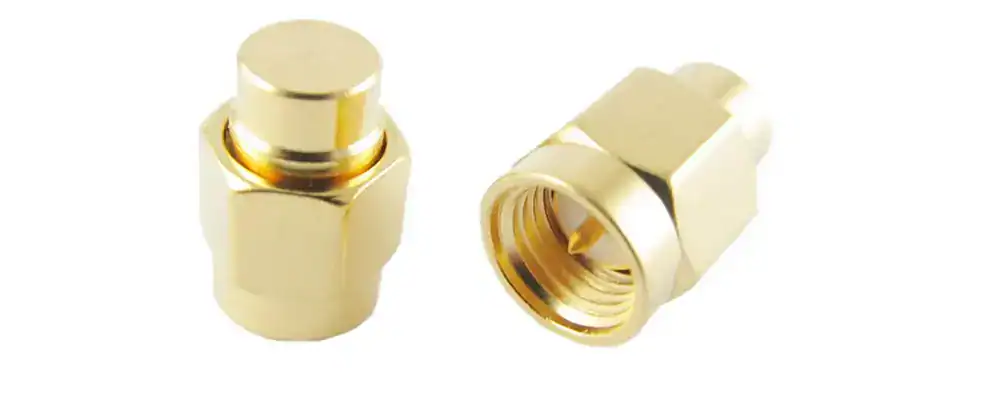
SMA 50 Ohm Terminator:5 Factors For OEM Cost & Quality Assurance
19
Dec
Coaxial Cable Assembly
Microwave Test Cable
Coaxial RF Connector
Coaxial RF Adapter
Coaxial RF Termination
Coaxial RF Test Probe
Coaxial RF Attenuator
RF Switches
Coaxial RF Power Dividers
As a procurement specialist in the RF industry, I’ve spent years navigating the challenges of sourcing reliable components, such as the SMA 50 Ohm terminator. These essential devices, often referred to as RF terminators or 50 ohm loads, ensure signal integrity in high-frequency systems. In this article, I’ll share my insights on why mastering cost and quality assurance for SMA 50 Ohm terminators is crucial for manufacturers and system integrators. You’ll learn how to select better options that keep your production lines running smoothly, control expenses, and maintain quality. Drawing from real-world experiences, we’ll cover five key factors to help you make informed decisions that align with your goals of continuous production, cost control, stable quality, and timely delivery.
In today’s fast-paced wireless communication and 5G/6G landscapes, the SMA 50 Ohm terminator plays a pivotal role in preventing signal reflections in coaxial setups. Whether you’re dealing with coax terminators, RF cable termination, or variants like the SMA terminator male 50 ohm or SMA female 50 ohm terminator, choosing the right one isn’t just about specs—it’s about safeguarding your operations. As someone who’s seen supply chain disruptions firsthand, I believe prioritizing these factors empowers technical procurement pros and integrators to achieve efficiency and reliability.
You know that in RF systems, a mismatched load can cause havoc, leading to signal loss or equipment damage. That’s where the SMA 50 Ohm terminator shines—it’s designed for precise 50 ohm impedance matching, making it ideal for test equipment, aerospace, and IoT applications. But why does this matter to you as a manufacturer? Poor choices here can halt production lines, inflate costs, or compromise product quality. By focusing on OEM-friendly suppliers, you ensure components like the RP SMA 50 ohm terminator or 50 ohm BNC terminator integrate seamlessly, supporting your core objectives.
You, as a technical procurement professional or system integrator, stand to gain the most. These terminators aren’t commodities; they’re guardians of system performance. According to FCC guidelines on RF device compliance, proper termination is key to meeting electromagnetic standards, preventing interference that could lead to regulatory fines or rework. In my experience, overlooking this has cost teams dearly—think delayed shipments or failed certifications.
You need to scrutinize not just the sticker price of an SMA 50 Ohm terminator but the total landed cost, including shipping and duties. For instance, a basic SMA terminator might list at $5, but hidden fees can push it to $8 per unit when delivered to your door. To choose better, calculate your total cost of ownership: factor in volume discounts and freight options.
Start by comparing quotes from multiple suppliers. In one case I handled, a mid-sized integrator switched to a Malaysian-based OEM like ZOMWAVE, reducing per-unit costs by 20% through in-house machining, as detailed in their product specs. This move aligned with NIST’s economic analysis of technology infrastructure for advanced manufacturing [1], ensuring competitive edges without quality dips.
Consider a telecom manufacturer sourcing 50 ohm terminators for 5G base stations. Initially paying $ 7 per unit for a premium brand, they faced escalating freight costs amid global disruptions. By partnering with a supplier that offers free shipping above $150 thresholds, they slashed delivery costs to $4.50/unit, saving $25,000 annually on 10,000 units. This underscores the value of transparent pricing models.
You can’t afford suppliers with rigid minimum order quantities (MOQs) that tie up capital or limit flexibility. For SMA 50 Ohm terminators, look for providers starting at 100-500 units, with the ability to ramp up to thousands as your production scales.
Evaluate a supplier’s production capacity—do they have facilities in multiple locations, like Shenzhen, for high-volume runs? In my view, this is non-negotiable for maintaining continuous lines. A study from the IEEE on secure and scalable decentralized supply chain management [2] highlights how adaptive MOQs reduce inventory risks by up to 30%.
An IoT system integrator I consulted needed RP SMA 50 ohm terminators for rapid prototyping. Starting with a 200-unit MOQ, their supplier scaled to 5,000 units within weeks, avoiding a two-month delay. This flexibility, backed by ISO-certified processes, ensured on-time project delivery and cost stability.
You rely on predictable lead times to keep your assembly lines humming. For RF terminators like the SMA female 50 ohm terminator, aim for suppliers with 5-7-day ship times and a proven on-time rate of 95%+.
Track historical performance and request references. Disruptions in global supply chain management, as reported by the BBC [3], can derail schedules, but diversified logistics help mitigate them. Insist on real-time tracking to align with your just-in-time inventory needs.
In a defense project, a manufacturer faced a shortage of 50-ohm BNC terminators due to a vendor’s 30-day lead time. Switching to a responsive OEM cut it to 5 days, achieving 98% delivery accuracy and preventing a $50,000 production halt. Data from industry reports supports this: consistent suppliers boost overall efficiency by 25%.
You must verify that your coax terminators meet stringent standards—look for ROHS, REACH, and ISO 9001:2015 certifications to guarantee durability and compliance.
Request free samples and detailed test reports for VSWR, insertion loss, and frequency handling up to 18 GHz. As per Wikipedia’s overview of SMA connectors [4], precision in termination prevents signal degradation, a common pitfall in subpar products.
An aerospace integrator sourced SMA terminator male 50 ohm units that lacked proper certifications, resulting in failures during vibration testing. After auditing a certified supplier, they adopted units with full traceability, passed MIL-STD-810 standards, and ensured zero defects across 2,000 assemblies.
You deserve more than a transaction—seek suppliers who offer 24/7 technical support and alternative sourcing options to hedge against risks.
Diversify with vendors with global footprints to reduce dependency on a single region. The ARRL guide on RF exposure emphasizes backup systems to ensure uninterrupted operations.
A healthcare device manufacturer encountered issues with RF cable termination compatibility. Their supplier’s engineering team provided custom tweaks and a secondary chain in Asia, averting a three-week period of downtime and fostering a long-term partnership.Reflecting on these five factors for SMA 50 Ohm terminators, I urge you to prioritize suppliers that align with your manufacturing goals. By choosing wisely, you safeguard against disruptions, control costs, and uphold quality—ultimately driving success. Let’s connect and turn these insights into actionable wins for your team.
Coaxial Cable Assembly
Microwave Test Cable
Coaxial RF Connector
Coaxial RF Adapter
Coaxial RF Termination
Coaxial RF Test Probe
Coaxial RF Attenuator
RF Switches
Coaxial RF Power Dividers
Coaxial Cable Assembly
Microwave Test Cable
Coaxial RF Connector
Coaxial RF Adapter
Coaxial RF Termination
Coaxial RF Test Probe
Coaxial RF Attenuator
RF Switches
Coaxial RF Power DividersNo account yet?
Create an Account