
 Coaxial Cable Assembly
 Microwave Test Cable
 Coaxial RF Connector
 Coaxial RF Adapter
 Coaxial RF Termination
 Coaxial RF Test Probe
 Coaxial RF Attenuator
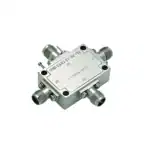 RF Switches
 Rotary Joints
 Coaxial RF Power Dividers
Selecting the optimal coaxial RF switch is critical for system performance and reliability. This guide outlines the key parameters to consider for your specific application.
1.RF Circuit Configuration:
The three primary circuit configurations are:
Single-Pole, Double-Throw (SPDT): One input port Switches between two output ports.
Transfer (DPDT): Switches connections between two sets of ports.
Mult position (SPnT): One input selects between multiple (e.g., 3 to 12) output ports.
Guideline: Choose the simplest configuration that meets your system’s functional requirements.
2.Actuator Type:
The choice of actuator is fundamental for control logic and power management.
Pulse Latching (Recommended): Requires only a short current pulse (typically ≥30 ms) to switch and hold position indefinitely without continuous power. This minimizes system power consumption and heat.
Failsafe: Returns to a predefined “normal” position (usually closed) upon removal of actuator power. Essential for safety-critical or default-path applications.
Normally Open: Connects the input to an output only while voltage is actively applied. All ports are disconnected when power is off.
3.Frequency & Connector Selection:
Generally, Electromechanical Switches are capable of higher frequencies and greater bandwidths than necessary for the intended usage.
Your operating frequency directly dictates the suitable connector type to ensure optimal RF performance. Match your requirements to the following standard correlations:
Frequency Range | Connector | Note |
DC to 67GHz | 1.85mm | Standard |
DC to 54GHz | 2.4mm | Standard |
DC to 50GHz | 2.4mm | Standard |
DC to 40GHz | 2.92mm | Standard |
DC to 26.5GHz | 2.92mm | Standard |
DC to 20GHz | SMA | Standard |
DC to 18GHz | SMA | Standard |
DC to 12.4GHz | N | Standard |
DC to 8GHz | N | Standard |
DC to 6GHz | SMA | Standard |
DC to 3GHz | N | Standard |
RF Connectors – Selection Guidelines
SMA: Standard for general-purpose use up to 18 GHz/20 GHz. Compact and widely available.
2.4mm: For reliable performance up to 50 GHz (Ka-band). Compatible with SMA and 2.92mm.
2.92mm(K): For applications up to 40 GHz. Balances performance and durability.
1.85mm: For highest frequencies up to 67 GHz (V-band). Precision design for millimeter-wave.
Type N: For high power and durability up to 12.4 GHz. Rugged for harsh environments.
4.Terminated vs Non-Terminated Ports:
Terminated: All unused ports present a 50Ω match, minimizing reflections and protecting sensitive sources. Ideal for signal routing and test systems.
Non-Terminated: Unused ports are open, slightly lower insertion loss but cause signal reflections. Suitable for antenna switching where only one path is active.
5. Actuator Voltage & Polarity:
Voltage: Standard switches are typically offered with a 12/24 Vdc actuator. Common alternative voltages (e.g., 28.0, 15.0 Vdc) are available across most switch series (SPDT, SPnT, DPDT).
Polarity: Most switches can be configured with either a positive (+) or negative (-) common return. The Failsafe SPDT series is an exception and does not require a common.
6. Power Interface Options:
Standard control interfaces are available to suit various integration needs:
Solder Pins: The default option for direct PCB mounting or cable soldering.
D-sub 9/15: Compact, multi-pin connectors for control signal integration in rack or chassis systems.
JTAG: Standard interface for in-system programming, testing, and firmware updates.
7. Critical Options for Advanced Applications:
TTL Logic Control: Integrates driver circuitry enabling switch control via standard 5V TTL logic levels, simplifying interface with digital control systems.
Low Passive Intermodulation (PIM) Design: Vital for systems where multiple high-power transmitters share an antenna or where receiver sensitivity is extreme. Specially designed switches minimize this nonlinear distortion.
Key Takeaways for Selection
Start with Circuit and Frequency to narrow down model families.
Choose a Pulse Latching Actuator for minimal power consumption in most applications.
Select the Connector based on your frequency and power requirements—SMA is the versatile standard.
Specify Voltage and Interface to match your system’s control and power supply.
Consider TTL for digital control and Low-PIM designs for demanding multi-carrier systems.