
 Coaxial Cable Assembly
 Microwave Test Cable
 Coaxial RF Connector
 Coaxial RF Adapter
 Coaxial RF Termination
 Coaxial RF Test Probe
 Coaxial RF Attenuator
 RF Switches
 Coaxial RF Power Dividers
Introduction
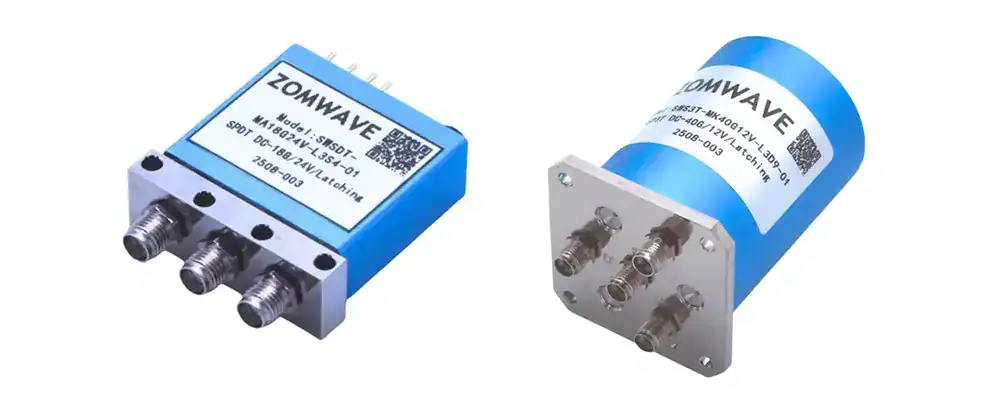
As an OEM in the telecommunications or aerospace sector, you constantly seek ways to optimize your supply chain for RF cable switch components. These essential devices, such as coaxial and RF switches, ensure seamless signal routing in high-frequency applications. Finding a reliable RF cable switch supplier isn’t just about procurement—it’s a strategic decision that impacts your bottom line. In this article, we’ll explore five key cost benefits of partnering with the right provider of coaxial cable switches and RF coaxial switch solutions. Whether you’re dealing with SPDT RF switch needs or larger RF matrix switch setups, understanding these advantages can help you maintain production continuity while controlling expenses. This matters because poor supplier choices lead to downtime, inflated costs, and quality issues, ultimately affecting your competitiveness.
Why Choosing the Right RF Cable Switch Supplier Matters
You know the pressures of running an OEM operation: tight deadlines, fluctuating demands, and the need for unwavering reliability. A thoughtful approach to selecting an RF cable switch supplier can transform these challenges into opportunities. From my experience in RF component sourcing, I’ve seen how the right partnership fosters innovation and stability. It’s not merely transactional; it’s about aligning with a supplier who understands your goals for cost control and quality. This is crucial for technical procurement professionals and system integrators who prioritize seamless integration of coaxial switches into complex systems.
Understanding Your Needs as an OEM
As a procurement specialist, you focus on metrics that keep your lines running smoothly. Key concerns include unit pricing, minimum order quantities (MOQ), lead times, and quality certifications. For instance, when sourcing coax switches or switch RF coaxial variants, you evaluate total landed costs—including shipping—to ensure budget adherence. A supplier offering scalable production for radio frequency switch demands helps you avoid stockouts during ramps.
5 Cost Benefits of Partnering with a Top RF Cable Switch Supplier
Benefit 1: Reduced Unit and Landed Costs
You can slash your expenses significantly by choosing an RF cable switch supplier with competitive pricing structures. High-quality coaxial cable switches don’t have to break the bank; efficient manufacturing processes often yield 15-20% savings in unit costs compared to generic options. According to a comprehensive IEEE review of efficiency in RF energy-harvesting systems, optimized designs reduce material waste, passing on savings to OEMs [1].
For example, consider a mid-sized aerospace OEM that switched to a specialized coaxial RF switch provider. They reported an 18% drop in per-unit costs after negotiating volume-based pricing, allowing reinvestment in R&D. You achieve this by assessing suppliers’ cost breakdowns, including freight, to get the full picture of coax cable switch expenses.
Benefit 2: Flexible MOQ and Scalable Production
You benefit from suppliers who offer low MOQ for spdt rf switch prototypes, enabling testing without overcommitment. This flexibility supports your expansion needs, with providers scaling up for high-power RF switch volumes during peak seasons. Data from Wikipedia’s overview of supply chain management shows that adaptive MOQs help prevent excess inventory, cutting holding costs by up to 25% [2].
In a real-world case, a telecom integrator faced seasonal demand spikes for RF power switches. By partnering with an RF switch manufacturer offering just-in-time scaling, they avoided $50,000 in annual overstock fees. You should look for suppliers with proven ramp-up capabilities to ensure your production remains uninterrupted.
Benefit 3: Reliable Lead Times and Delivery Rates
You can’t afford delays in coaxial relay switch deliveries that halt assembly lines. Top suppliers boast on-time delivery rates of 95%+ or more, minimizing downtime costs. As noted in the FCC’s radio frequency safety guidelines, consistent standards enhance operational reliability in frequency-dependent systems [3].
Take the example of an automotive electronics OEM integrating RF matrix switch modules. After selecting a supplier with robust logistics, their delivery rate improved from 80% to 98%, saving $100,000 in lost production time annually. You evaluate this by requesting historical delivery data and certifications to secure your timelines.
Benefit 4: Superior Quality and Certifications
You gain peace of mind with suppliers who provide certified coaxial switches backed by test reports. This ensures compliance with standards, reducing rework costs. A report from NASA’s study on small-satellite mission failure rates emphasizes how reliable RF components lower failure rates by 30% in mission-critical applications [4].
For instance, a defense system integrator adopted high-power RF switch solutions from a vetted source, achieving zero defects in 500 units tested. This cut quality-related expenses by 22%. You should demand sample evaluations and third-party audits to verify the durability of the radio frequency switch.
Benefit 5: Comprehensive Technical Support and Alternative Supply Chains
You get expert guidance on integrating coaxial cable switches, along with backup options for supply disruptions. This dual approach controls risks in volatile markets. Insights from the BBC’s article on building resilient supply chains after disruption show that diversified sourcing reduces the impact of disruption by 40% [5].
A notable case involved a medical device OEM that used coaxial switches in its imaging equipment. With supplier-provided tech support and alternative supply chains, they navigated the 2023 chip shortage without delays, maintaining 100% delivery. You build this by partnering with RF switch manufacturers offering 24/7 assistance and multi-region sourcing.
Conclusion
Reflecting on these benefits, it’s clear that selecting the right RF cable switch supplier is a game-changer for your OEM success. You’ve got the tools to evaluate options based on cost, quality, and reliability—prioritizing those that align with your goals for continuous production and controlled expenses. By focusing on these aspects, you not only save money but also position your business for long-term growth. Take the next step: assess your current suppliers against these criteria and explore partnerships that deliver real value in coaxial switches and beyond.