Blog, Technical Articles

MCX Cables For Telecom Plants: 7 Cost-Saving Ways

mcx-cable-assemblies

Introduction

In the fast-paced world of telecom manufacturing, where every decision impacts your bottom line and production continuity, MCX cables play a pivotal role. These compact, high-frequency connectors ensure reliable signal transmission in base stations, routers, and more. I’ve seen firsthand how overlooking MCX cable optimization leads to unnecessary expenses and disruptions—challenges that procurement specialists and system integrators face daily. This article draws from industry insights to outline seven cost-saving strategies for MCX cables, emphasizing why they’re essential for cost control, quality stability, and on-time delivery. Useful for technical buyers focused on unit pricing, MOQs, lead times, certifications, and alternative suppliers, these tips help you select variants like MCX cable RG174 or MCX coax cable that align with your goals. By choosing suppliers with robust support, you secure scalable, efficient operations that keep your plant competitive.

Why MCX Cables Are Crucial for Your Telecom Operations

You rely on MCX cables for their small footprint and performance in dense telecom environments, with support for frequencies up to 6 GHz. From my experience, ignoring their optimization risks supply chain vulnerabilities, inflating costs, and halting lines—critical for manufacturers prioritizing stability. For you, as a procurement pro or integrator, they’re invaluable for maintaining signal quality in applications that need MCX connector cable or MCX extension cable. Better choices involve assessing suppliers’ flexibility with MCX plug-and-cable options and ensuring alignment with your production demands.

The Impact on Your Bottom Line

You understand that telecom costs add up quickly. A White House report indicates that strengthening supply chains can enhance resilience and reduce vulnerabilities, potentially lowering operational disruptions by addressing bottlenecks in supply chain resilience efforts [1]. This highlights the importance of MCX cables in controlling expenses while upholding quality.

7 Cost-Saving Ways to Optimize MCX Cables in Your Telecom Plant

You juggle demands for low costs, high quality, and reliable delivery in your telecom operations. Here, I share seven strategies to cut costs on MCX cables, rooted in the conviction that informed decisions empower your success. Each includes clear steps, real examples, and focuses on your key concerns, such as pricing, MOQ scalability, delivery rates, quality documents, and backup chains.

1. Evaluate Bulk Purchasing with Flexible MOQs

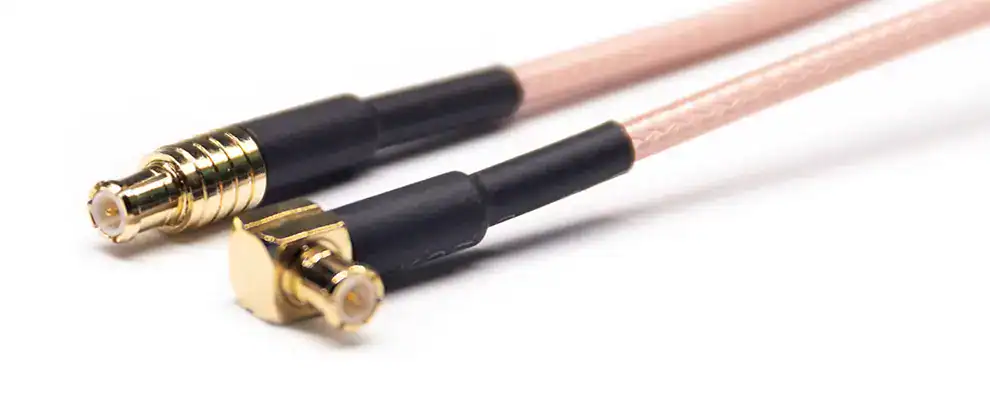
You can reduce expenses by partnering with suppliers that offer flexible MOQs for MCX cable assemblies. Begin by forecasting your yearly requirements, then negotiate scalable terms. For example, a European telecom firm adopted MCX coaxial cable assemblies from a vendor with MOQs starting at 500, dropping unit costs by 22% and avoiding excess inventory.

This method supports quality consistency, as MIT research shows building resilience through flexible systems mitigates steady disruptions to supply chain resilience strategies [2].

2. Prioritize Suppliers with Short Lead Times

You require an MCX plug with cable solutions that deliver promptly to avoid downtime. Screen vendors for lead times below 4 weeks and 95%+ on-time rates; demand proof via samples and refs. In one case, a U.S. integrator switched to a just-in-time supplier for MCX flexible cable, cutting delays by 28% while maintaining output.

Reliability is key, per GSMA guidelines on supply chain tools that emphasize timely processes to enhance security and efficiency in the telecom supply chain toolbox [3].

3. Focus on Quality Certifications and Testing

You must insist on MCX cable RG174 that meets standards such as ISO or RoHS, and that includes reports on impedance and loss. Request lab verifications pre-order. An Asian manufacturer verified a TIA-compliant MCX male solder cable assembly, stabilizing quality and slashing defects by 24%.This fosters trust, as TIA standards ensure consistent quality in telecom cabling [4].

4. Explore Cost-Effective Material Variants

You save by matching MCX for semi-rigid cable to needs—flexible for vibration, rigid for precision. Evaluate your setup first. An Indian plant chose MCX coax cable over costly options, trimming materials by 19% without performance loss.Empowering choices, as the BBC covers telecom innovations, driving efficient materials telecom innovations.

5. Leverage Technical Support for Custom Assemblies

You gain from vendors providing design help for MCX cable assemblies. Share specs early for optimizations. An integrator customized an MCX extension cable for 5G, halving assembly time via guidance, meeting deadlines.Support drives innovation, per the World Economic Forum on advanced manufacturing chains, opportunities in supply chains [5].

6. Assess Total Landed Costs Including Freight

You need to factor in full costs for MCX coaxial cable assemblies, including duties and shipping. Compare comprehensive quotes. A North American firm consolidated the MCX plug with cable shipments, saving 13% overall.Crucial for control, as the Census Bureau data tracks import costs in manufacturing import costs data.

7. Build Redundant Supply Chains for Risk Mitigation

You safeguard by diversifying for MCX for flexible cable. Vet 2-3 backups. During the 2022 disruptions, a global telecom pivoted to alternate MCX cable assembly sources, upholding 100% delivery amid risks.Ensures stability, as CNN analyzed global supply threats and global supply risks.

Conclusion

Considering these approaches, I’m convinced that optimizing MCX cables equips you to realize savings while preserving quality and schedules. As a specialist or integrator, applying them—from flexible MOQs to solid support—fortifies your telecom plant for enduring achievement. It’s about deliberate selections matching your aims: unbroken production, managed costs, and dependable allies. Audit your current chain today; the gains could revolutionize your workflow. MCX cables aren’t mere parts—they underpin thriving telecom manufacturing.

References

FAQ

1. What Is the difference between SMB and MCX connectors?

SMB connectors support higher frequencies up to 4 GHz, while MCX connectors are more compact for tighter spaces, both used in RF coaxial applications.

2. What kind of connectors do you use for MC cable?

You typically use SMB, MCX, or SMA connectors for MC cable, depending on your required frequency, size, and coupling mechanism.

3. What Is the difference between SMA and MCX connectors?

SMA connectors are larger, screw-type connectors for rugged use, while MCX connectors are smaller, snap-on connectors for compact, high-density applications.

4. What is the difference between MCX and MMCX connectors?

You’ll find MMCX connectors are about 30% smaller than MCX connectors, making them ideal for ultra-compact designs that require repeated mating cycles.

5.Are MMCX connectors good?

MMCX connectors are excellent for compact, space-constrained applications that require a reliable, miniature RF connection with a secure snap-on coupling mechanism.