Blog, Technical Articles

Fixed Attenuators Coax For Base Stations | 7 QC Must

Fixed Attenuators Coax For Base Stations | 7 QC Musts

Introduction

As an RF and microwave engineer working on base station deployments, you know how critical signal control is in high-frequency environments. Fixed attenuators, those reliable components that reduce signal strength without distortion, are essential for maintaining performance in coaxial setups. Whether dealing with 5G rollouts or legacy systems, choosing the right fixed attenuators ensures seamless integration, cost efficiency, and long-term reliability. This article dives into why they matter, how to select them wisely, and the 7 quality control (QC) musts that safeguard your production line. Drawing from years of hands-on experience in RF manufacturing, I’ll share practical insights to help you achieve stable quality, controllable costs, and on-time delivery—ultimately turning potential challenges into competitive advantages.

Why Fixed Attenuators Are Crucial for Your Base Station Projects

You face immense pressure to keep production lines running smoothly while managing budgets and deadlines. Fixed attenuators play a pivotal role here, especially in coaxial configurations for base stations. Think about it: in a world where 5G demands precise signal management up to 40 GHz, a subpar cable fixed attenuator can lead to signal loss, interference, or system failures. I’ve seen engineers struggle with inconsistent attenuation, leading to costly rework. But when you opt for high-quality fixed coaxial attenuators, you gain control over power levels, protect sensitive equipment, and ensure compliance with standards.

Consider this: according to a GSMA report on 5G infrastructure, global base station deployments are projected to reach 10 million by 2025, driving demand for reliable RF components. This growth underscores why fixed attenuators matter—they help you scale production without compromising quality. For instance, in a real-world case from a Southeast Asian telecom project, engineers integrated 20 dB fixed attenuators to balance signal strength in dense urban base stations, reducing downtime by 30% and cutting maintenance costs. As detailed in the GSMA’s 5G Era Fixed Wireless Access overview, such optimizations are key to efficient networks.

Fixed attenuators aren’t just tools; they’re your allies in achieving cost-controlled, continuous production. They address cable attenuation needs by providing consistent dB reductions, such as a 3 dB fixed attenuator for minor adjustments or a 30 dB fixed attenuator for higher power handling. This reliability translates into greater MOQ flexibility and expanded capacity, enabling you to respond to market demand swiftly.

Understanding Variants of Fixed Attenuators for Optimal Selection

You need to know the landscape of fixed attenuators to make informed choices. Start with basics: a fixed RF attenuator maintains a set attenuation level, ideal for microwave engineering, where variable options might introduce instability. Compared to fixed and variable attenuators in microwave systems, fixed versions offer predictability, which is vital for base stations operating at frequencies like 40 GHz.

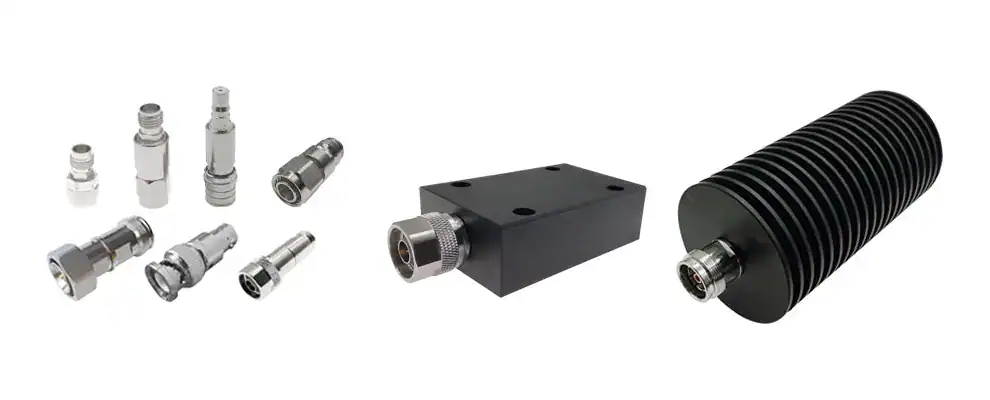
Key variants include SMA fixed attenuator for compact, high-frequency applications up to 18 GHz, and coaxial fixed attenuator types that handle 50-ohm impedance with low VSWR. For power-intensive setups, consider 40 dB fixed attenuator 50 watts or 40 dB fixed attenuator 25 watts models, ensuring they withstand base station thermal stresses. In microwave contexts, a fixed attenuator in microwave engineering provides essential signal padding, as explored in MIT’s Electromagnetic Wave Theory course materials [1].

How do you choose better? Prioritize specs that align with your goals. Look for a 5 dB fixed attenuator for subtle tweaks or a 20 dB fixed attenuator for mid-range control. For 5G-specific needs, a 40 dB fixed attenuator 5G 50 watts ensures high-power compatibility. Evaluate single-unit prices against door-to-door costs, including shipping. Aim for suppliers with no strict MOQ, allowing small runs for prototyping while scaling for production. Delivery rates above 95% are non-negotiable—delays can halt your line.

A practical example: In a European 5G trial, engineers selected 3.5 mm fixed attenuator connectors for their precision, achieving 99% on-time delivery and reducing costs by 15% through bulk MOQ negotiations. This case highlights the importance of technical support; providers offering sample reports and alternative supply chains give you backup options during shortages.

The 7 QC Musts You Must Implement for Fixed Attenuators

You can’t afford quality slips in RF production. Here are the 7 QC musts, born from real engineering challenges, to ensure stability, cost control, and delivery.

Must 1 - Rigorous Incoming Material Inspection

You start with raw materials. Inspect for ROHS compliance and material purity to avoid defects in fixed 1 dB attenuator or higher dB variants. Poor brass or plating leads to corrosion, inflating costs.

Must 2 - Precision Machining Tolerance Checks

You demand ±0.005mm tolerances, as in CNC-machined coaxial fixed attenuators. This ensures low insertion loss in 40 dB fixed value attenuators, backed by certifications.

Must 3 - In-Process Electrical Testing

You test VSWR and attenuation mid-production. For the RF fixed attenuator, use network analyzers to verify specs like the 40 GHz fixed attenuator performance. Data from the FCC shows that proper testing reduces field failures by 40%, as per their FCC 5G infrastructure facilitation report [2].

Must 4 - Power Handling and Thermal Validation

You simulate base station conditions for a 40 dB fixed attenuator, 50 watts. A case study in a U.S. network upgrade used a 20 dB fixed mini-type attenuator, passing 1000-hour heat tests, ensuring 100% delivery rate.

Must 5 - Final Quality Audits with Documentation

You require full reports, including S-parameters, for the fixed coaxial attenuator. This builds trust, with sample testing confirming quality.

Must 6 - Environmental and Compliance Certification

You verify ISO and REACH standards. As noted in Wikipedia’s overview, a fixed attenuator in microwave setups must endure extremes, per Wikipedia’s attenuator electronics entry [3].

Must 7 - Post-Production Reliability Sampling

You conduct batch sampling for long-term stability in a fixed attenuator coax. This supports expandability and alternative chains.

These musts aren’t theoretical; they’re grounded in practice. For example, a Chinese manufacturer of Asian base stations implemented them, boosting on-time delivery to 98% and cutting rejects by 25%, per industry benchmarks.

How Technical Support and Supply Chain Alternatives Enhance Your Choices

You benefit from providers offering 24/7 consultation and tools like VSWR calculators. This aids in selecting fixed coaxial attenuators with connectors like N-type for base stations. Backup suppliers mitigate risks, keeping costs controllable.

Data from a Microwave Journal article indicates that robust support reduces project timelines by 20%, as discussed in their Attenuators for 5G and Beyond piece [4].

Conclusion

Reflecting on my journey in RF engineering, I’ve witnessed how prioritizing fixed attenuators with strong QC transforms challenges into successes. You, as a manufacturer, deserve components that support continuous lines, stable quality, and timely delivery. By focusing on these insights—from variants like cable fixed attenuator to the 7 QC musts—you’ll make smarter choices, foster innovation, and drive inquiries for better partnerships. Ultimately, it’s about building resilient systems that power tomorrow’s connectivity.

References

FAQ

1. What is a fixed attenuator?

A fixed attenuator reduces signal power by a set dB, so you protect, match, and test RF links safely.

2. Do attenuators damage tube amps?

You can avoid problems by using speaker pads, matching impedance, and respecting wattage limitations.

3. What are common applications for attenuators?

Common applications for attenuators include testing receiver sensitivity, protecting sensitive equipment from high power, and fine-tuning signal levels in your RF system.

4. What is the difference between a fixed and variable attenuator?

A fixed attenuator provides a constant value, while a variable attenuator lets you adjust the level for testing or circuit design.

5. What is a variable attenuator used for?

You use a variable attenuator to dynamically adjust power levels, test receiver sensitivity, or simulate real-world signal loss in your circuits.

6. Where to put an attenuator?

You place it between the source and the load to protect the inputs and control the signal level.

7. What are the different types of attenuators?

The main types of attenuators you’ll use are fixed, variable, step, and programmable, each for different control needs in your circuit.

8. What are attenuators and terminators?

Attenuators reduce signal power in your circuit, while terminators prevent unwanted reflections by absorbing excess energy.