
 Coaxial Cable Assembly
 Microwave Test Cable
 Coaxial RF Connector
 Coaxial RF Adapter
 Coaxial RF Termination
 Coaxial RF Test Probe
 Coaxial RF Attenuator
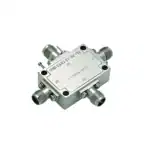 RF Switches
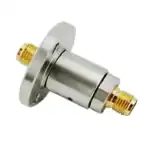 Rotary Joints
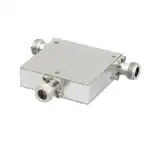 RF Circulators
 Coaxial RF Power Dividers
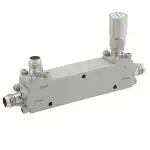 RF Couplers
 RF Filters
Click on any RF calculator below to get started
Conversion Calculators
RF Product Calculators
General RF Calculators
**Note: All of our radio frequency calculators allow SI prefix input. For example, if you wish to input"25000000", just type "25M" instead. Keep in mind that some calculators for RF have hard-coded units; if the label says (nF), for example, there is no need to input "10n", as your input is already considered to be in nanofarads. See the quick-reference table below for all compatible SI prefixes.
| Prefix | Symbol | Value |
| Tera | 'T' | 1012 |
| Giga | 'G' | 109 |
| Mega | 'M' | 106 |
| kilo | 'k' | 103 |
| Prefix | Symbol | Value |
| pico | 'p' | 10-12 |
| nano | 'n' | 10-9 |
| micro | 'u' | 10-6 |
| milli | 'm' | 10-3 |
Disclaimer:ZOMWAVE’s coaxial cable calculator resources, including the coaxial line calculator and coax impedance calculator, are built for engineers who need quick reference for impedance, loss, and matching decisions. The resources page also includes phase matching, RF attenuation, link budget, VSWR, return loss, and wavelength tools, helping you spot mismatch risk earlier and reduce rework. However, ZOMWAVE makes clear that these calculators are for educational use only and should not replace real design, build, or test validation.
Why Static Coax Charts Are Not Enough
Which RF Calculator Should You Use First?
Charts vs Calculators
| Item | Coax Chart | RF Calculator |
|---|---|---|
| Input | Fixed values | Adjustable variables |
| Accuracy | Basic reference | More practical estimate |
| Use case | Quick lookup | Design and troubleshooting |
| Flexibility | Low | High |
FAQ
1. What is a coaxial cable attenuation calculator?
2. How do you calculate cable attenuation?
3. How do l reduce signal loss for coaxial cables?
4. How to calculate signal loss in coaxial cable?
5. How to calculate attenuation of coaxial cable?
6. How to calculate characteristic impedance of coaxial cable?
8. What is the impedance of a coaxial transmission line?
9. How to calculate transmission line impedance?
10.How to calculate coax cable loss?
Calculate coax cable loss by multiplying the cable’s attenuation per meter (dB/m) by its total length in meters.